Server Support Essentials and Nurturing Digital Infrastructure

Server support involves continuous monitoring, security implementation, backup and recovery strategies, timely software updates, resource scaling, efficient troubleshooting, remote management, 24/7 monitoring, comprehensive documentation, and adherence to compliance standards. It ensures the optimal performance, security, and scalability of digital infrastructure.

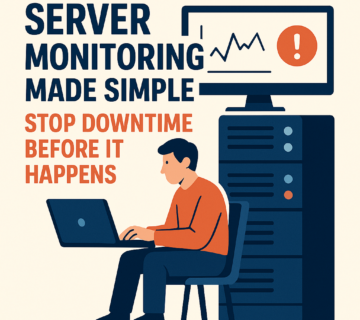
Server Monitoring Made Simple Stop

Server Monitoring Made Simple: Stop Downtime Before It Happens

An excerpt from “Infrastructure Vigilance: Mastering Proactive Server Monitoring” serves as a comprehensive guide arguing that businesses must adopt proactive server monitoring to avoid the high financial, legal, and reputational costs associated with reactive “break-fix” IT models. It thoroughly details the necessary components for effective oversight, including tracking hardware health, resource utilization, application performance, and network connectivity, while cautioning against pitfalls such as alert fatigue from poor configuration. Furthermore, the document discusses how to implement a robust monitoring strategy by establishing baselines and integrating data with IT service management processes like incident and change management. Advanced concepts such as predictive analytics and automated remediation are explored as methods to continuously improve system reliability and reduce the mean time to detection. The guide concludes by profiling Technijian, an IT services provider based in Southern California, who offers expert, managed monitoring solutions to help small and medium-sized businesses secure their infrastructure. ... Read More
Securing the Cloud Edge: 5 Steps to Protect Your Azure and Microsoft 365 Data from Breaches

Securing the Cloud Edge: 5 Steps to Protect Your Azure and Microsoft 365 Data from Breaches

Five critical steps for securing the cloud edge—the dynamic boundary where an organization’s systems meet cloud services like Microsoft 365 and Azure. It emphasizes that traditional security measures are insufficient against modern cyber threats, such as sophisticated ransomware and credential theft, which cost businesses millions annually. The recommended strategy centers on implementing a layered defense, beginning with Zero Trust architecture and optimizing tools like Microsoft Defender and Azure Sentinel for advanced threat detection and response. The text specifically targets businesses in Southern California, particularly those in regulated industries, outlining steps for securing Azure infrastructure and establishing continuous monitoring and incident response capabilities to meet compliance and operational needs. ... Read More
Patch Tuesday Simplified: Automating Windows

Patch Tuesday Simplified: Automating Windows & Third-Party Updates with Endpoint Central

An extensive analysis detailing how manual patch management processes are a primary vulnerability exploited by ransomware operators, leading to significant financial losses and operational downtime for organizations. It emphasizes that unpatched third-party applications and operating systems create a critical window between patch release and deployment, which attackers actively utilize, often within 15 to 30 days. The text strongly advocates for implementing automated patch management solutions, specifically highlighting ManageEngine Endpoint Central, to rapidly close these vulnerability gaps, improve compliance, and free up IT resources consumed by tedious manual work. Ultimately, the document serves as a comprehensive guide outlining the risks of slow patching and offering a strategic playbook for adopting automated solutions to achieve a more secure and compliant security posture. ... Read More
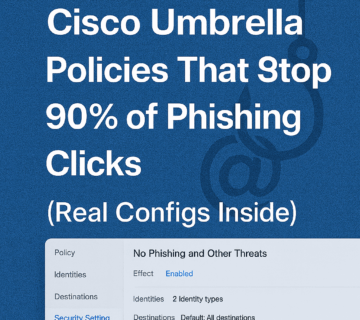
Cisco Umbrella Policies That Stop 90% of Phishing Clicks (Real Configs Inside)

Cisco Umbrella Policies That Stop 90% of Phishing Clicks (Real Configs Inside)

Cisco Umbrella policies to combat the pervasive threat of phishing, particularly for small and medium businesses (SMBs). It outlines seven specific real-world policy configurations ranging from aggressive to balanced, designed to block up to 90% of phishing attempts by leveraging DNS-layer security. Furthermore, the text details advanced techniques such as SSL decryption and Intelligent Proxy and offers a structured, multi-phase deployment methodology, including common pitfalls to avoid. Finally, the source concludes with an advertisement for Technijian, a Managed IT Services provider that offers professional deployment, ongoing management, and strategic security planning to assist SMBs with their Umbrella implementation and broader cybersecurity needs. ... Read More
New Supermicro BMC Vulnerabilities

Critical Security Alert: New Supermicro BMC Vulnerabilities Enable Persistent Backdoor Access

“Supermicro BMC Backdoors and Persistent Firmware Vulnerabilities,” is a critical security alert detailing newly discovered and sophisticated flaws in Supermicro’s Baseboard Management Controller (BMC) firmware, which allow attackers to create persistent backdoors that survive operating system reinstalls. Specifically, two vulnerabilities, CVE-2024-10237 and the more severe CVE-2025-6198 (which compromises the system’s Root of Trust), are explained as enabling access that traditional security tools cannot detect. The secondary source, an excerpt about the company Technijian, establishes itself as a managed IT services provider specializing in cybersecurity solutions and incident response, positioning their expertise to help organizations mitigate high-level threats like the Supermicro BMC vulnerabilities through specialized firmware analysis and strategic consulting. Both texts emphasize the need for urgent firmware updates and comprehensive security programs to counter these hard-to-detect, deep-level compromises in enterprise infrastructure. ... Read More