Network Monitoring: Ensuring Performance and Security

Network monitoring is the process of continuously overseeing a network’s performance to detect issues like slow traffic, outages, or security breaches. It involves using tools to track bandwidth usage, server health, and connected devices. Effective network monitoring ensures that potential problems are identified and resolved quickly, enhancing system reliability and protecting against cyber threats.

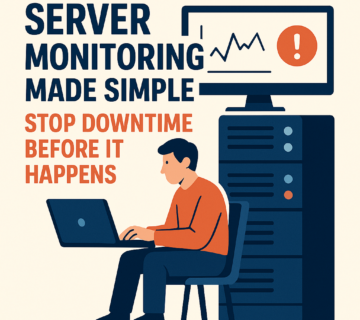
Server Monitoring Made Simple Stop

Server Monitoring Made Simple: Stop Downtime Before It Happens

An excerpt from “Infrastructure Vigilance: Mastering Proactive Server Monitoring” serves as a comprehensive guide arguing that businesses must adopt proactive server monitoring to avoid the high financial, legal, and reputational costs associated with reactive “break-fix” IT models. It thoroughly details the necessary components for effective oversight, including tracking hardware health, resource utilization, application performance, and network connectivity, while cautioning against pitfalls such as alert fatigue from poor configuration. Furthermore, the document discusses how to implement a robust monitoring strategy by establishing baselines and integrating data with IT service management processes like incident and change management. Advanced concepts such as predictive analytics and automated remediation are explored as methods to continuously improve system reliability and reduce the mean time to detection. The guide concludes by profiling Technijian, an IT services provider based in Southern California, who offers expert, managed monitoring solutions to help small and medium-sized businesses secure their infrastructure. ... Read More
Scattered Spider's Latest VMware ESXi Attack

Scattered Spider’s Latest VMware ESXi Attack Campaign: A New Threat to Virtualized Environments

Specifically focusing on the Scattered Spider cybercriminal group's sophisticated attacks against VMware ESXi virtualized environments. They detail the multi-stage attack methodology, which leverages social engineering for initial access, followed by reconnaissance, privilege escalation, and ultimately, hypervisor-level compromise to deploy ransomware and neutralize backup systems. The sources highlight the significant impact on industries like retail, transportation, and insurance due to the speed and efficiency of these attacks. Finally, the documents emphasize crucial defensive strategies, including VMware infrastructure hardening, identity and access management improvements, enhanced monitoring, and robust backup and recovery preparation, while Technijian positions itself as a managed IT service provider offering specialized expertise to combat such advanced threats. ... Read More
AI Malware Successfully Bypasses Microsoft Defender: What This Means for Cybersecurity in 2025

AI Malware Successfully Bypasses Microsoft Defender: What This Means for Cybersecurity in 2025

examines the emergence of AI-powered malware and its implications for cybersecurity. It highlights research demonstrating AI malware's ability to bypass Microsoft Defender, though currently at a modest 8% success rate, indicating limitations in current AI models. The sources discuss the resources required to develop such malware and emphasize that traditional attack vectors remain significant threats. Ultimately, the text underscores the ongoing arms race between cyber defenders and attackers, stressing the need for adaptive and comprehensive security strategies. ... Read More
Alarming Tycoon2FA Phishing Attack Exposes Microsoft 365 Users

Alarming Tycoon2FA Phishing Attack Exposes Microsoft 365 Users – Here’s How to Stay Safe

This source describes the Tycoon2FA phishing campaign, a sophisticated attack specifically targeting Microsoft 365 users. The attack utilizes clever URL manipulation by using backslashes instead of forward slashes to evade traditional email security filters. Once clicked, the links lead to deceptive redirection chains and ultimately a phishing page designed to harvest user credentials. A significant aspect of this attack is its ability to bypass multi-factor authentication (MFA) through Phishing-as-a-Service infrastructure, allowing attackers full account access and potentially leading to severe data breaches. The article also provides key technical takeaways, indicators of compromise, and recommendations for protection, such as upgrading email filters, deploying real-time threat intelligence, and educating the workforce. ... Read More