AI Compliance: Ensuring Ethical Innovation

AI compliance is essential for guiding organizations in building and deploying artificial intelligence responsibly. It involves aligning AI systems with legal frameworks, ethical standards, and industry regulations to ensure fairness, transparency, and accountability. Compliance helps mitigate risks such as bias, data misuse, and security vulnerabilities while strengthening user trust. As governments introduce stricter AI laws, businesses must adopt governance models that balance innovation with regulation. Effective AI safeguards not only organizations but also the public, ensuring AI technologies are developed safely and ethically. By prioritizing compliance, companies can innovate confidently while meeting global standards.

AI Security and Compliance

AI Security and Compliance for Enterprises: How to Deploy GenAI Without Leaking Your Data

AI Security and Compliance is now a critical priority for enterprises deploying generative AI tools. As employees increasingly use platforms like ChatGPT and AI-powered applications, organizations face rising risks such as data leakage, shadow AI usage, prompt injection attacks, and regulatory non-compliance. This guide explains the key AI security threats facing enterprises in 2026 and provides a practical governance framework to deploy AI safely while protecting sensitive data. It outlines how organizations can implement secure AI architectures, enforce data loss prevention policies, conduct AI penetration testing, and maintain compliance with regulations such as CCPA, HIPAA, SOC 2, and the EU AI Act. ... Read More
Enterprise AI Guide

Enterprise AI Guide 2026: How Smart Businesses Are Scaling with Artificial Intelligence

Enterprise AI is no longer just for Fortune 500 companies—by 2026 it’s a competitive advantage for mid-size and large organizations across every industry. This guide explains what enterprise AI really is (and how it differs from consumer AI), why the Enterprise AI Guide 2026 framework helps businesses adopt AI with structure and confidence, and the five pillars required for success: data readiness, use case prioritization, integration, governance/security, and change management. It also highlights high-impact 2026 use cases—customer support automation, predictive analytics, document processing, AI-driven cybersecurity, and productivity tools—plus what Orange County companies must consider around compliance and talent. Finally, it outlines a practical roadmap to get started and how Technijian helps businesses deploy secure, scalable, ROI-focused AI solutions. ... Read More
Personal ChatGPT for Business Data

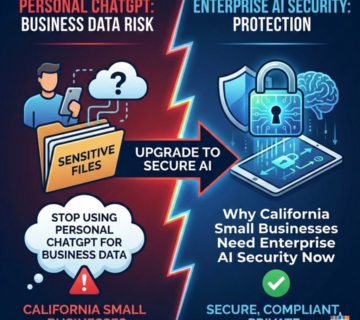
Stop Using Personal ChatGPT for Business Data: Why California Small Businesses Need Enterprise AI Security Now

When the California Privacy Protection Agency sends a CPRA violation notice to your Orange County business, you have 30 days to respond—or face penalties averaging $580,000 per incident. The critical mistake? Assuming employee ChatGPT usage for "harmless" tasks like email drafting, document summaries, and client communication is safe because "we're just being more productive." Orange County's 34,000+ small businesses are discovering that proprietary strategies fed into consumer AI tools, client data processed through unsecured platforms, and confidential information exposed to training datasets trigger enforcement actions destroying competitive advantages and terminating professional licenses. Beyond regulatory penalties, violations cost lucrative contracts as enterprise clients now require documented AI governance before vendor approval. The solution: enterprise-grade AI environments implementing zero data retention, California data residency, and comprehensive audit trails. Technijian delivers turnkey AI security compliance for Southern California businesses since 2000. ... Read More
AI Policy Templates: Keep Your Teams Secure While Using ChatGPT

AI Policy Templates: Keep Your Teams Secure While Using ChatGPT

The crucial need for organizations to establish comprehensive AI governance frameworks and AI usage policies immediately, driven by the finding that most employees use AI tools without company guidelines. The sources emphasize that unmanaged AI adoption exposes businesses to serious threats, including the potential for data leakage of confidential information, intellectual property disputes, and costly compliance violations of regulations such as GDPR and HIPAA. To address these vulnerabilities, effective policies must define data classification guidelines, mandate the use of approved AI tools, and establish verification requirements to prevent flawed decision-making based on AI outputs. Furthermore, the imperative for secure AI requires continuous oversight from a governance committee, regular risk assessment of new tools, and mandatory training programs to ensure that employees understand responsible usage protocols. The overall goal is to strike a practical balance between leveraging AI's innovative capabilities and maintaining strict security controls, often achieved through external expertise in compliance management. ... Read More
ChatGPT 5 Downgrade Attack: How Hackers Bypass AI Security With Simple Phrases

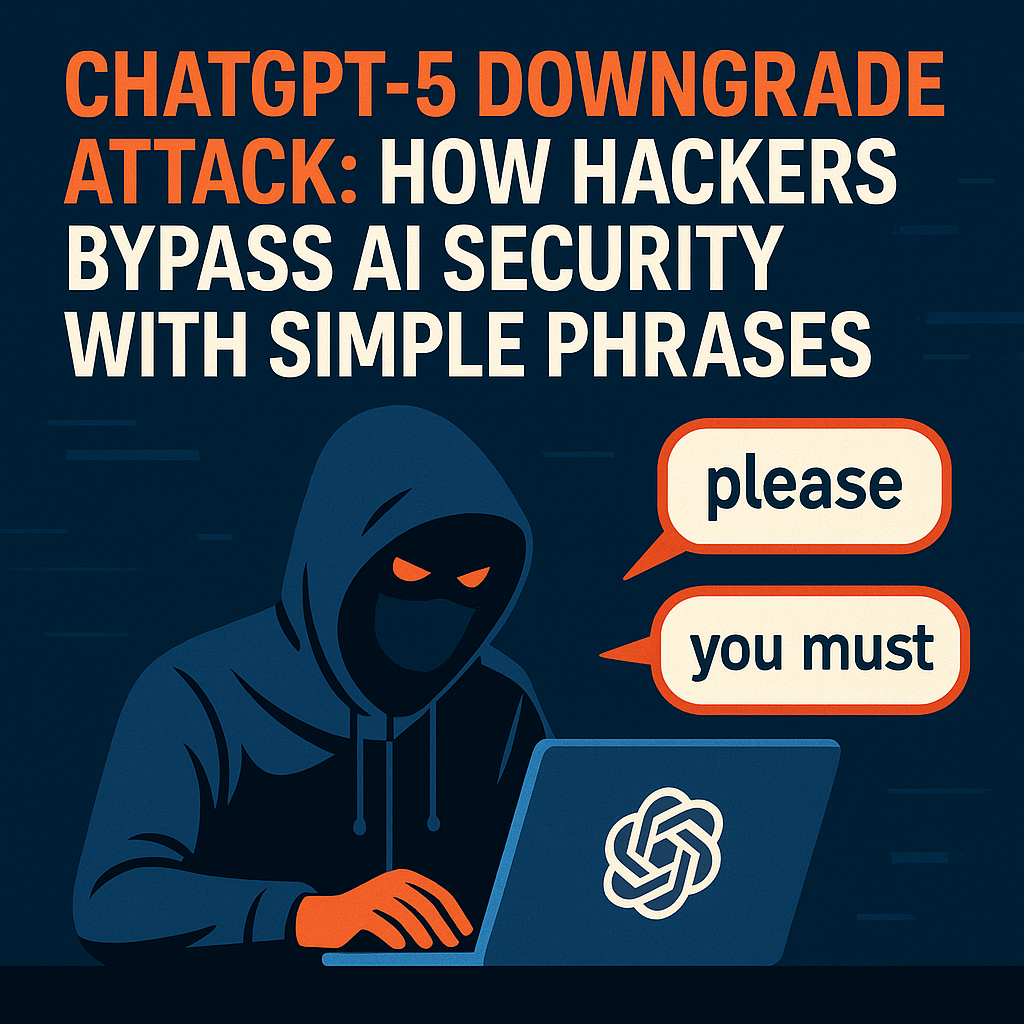
ChatGPT-5 Downgrade Attack: How Hackers Bypass AI Security With Simple Phrases

PROMISQROUTE vulnerability, a security flaw discovered in AI systems like ChatGPT-5. This vulnerability allows attackers to bypass advanced AI security measures by manipulating routing systems that direct user requests to less secure, cost-optimized models. The exploit leverages phrases such as "urgent reply" to trick the system into using outdated or weaker AI models, which lack the robust safeguards of flagship versions. The document further explains that this issue stems from AI services' multi-tiered architectures, designed for cost-efficiency, and has industry-wide implications for any platform using similar routing mechanisms, posing risks for data security and regulatory compliance. Finally, it outlines mitigation strategies and introduces Technijian as a company offering AI security services to address such vulnerabilities. ... Read More