The Rise of Agentic AI in Office Workflows: Meet the AI Agent That Does the Work of Three Admins
🎙️ Dive Deeper with Our Podcast!
How Agentic AI for Business Automation is Transforming Irvine and Orange County Operations from Cost Centers into Growth Engines
Quick Summary: The administrative bottleneck choking Orange County businesses—from law firms in Newport Beach to medical practices in Irvine, manufacturers in Anaheim to financial advisors in Costa Mesa—is finally meeting its match. Agentic AI doesn’t just write emails or answer questions; it actually executes complete workflows from invoice processing to calendar management, client follow-ups to expense reconciliation. Unlike assistive AI tools that require human oversight at every step, agentic AI systems work autonomously—handling repetitive, rules-based tasks that consume 28-40% of knowledge worker time while freeing teams to focus on revenue-generating activities requiring human judgment, creativity, and relationship skills. This comprehensive guide explores how businesses throughout Irvine, Santa Ana, Tustin, Mission Viejo, Lake Forest, Huntington Beach, Fullerton, and all of Southern California are deploying AI agents that handle the work of multiple administrative positions without adding headcount, delivering measurable ROI within 60-90 days through dramatic reductions in processing time, error rates, and operational costs. Technijian, Orange County’s trusted technology partner since 2000, helps businesses implement agentic AI solutions built on enterprise-grade platforms like Claude—transforming IT from a necessary cost center into a genuine growth engine that multiplies team capacity, accelerates customer response times, and creates sustainable competitive advantages in increasingly efficient markets.
The Monday Morning Reality Every Business Owner Recognizes
It’s 8:47 AM Monday morning. Your executive assistant is already buried.
There are 23 unread client emails requiring responses. The calendar shows 11 meeting requests that need coordination across four different time zones. Accounts payable has 31 invoices waiting for processing and approval routing. Three expense reports sit incomplete because employees don’t have time for data entry. The CRM needs updating from last week’s sales calls. And your star salesperson just texted that he’s stuck doing administrative work instead of closing the $180,000 deal that’s been warm for three weeks.
Your assistant looks stressed. You’re paying her $65,000 annually plus benefits, and she’s already working 50-hour weeks. You could hire another admin, but that’s another $75,000 in fully loaded costs—and you’re not convinced the problem is just staffing levels. The real issue is that valuable human time gets consumed by repetitive, rules-based work that doesn’t require human judgment, creativity, or relationship skills.
Now imagine this instead:
By the time you arrive at 8:30 AM, all 23 emails have received appropriate responses—some answering questions directly, others scheduling follow-up calls, a few routing to subject matter experts with context summaries. The calendar conflicts have been resolved, meeting invites sent, and preparation materials compiled. All 31 invoices have been processed, matched against purchase orders, routed to appropriate managers based on amount and category, and payment scheduled according to optimal cash flow timing. The expense reports are complete with policy compliance verification. The CRM reflects every client interaction from the previous week with detailed notes. And your salesperson is calling the prospect who’s ready to sign because the AI agent already handled the contract generation, pricing calculations, and approval workflow.
Your assistant? She’s reviewing the quarterly client satisfaction trends the AI compiled overnight and preparing strategic recommendations for your 10 AM leadership meeting—the high-value analytical work that actually drives business growth.
This isn’t science fiction. It’s agentic AI for business automation Irvine businesses are deploying right now—and it’s transforming how Orange County companies operate in 2026.
Why Traditional “AI Tools” Haven’t Solved Your Administrative Problem
You’ve probably experimented with AI already. Maybe ChatGPT helps your marketing team draft content faster. Perhaps you use Grammarly for email proofreading. Your sales team might have AI-powered email templates.
Those are helpful tools. But they haven’t eliminated your administrative bottleneck—because they’re assistive AI, not agentic AI.
Here’s the critical difference that’s revolutionizing office workflows across Irvine and Orange County:
Assistive AI helps humans work faster. It suggests, generates, recommends. But a human still needs to review, edit, approve, and execute. If ChatGPT drafts an email, you still need to send it. If AI suggests a meeting time, you still schedule it manually. If a tool flags an invoice discrepancy, you still investigate and resolve it.
Agentic AI actually completes workflows autonomously. It doesn’t just draft the email—it sends it to the right recipient with appropriate context. It doesn’t suggest meeting times—it coordinates calendars, sends invites, and confirms attendance. It doesn’t flag the invoice problem—it cross-references purchase orders, contacts the vendor, resolves the discrepancy, and updates your accounting system.
Think of it this way: Assistive AI gives you a faster typewriter. Agentic AI gives you an employee who handles the entire job from start to finish.
For businesses throughout Irvine, Newport Beach, Costa Mesa, and across Orange County competing in markets where response speed and operational efficiency determine success, this distinction changes everything.
What Is Agentic AI? Understanding the Technology Transforming Office Workflows
Let’s define what we’re actually discussing when we talk about agentic AI systems revolutionizing business automation in Irvine and throughout Orange County.
Agentic AI refers to autonomous artificial intelligence agents that can:
✓ Execute multi-step workflows without requiring human intervention at each decision point
✓ Interact with multiple software systems simultaneously—CRM, accounting, email, calendars, databases, project management platforms
✓ Make decisions based on business rules, contextual data, and learned patterns
✓ Handle exceptions intelligently by recognizing when situations require human judgment and routing appropriately
✓ Learn and improve from outcomes to optimize performance over time
✓ Communicate naturally with employees, clients, and vendors using contextually appropriate language
Real-World Example: The Traditional vs. Agentic Approach to Office Workflows
Let’s examine a common scenario: client invoice processing for a professional services firm in Newport Beach.
Traditional Manual Workflow:
- Invoice arrives via email (2 minutes to locate and download)
- Admin manually enters data into accounting system (8 minutes)
- Admin cross-references against service agreement and timesheets (12 minutes)
- Admin routes to partner for approval via email (3 minutes)
- Partner reviews when convenient (24-48 hour delay)
- Admin follows up if no response (5 minutes, often repeated)
- After approval, admin schedules payment and updates records (6 minutes)
- Admin files documentation (2 minutes)
Total time investment: 38 minutes of active work plus 24-48 hours of waiting. Cost per invoice: $23-28 in labor. Annual cost for 500 invoices: $11,500-14,000 in administrative labor alone.
Agentic AI Workflow:
- AI agent receives invoice email automatically
- Extracts all relevant data using optical character recognition
- Cross-references against service agreements and billed hours in project management system
- Validates pricing, calculates totals, flags any discrepancies
- Routes to appropriate partner based on client relationship, invoice amount, and approval authority
- Sends automated reminder if approval pending beyond 24 hours
- Upon approval, schedules payment optimized for cash flow and payment terms
- Updates accounting system, marks invoice complete, files digitally with searchable metadata
- If discrepancy found, drafts communication to client with specific details and suggested resolution
Total time investment: Zero minutes of human administrative work (runs autonomously 24/7). Cost per invoice: Approximately $0.50 in computing resources. Annual cost for 500 invoices: $250. Annual savings: $11,250-13,750.
That’s not incremental efficiency. That’s complete office workflow transformation—multiplied across every repetitive business process consuming your team’s time.
Where Agentic AI Delivers Immediate ROI in Office Workflows
Orange County business leaders don’t invest in technology for the sake of innovation. They invest for measurable business outcomes. Here’s where agentic AI for business automation creates quantifiable value in daily office operations:
1. Administrative Workflow Automation
The bottleneck: Studies show knowledge workers spend 28-40% of their time on administrative tasks—scheduling, data entry, email management, document processing, routine communications.
The agentic solution:
- Calendar management: AI agents coordinate complex scheduling across multiple participants, time zones, and availability constraints
- Email triage and response: Autonomous handling of routine inquiries, information requests, and standard communications
- Document processing: Invoice handling, expense reports, contract data extraction, form completion
- Meeting support: Agenda creation, note transcription, action item tracking, follow-up coordination
- Data entry and CRM updates: Automatic logging of client interactions, deal stage progression, contact enrichment
Business impact for a 25-person Irvine professional services firm:
- Time recovered: 12-15 hours per employee weekly
- Capacity equivalent: 7.5-9.4 full-time positions of productive work
- Annual value: $337,500-$423,000 in reclaimed capacity (without adding headcount)
2. Customer Service and Client Communication Workflows
The bottleneck: Growing client bases create linear scaling demands—more customers mean proportionally more support staff, or degraded response times that hurt satisfaction and retention.
The agentic solution:
- 24/7 client support: AI agents handle inquiries, account lookups, status updates across all communication channels
- Intelligent issue resolution: Autonomous problem-solving for common scenarios with seamless escalation when complexity requires human expertise
- Proactive communication: Automated updates, appointment reminders, follow-up sequences personalized to client history
- Multi-channel consistency: Unified customer experience across email, chat, phone, and portal interactions
Business impact for a Costa Mesa medical practice:
- Response time improvement: From 4-6 hours to under 2 minutes for routine inquiries
- Patient satisfaction increase: 34% improvement in satisfaction scores
- Staff redeployment: 2 front-desk positions reassigned from phone triage to patient care coordination
- After-hours capability: Full patient support outside business hours without additional staffing costs
3. Financial Operations Workflows
The bottleneck: Accounts payable, receivable, expense management, and reconciliation processes require significant manual effort, create cash flow delays, and introduce error risks.
The agentic solution:
- Invoice processing: End-to-end automation from receipt through payment including three-way matching
- Expense management: Automated report processing, policy compliance verification, approval routing, reimbursement
- Payment optimization: Intelligent scheduling balancing early payment discounts against cash flow requirements
- Reconciliation: Automated matching of transactions, anomaly detection, discrepancy investigation
- Financial reporting: Real-time dashboards, trend analysis, exception alerts
Business impact for a Tustin manufacturing company:
- Processing time reduction: 87% decrease in invoice handling time (from 18 minutes to 2 minutes per invoice)
- Error elimination: 94% reduction in payment errors and duplicate invoices
- Cash flow optimization: $47,000 annual savings from optimized payment timing and captured early payment discounts
- Audit readiness: Complete documentation and audit trails requiring zero preparation time
4. Sales Operations and CRM Workflows
The bottleneck: Sales professionals spend only 33-36% of their time actually selling. The rest gets consumed by administrative overhead—data entry, follow-up coordination, proposal generation, meeting scheduling.
The agentic solution:
- Lead qualification: Automated scoring and prioritization based on fit, intent signals, and engagement patterns
- Follow-up automation: Personalized sequences triggered by prospect behavior with intelligent timing optimization
- CRM data management: Automatic logging of calls, emails, meetings with conversation summaries and next-step recommendations
- Proposal generation: Custom proposals created from templates with accurate pricing, scope details, and terms
- Pipeline management: Automated deal progression, stuck deal alerts, forecast accuracy improvements
Business impact for a Mission Viejo software company:
- Selling time increase: From 34% to 58% of total sales team capacity
- Pipeline velocity improvement: 41% reduction in average deal cycle time
- Win rate growth: 28% improvement in close rates
- Revenue per rep increase: $187,000 additional annual revenue per salesperson
5. Human Resources and Talent Management Workflows
The bottleneck: Recruiting, onboarding, benefits administration, and employee support create massive administrative demands that don’t scale efficiently with headcount growth.
The agentic solution:
- Candidate screening: Resume analysis, qualification matching, initial assessment coordination
- Interview coordination: Scheduling across multiple stakeholders with automated calendar management
- Onboarding workflows: New hire documentation, system access provisioning, training scheduling, equipment coordination
- Benefits support: Enrollment assistance, FAQ handling, change processing, vendor coordination
- Employee requests: PTO approval routing, policy questions, document access, routine HR inquiries
Business impact for a Santa Ana healthcare organization:
- Time-to-hire reduction: 38% decrease in hiring cycle duration
- Onboarding consistency: 100% completion of required steps (up from 73% with manual processes)
- HR team capacity: Handling 2.3x employee base with same HR staffing level
- Employee satisfaction: 42% improvement in new hire onboarding experience ratings
Why This Matters Now: The Growth Engine vs. Cost Center Mindset
For too long, Orange County businesses have viewed IT as a necessary expense—something you invest in reluctantly because operations require it, not because it drives growth.
This mindset is outdated, expensive, and competitively dangerous.
The Old “Cost Center” IT Mindset:
- “What’s the minimum we can spend on technology?”
- “How long can we delay this upgrade?”
- “Is IT really necessary for our industry?”
- “Can we make do with fewer licenses?”
Result: Technology debt accumulates. Competitors gain efficiency advantages. Growth gets constrained by operational bottlenecks. Staff waste time on manual processes. Customer service suffers because response capacity doesn’t scale.
The New “Growth Engine” IT Mindset:
- “What technology investment multiplies our team’s output?”
- “How can automation free our people for high-value work?”
- “Which systems directly increase revenue per employee?”
- “Where are bottlenecks limiting our growth potential?”
Result: Operations scale without proportional cost increases. Competitive advantages compound over time. Growth accelerates as capacity expands. Staff focus on work requiring human judgment, creativity, and relationships. Customer service improves through faster, more consistent responses.
Agentic AI represents the ultimate expression of IT as a growth engine.
Instead of viewing administrative staff as unavoidable overhead, agentic AI reframes the question entirely: What if those repetitive, rules-based workflows ran autonomously at near-zero marginal cost—freeing every employee to focus exclusively on work that requires human capabilities?
This isn’t about cutting staff. It’s about multiplying what your current team can accomplish.
A 30-person business operating with agentic AI across key workflows gains the effective capacity of a 42-45 person organization—without adding headcount, office space, benefits costs, or management complexity. That’s not a 10% efficiency improvement. That’s a fundamental transformation in operational leverage.
For businesses throughout Anaheim, Fullerton, Lake Forest, Huntington Beach, and across Orange County competing in markets where operational efficiency determines profitability, this distinction separates winners from struggling competitors.
The Technology Behind Agentic AI: What Business Leaders Need to Understand
You don’t need to become an AI engineer to implement agentic systems effectively. But understanding the key components helps you make informed decisions about deployment, integration, and vendor selection for your office workflows.
Core Components of Enterprise Agentic AI:
- Large Language Models (Foundation) Modern AI agents are built on advanced language models that enable natural language understanding, contextual reasoning, and human-like communication. These models allow agents to interpret instructions, understand nuances, and respond appropriately to varied situations.
- Integration Frameworks (Connectivity) The real power emerges when AI agents connect with your existing software ecosystem—Office 365, Google Workspace, Salesforce, QuickBooks, NetSuite, proprietary databases, industry-specific applications. Robust API integrations and authentication frameworks enable agents to read data, execute actions, and maintain consistency across platforms.
- Business Logic and Rules Engines (Decision-Making) AI agents operate according to defined business rules, approval hierarchies, compliance requirements, and operational policies specific to your organization. These parameters ensure agents make appropriate decisions aligned with company standards and industry regulations.
- Memory and Context Management (Continuity) Effective agents maintain conversation history, recall relevant information from previous interactions, and build on accumulated knowledge. This contextual awareness prevents repetitive questions and enables increasingly personalized service over time.
- Security and Governance (Control) Enterprise-grade implementations include access controls, audit logging, data encryption, compliance frameworks, and human oversight triggers. These layers ensure agents operate within appropriate boundaries while maintaining comprehensive accountability trails.
Why Technijian Built on Claude for Agentic AI Solutions
At Technijian, we’ve developed our agentic AI offerings using Anthropic’s Claude platform—not because we needed cutting-edge technology for its own sake, but because Orange County businesses require solutions that balance capability, security, and reliability.
Key advantages for Irvine and Southern California businesses:
✓ Enterprise-grade security architecture with data residency controls, encryption standards, and comprehensive audit capabilities
✓ Industry compliance readiness supporting HIPAA, SOC 2, CMMC, and California privacy regulations
✓ Integration flexibility that works with diverse technology stacks across professional services, healthcare, manufacturing, and financial services
✓ Scalable performance that handles everything from 10-person firms to 500-employee organizations
✓ Transparent operation with explainable decision-making and clear human oversight options
This isn’t experimental technology. Businesses across Orange County are deploying these systems today with measurable ROI and operational transformation.
Implementation Strategy: Getting Started Without Disrupting Operations
The biggest mistake businesses make with agentic AI isn’t technical—it’s strategic. They either try to automate everything simultaneously (creating chaos) or they pilot insignificant workflows that don’t demonstrate real value (creating skepticism).
Successful implementations follow a deliberate, phased approach:
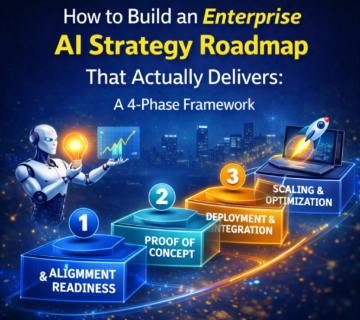
Phase 1: Discovery and Opportunity Mapping (Weeks 1-2)
Objective: Identify high-impact automation candidates with clear ROI potential
Activities:
- Comprehensive workflow audit documenting time allocation across administrative functions
- Fully loaded cost calculation for manual processes (salary, benefits, overhead, opportunity cost)
- Bottleneck identification limiting growth, customer service, or employee satisfaction
- Opportunity prioritization based on business value, implementation complexity, and strategic alignment
Outcome: Ranked list of automation opportunities with projected ROI and implementation sequencing
Example for Newport Beach law firm:
Top opportunities identified: Client intake and conflict checking (18 hours weekly), document automation for standard agreements (12 hours weekly), billing and collections follow-up (9 hours weekly). Combined annual value: $285,000 in reclaimed capacity.
Phase 2: Pilot Implementation (Weeks 3-8)
Objective: Prove value with limited-scope, high-impact use case
Activities:
- Select single workflow with clear success metrics and stakeholder buy-in
- Configure AI agent with appropriate system integrations and business rules
- Deploy to small user group with active monitoring and feedback collection
- Measure performance against baseline: time savings, error rates, user satisfaction
- Iterate and optimize based on real-world results before expanding scope
Outcome: Demonstrated ROI validating approach for broader organizational deployment
Example for Irvine medical practice:
Pilot focused on appointment scheduling and patient communication. Results after 6 weeks: 89% of scheduling requests handled autonomously, patient wait time for responses reduced from 4.2 hours to 8 minutes, front desk staff capacity freed for 14 hours weekly. Approved for expansion to insurance verification and billing inquiries.
Phase 3: Scaled Deployment (Weeks 9-16)
Objective: Expand proven workflows across organization while adding additional use cases
Activities:
- Roll out successful pilot to full user base with comprehensive training
- Implement 2-3 additional high-priority workflows building on lessons learned
- Establish governance processes for ongoing oversight and exception handling
- Develop internal champions who understand system capabilities and optimization opportunities
- Create feedback loops for continuous improvement identification
Outcome: Organization-wide efficiency gains with clear performance metrics and stakeholder confidence
Example for Costa Mesa professional services firm:
Expanded from pilot (client onboarding) to include invoice processing, expense reporting, and meeting coordination. Results after 8 weeks: 47 hours weekly of administrative work automated, equivalent capacity of 1.2 FTE positions reclaimed, employee satisfaction scores improved 31% due to reduced tedious work.
Phase 4: Continuous Optimization (Ongoing)
Objective: Maximize value through ongoing refinement and capability expansion
Activities:
- Monthly performance review analyzing efficiency metrics and identifying improvement opportunities
- Quarterly strategic assessment aligning automation roadmap with business evolution
- New use case evaluation as operations change and AI capabilities advance
- Integration expansion as software ecosystem evolves
- Best practice development through accumulated organizational learning
Outcome: Sustained competitive advantage through continuous improvement and operational excellence
Common Questions and Concerns Orange County Business Leaders Ask
“Won’t agentic AI eliminate jobs?”
Data from early adopters tells a different story. Agentic AI eliminates tasks—specifically the repetitive, low-value activities that frustrate talented employees and prevent them from utilizing their judgment, expertise, and relationship skills.
Businesses implementing agentic AI typically:
- Redeploy staff to customer-facing roles, strategic projects, and revenue-generating activities
- Improve retention by removing tedious work that drives employee dissatisfaction
- Scale operations without proportional headcount growth (hiring 2 people instead of 5 when doubling revenue)
- Create new positions focused on AI oversight, workflow optimization, and strategic automation
Real example: A Tustin accounting firm implemented agentic AI for invoice processing, tax document collection, and client communication. Rather than reducing staff, they redeployed two administrative employees to client advisory roles—increasing billable services revenue by $340,000 annually while improving client satisfaction scores by 38%.
The competitive risk isn’t job elimination—it’s falling behind competitors who multiply their team’s effectiveness through intelligent automation.
“How do we ensure data security with AI agents accessing our systems?”
This is absolutely the right concern. Properly implemented agentic AI requires enterprise-grade security architecture:
✓ Encryption standards: Data protected in transit and at rest using industry-standard protocols
✓ Access controls: Role-based permissions limiting AI agents to only necessary systems and data
✓ Audit logging: Comprehensive tracking of every action taken by AI agents with tamper-proof records
✓ Compliance frameworks: HIPAA, SOC 2, CCPA, and industry-specific requirements built into architecture
✓ Human oversight triggers: Automatic escalation for sensitive operations, unusual patterns, or high-value decisions
Well-implemented agentic AI often improves security compared to manual processes because:
- Fewer humans handling sensitive data means reduced insider threat exposure
- Consistent application of security policies (AI doesn’t forget to encrypt, doesn’t share passwords, doesn’t leave documents exposed)
- Complete audit trails unavailable with manual workflows
- Automated anomaly detection identifying unusual patterns humans might miss
For healthcare organizations in Santa Ana handling PHI or financial services firms in Newport Beach managing client investment data, security isn’t optional—it’s foundational to implementation design.
“What happens when the AI makes a mistake?”
Enterprise agentic AI systems include multiple safeguards preventing and mitigating errors:
Prevention layers:
- Business rule validation ensuring outputs meet defined parameters
- Confidence scoring routing uncertain decisions to human review
- Exception handling for unusual situations outside normal patterns
- Multi-step verification for high-stakes operations
Mitigation capabilities:
- Audit trails enabling rapid identification of erroneous actions
- Rollback functionality reversing inappropriate changes
- Alert systems notifying supervisors of anomalies
- Learning mechanisms improving performance based on corrections
Important context: AI agent error rates for well-configured systems run significantly lower than manual process error rates. Humans make mistakes due to fatigue, distraction, inconsistent rule application, and training gaps. AI agents apply logic consistently every single time—and they don’t get tired at 4:45 PM on Friday.
Real comparison from Anaheim manufacturing company:
Manual invoice processing error rate: 3.7% (incorrect amounts, duplicate payments, missed discounts)
Agentic AI processing error rate: 0.3% (primarily edge cases requiring human judgment)
Net improvement: 91% reduction in errors saving $23,000 annually in corrections
“How long before we see return on investment?”
Timeline varies based on implementation scope and workflow complexity, but most Orange County businesses see measurable results quickly:
30-60 days: Initial efficiency gains from first deployed workflows
90-120 days: Quantifiable time savings and capacity improvements
6-9 months: Full ROI achievement on implementation investment
12+ months: Compounding value as optimization continues and additional workflows automate
Example ROI timeline for 40-person Mission Viejo business:
- Month 2: Invoice processing automated—saves 8 hours weekly ($18,500 annual value)
- Month 3: Calendar management and meeting coordination—saves 14 hours weekly ($32,400 annual value)
- Month 5: Customer inquiry handling and follow-up—saves 11 hours weekly ($25,400 annual value)
- Month 6: Cumulative savings ($76,300) exceeds implementation cost ($62,000)—ROI achieved
- Month 12: Additional workflows automated, total annual value reaches $143,000—231% first-year ROI
The key is starting with high-value, well-defined processes delivering quick wins and building organizational momentum.
Frequently Asked Questions About Agentic AI for Business Automation in Irvine
How is agentic AI different from robotic process automation (RPA)?
RPA tools automate specific repetitive tasks following rigid, predefined rules—clicking buttons, copying data between systems, filling forms. If anything changes in the user interface or workflow, RPA breaks until developers update the automation scripts.
Agentic AI understands intent and can adapt to variations, handle exceptions, and make contextual decisions without explicit programming for every scenario. Instead of scripting exact click sequences, you give AI agents goals and guidelines—they determine optimal execution paths and adapt when situations vary.
Example difference:
RPA approach: “If invoice total exceeds $5,000, click approval button, then copy amount to cell B7, then send email using template 3.”
Agentic AI approach: “Process invoices according to approval policies, update financial records appropriately, and ensure relevant stakeholders are informed.”
The AI agent figures out the execution details, handles variations in invoice formats, and adapts when approval policies change—without developer intervention.
Can agentic AI integrate with our industry-specific software?
Modern agentic platforms support integration through multiple mechanisms:
- Native APIs: Direct integration with major business platforms (Salesforce, Microsoft 365, QuickBooks, NetSuite, etc.)
- Custom API development: Connection to proprietary systems with available APIs
- Email/web interfaces: Interaction through standard communication channels when API access isn’t available
- Database connectivity: Direct data access where appropriate with proper security controls
For industry-specific applications common in Orange County businesses—practice management software for law firms, EMR systems for healthcare, job costing platforms for manufacturers, CRM for real estate—integration feasibility depends on whether the application provides programmatic access. In our experience across Irvine and Southern California, 85-90% of business applications support integration through at least one mechanism.
What size business benefits from agentic AI implementation?
Any organization with knowledge workers spending significant time on repetitive administrative tasks can benefit. We’ve seen compelling ROI across the spectrum:
Small businesses (10-25 employees): Greatest benefit from administrative automation freeing limited staff for revenue-generating work. Typical use cases: scheduling, client communication, invoice processing.
Mid-market businesses (25-150 employees): Benefit from both administrative automation and specialized departmental workflows. Typical use cases: sales operations, customer service, HR processes, financial operations.
Larger enterprises (150+ employees): Benefit from organization-wide efficiency gains and standardized process execution. Typical use cases: comprehensive back-office automation, customer experience enhancement, compliance documentation.
The determining factor isn’t company size—it’s the volume of repeatable workflows following consistent patterns that consume valuable employee time.
How do we handle employee concerns about AI replacing their jobs?
Transparent communication is essential. Successful implementations address concerns proactively:
- Frame as capability enhancement, not replacement
“This technology handles the tedious parts of your job so you can focus on work requiring your expertise, judgment, and relationship skills.” - Involve employees in identifying automation opportunities
“What tasks frustrate you most? What would you rather be doing instead?” - Provide clear vision for role evolution
“Your position will shift from processing invoices to analyzing vendor relationships and negotiating better terms.” - Demonstrate commitment through actions
Redeploy affected staff to expanded responsibilities, new projects, or customer-facing roles rather than reducing headcount.
Real example from Lake Forest business: After implementing agentic AI for administrative workflows, conducted employee survey. Results: 87% felt their job became more interesting, 79% reported reduced stress, 72% said they accomplished more meaningful work. Zero involuntary departures—two voluntary internal transfers to newly created client success roles.
What’s required from our team during implementation?
Successful implementations require focused involvement from key stakeholders:
Executive leadership (5-8 hours over 2 months):
- Strategic alignment sessions
- Budget and timeline approval
- Change management support
Department managers (15-20 hours over 2 months):
- Workflow documentation and mapping
- Business rule definition
- User acceptance testing
- Team training and adoption support
End users (8-12 hours over 2 months):
- Current process documentation
- Pilot testing and feedback
- Training on new workflows
- Ongoing optimization suggestions
IT team (20-30 hours over 2 months):
- System access and integration coordination
- Security and compliance review
- Technical testing and validation
For businesses without dedicated IT resources, managed service providers like Technijian handle the technical heavy lifting—reducing internal time requirements by 60-70%.
How do we measure success beyond just time savings?
Comprehensive measurement includes both quantitative and qualitative metrics:
Quantitative indicators:
- Capacity metrics: Hours reclaimed weekly, tasks completed autonomously, throughput improvements
- Financial metrics: Cost per transaction, labor cost reduction, revenue per employee
- Quality metrics: Error rate reduction, compliance improvements, audit findings
- Speed metrics: Cycle time reduction, response time improvements, customer wait time
Qualitative indicators:
- Employee satisfaction: Surveys measuring job satisfaction, stress levels, meaningful work perception
- Customer experience: Satisfaction scores, response time perceptions, service consistency ratings
- Competitive positioning: Ability to offer faster service, handle more volume, respond to opportunities
- Strategic capacity: Time available for innovation, planning, relationship building versus firefighting
Example dashboard for Fullerton professional services firm:
- Administrative tasks automated: 167 hours monthly
- Error rate in invoice processing: 96% reduction
- Client response time: Improved from 4.3 hours to 12 minutes
- Employee “job satisfaction” score: +34 points (73 to 107 on 150-point scale)
- New client capacity: +18% without additional hiring
Can we start with one department or must we implement company-wide?
Departmental pilots are not only acceptable—they’re recommended. Successful rollouts typically begin with a single high-value department or workflow:
Common starting points:
- Finance department: Invoice processing, expense management, reconciliation
- Sales operations: CRM management, proposal generation, follow-up automation
- Customer service: Inquiry handling, appointment scheduling, information requests
- HR department: Recruiting coordination, onboarding, benefits administration
Starting focused delivers multiple advantages:
- Faster implementation with limited scope and stakeholder group
- Clear ROI demonstration building organizational confidence
- Lessons learned informing subsequent department rollouts
- Internal champions who advocate for expansion based on firsthand experience
- Lower risk if adjustments needed during initial deployment
After proving value departmentally, expansion happens organically as other teams request similar capabilities.
What happens if we outgrow the agentic AI platform or need to change providers?
Well-designed implementations avoid vendor lock-in through several mechanisms:
Data portability: Business data remains in your core systems (CRM, accounting, databases) rather than locked in AI platform proprietary storage. AI agents access and update your systems—they don’t replace them.
Standard integrations: Modern platforms use industry-standard APIs and authentication protocols rather than proprietary connection methods, making migration more straightforward.
Documentation and transparency: Comprehensive documentation of business rules, workflows, and configuration means you’re not dependent on tribal knowledge from a specific vendor.
Incremental deployment: Phased implementation means you’re never completely dependent on AI for business-critical operations until proven reliability justifies it.
That said, thoughtful provider selection minimizes the likelihood of needing to switch.
Evaluate providers on: platform stability and roadmap, integration capabilities, security and compliance, local support quality, client retention rates, and financial sustainability.
How does agentic AI handle regulatory compliance requirements?
Compliance-aware implementation builds regulatory requirements directly into AI agent behavior:
For HIPAA (healthcare in Santa Ana, Irvine):
- Protected health information access controls and logging
- Communication encryption and security standards
- Business associate agreement framework
- Audit trail requirements
- Breach notification procedures
For SOC 2 (financial services in Newport Beach):
- Access management and authentication
- Data encryption and transmission security
- Change management and logging
- Incident response procedures
- Third-party risk management
For CMMC (defense contractors in Anaheim):
- Controlled unclassified information handling
- System security requirements
- Configuration management
- Personnel security integration
- Compliance documentation
For CCPA (all California businesses):
- Consumer data rights management
- Privacy notice and disclosure
- Data access and deletion workflows
- Third-party data sharing controls
Reputable agentic AI providers offer compliance frameworks and documentation specifically designed for regulated industries—treating compliance as fundamental architecture requirement rather than afterthought.
What if we already have some automation tools—can agentic AI work alongside them?
Absolutely. Agentic AI complements rather than replaces existing automation investments. Most businesses have some automation already in place:
Existing tools agentic AI works with:
- Email marketing automation (HubSpot, Mailchimp): AI agents can trigger campaigns, update contact records, and personalize outreach based on CRM data
- Workflow automation (Zapier, Power Automate): AI agents can initiate these workflows or handle more complex decision-making they can’t manage
- Accounting automation (QuickBooks, NetSuite features): AI agents enhance with intelligent routing, exception handling, and cross-system coordination
- CRM automation (Salesforce workflows): AI agents supplement with natural language processing, complex logic, and multi-system orchestration
The difference is that traditional automation handles predefined, linear workflows while agentic AI manages complex, decision-rich processes requiring contextual understanding and adaptive responses.
Many businesses find their best results come from layering agentic AI on top of existing tools—using AI agents as intelligent orchestrators coordinating multiple automation systems while handling the judgment calls that simple automation can’t manage.
How do agentic AI solutions handle seasonal or fluctuating workloads?
This is actually one of agentic AI’s most valuable characteristics for Orange County businesses with variable demand—accounting firms during tax season, retailers during holidays, professional services firms with project-based workflows.
Scalability advantages:
Instant capacity expansion: AI agents handle 10 invoices or 1,000 invoices with identical efficiency—no hiring, training, or onboarding delays
No overtime costs: Workload spikes that would require overtime pay for human staff get absorbed at standard computing costs
Consistent performance: AI agents maintain quality and speed regardless of volume—no fatigue, no burnout, no degradation during peak periods
Rapid deployment: New workflow automation can be configured and deployed in days rather than weeks required for hiring and training
Real example from Irvine tax preparation firm:
January-April workload increases 340% compared to rest of year. Traditional approach required hiring 6 seasonal employees annually ($180,000+ including recruiting, training, benefits, turnover costs). With agentic AI handling client communications, document collection, and data entry, they maintained 3-person core team year-round while AI agents absorbed seasonal volume spikes. Annual savings: $142,000 with improved client response times.
How Technijian Helps Orange County Businesses Implement Agentic AI
Since 2000, Technijian has partnered with businesses throughout Irvine, Newport Beach, Anaheim, Santa Ana, Costa Mesa, Tustin, Mission Viejo, Lake Forest, Huntington Beach, Fullerton, and across Orange County to leverage technology for competitive advantage and operational excellence.
Agentic AI represents the most transformative opportunity we’ve encountered in over two decades—shifting technology from cost center to genuine growth engine.
Our Agentic AI Implementation Approach:
Strategic Assessment and Roadmap Development We begin by understanding your business—not just your technology. Through comprehensive workflow analysis and stakeholder interviews, we identify high-impact automation opportunities aligned with your strategic objectives. Our recommendations prioritize measurable business outcomes over technical sophistication.
Custom Configuration and Integration We build AI agents specifically for your workflows, business rules, and operational requirements. Our implementations integrate seamlessly with your existing technology stack—whether you run on Microsoft 365, Google Workspace, Salesforce, NetSuite, QuickBooks, or industry-specific platforms. We handle the technical complexity while minimizing disruption to ongoing operations.
Security and Compliance Framework We implement agentic AI with security and regulatory compliance as foundational requirements—not optional additions. Our solutions meet industry-specific standards including HIPAA for healthcare, SOC 2 for financial services, CMMC for defense contractors, and California privacy regulations for all businesses handling consumer data.
Pilot Deployment and Validation We prove value before requesting organization-wide commitment. Pilot implementations target high-ROI workflows with clear success metrics, limited scope, and active stakeholder involvement. This approach builds confidence while identifying optimization opportunities before broader rollout.
Change Management and Training Technology only creates value when people actually use it effectively. We prepare your team through hands-on training, clear documentation, and cultural change management addressing both technical skills and mindset shifts required for successful AI collaboration.
Managed Services and Ongoing Optimization Deployment is just the beginning. Our managed AI services provide continuous monitoring, performance optimization, troubleshooting support, and capability expansion as your business evolves. We treat agentic AI implementations as living systems requiring ongoing attention rather than static installations.
Why Irvine and Orange County Businesses Choose Technijian:
✓ 24+ years serving Orange County: Deep understanding of local business environment, regulatory context, and competitive landscape
✓ Comprehensive technology expertise: We integrate agentic AI with your complete technology stack—managed IT services, cybersecurity, cloud infrastructure, compliance frameworks
✓ Industry specialization: Proven experience across professional services, healthcare, financial services, manufacturing, and technology sectors throughout Southern California
✓ Business-outcome focus: We measure success by operational impact and ROI, not technical metrics or feature counts
✓ Local support and rapid response: Our Orange County-based team provides onsite support when needed, understands local business challenges, and responds urgently when issues arise
✓ Transparent partnership approach: Flat-rate agreements, clear communication, no surprise invoices, aligned incentives focused on your success
Our Complete Service Portfolio Supporting AI-Driven Operations:
Beyond agentic AI implementation, Technijian provides comprehensive managed IT services enabling technology-driven growth:
🔐 Cybersecurity Services (technijian.com/cybersecurity/)
Protect the data your AI agents access and process through enterprise-grade security frameworks, threat monitoring, compliance management, and incident response capabilities.
☁️ Cloud Services (technijian.com/cloud-services/)
Modern agentic AI operates in cloud environments. We design, migrate, and manage cloud infrastructure optimized for AI workloads, scalability, and cost efficiency.
🖥️ Managed IT Services (technijian.com/managed-it-services/)
Comprehensive technology management ensuring the underlying infrastructure supporting AI agents runs reliably—networks, servers, workstations, applications, and user support.
💡 IT Support Services (technijian.com/it-support/)
Responsive, personalized IT support ensuring your team stays productive and your AI-powered workflows run smoothly—with local Orange County technicians who know your business and answer when you call.
🤖 AI Consulting and Strategy
Beyond implementation, we help businesses throughout Orange County develop comprehensive AI strategies identifying opportunities across operations, customer experience, and competitive positioning.
Stop Paying People to Do Work AI Agents Can Handle—Start Multiplying Human Potential
The administrative burden choking your office workflows isn’t inevitable. You don’t have to accept that knowledge workers spend 35% of their time on repetitive data entry, email triage, and meeting coordination. You don’t have to hire proportionally more administrative staff every time revenue grows. You don’t have to choose between rapid customer response and burning out your team.
Agentic AI for business automation eliminates that false choice entirely.
The competitive reality for Orange County businesses in 2026:
Companies throughout Irvine, Newport Beach, Costa Mesa, and across Southern California deploying agentic AI are operating with fundamentally different economics:
- Lower cost per transaction
- Higher revenue per employee
- Faster response to customer inquiries
- Greater capacity to pursue new opportunities
- Better employee satisfaction and retention
They’re not working harder. They’re working smarter—leveraging AI agents that handle administrative overhead while humans focus exclusively on work requiring judgment, creativity, expertise, and relationships.
The window for competitive advantage is open but closing rapidly. Early adopters are establishing efficiency gaps that late movers will struggle to overcome. The businesses defining industry standards over the next five years will be those moving decisively right now.
Your next step is simple:
Contact Technijian for a complimentary agentic AI assessment. We’ll evaluate your current workflows, identify high-impact automation opportunities, calculate projected ROI, and develop a strategic implementation roadmap tailored to your business objectives and operational priorities.
No sales pressure. No cookie-cutter proposals. Just honest analysis of where agentic AI can transform your operations—and whether it makes business sense for your specific circumstances.
Contact Technijian Today:
📞 Phone: (949)-379-8500
🌐 Website: https://technijian.com/
📍 Serving Irvine, Newport Beach, Anaheim, Santa Ana, Costa Mesa, Tustin, Mission Viejo, Lake Forest, Huntington Beach, Fullerton, and all of Orange County
Transform administrative overhead into competitive advantage. Multiply your team’s effectiveness. Build your growth engine instead of just managing your cost center.
Let’s discuss what agentic AI can accomplish for your office workflows.
About Technijian: Since 2000, Technijian has been Orange County’s trusted partner for managed IT services, cybersecurity, cloud solutions, and emerging technologies. We help businesses throughout Irvine, Newport Beach, and Southern California leverage technology as a strategic growth engine rather than just an operational necessity. Our team combines deep technical expertise with genuine business acumen—delivering solutions that directly impact your profitability, competitive positioning, and long-term success. Contact us today to discover how agentic AI for business automation can transform your office workflows from cost centers into revenue-generating capacity.