Software Development: Crafting Digital Solutions

Software development encompasses planning, design, coding, testing, deployment, and maintenance. It follows agile methodologies, prioritizes collaboration, relies on documentation, and integrates security measures. The process aims to craft efficient and robust digital solutions.

MVP development journey 2026

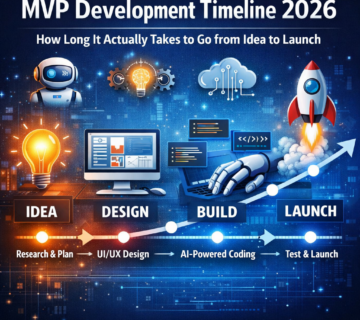
MVP Development Timeline 2026: How Long It Actually Takes to Go from Idea to Launch

Building an MVP in 2026 takes less time than ever—but only with the right approach. This guide breaks down realistic timelines by product type, highlights the biggest mistakes that delay launches, and explains how AI-powered development is accelerating delivery. Whether you're a startup founder or enterprise innovator, learn how to go from idea to launch efficiently while avoiding costly delays. ... Read More
Why Santa Monica Startups Are Winning with Hybrid Dev Teams

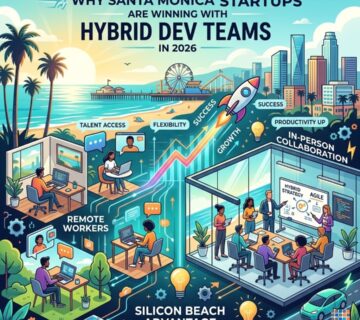
Why Santa Monica Startups Are Winning with Hybrid Dev Teams

Santa Monica's Silicon Beach is booming — but local engineering talent is expensive, with senior developers costing $220,000+ per year all-in. For startups and growing businesses, that's unsustainable. The solution? Hybrid development teams. A hybrid dev team combines your in-house leadership with remote senior engineers — running under one Agile workflow, one toolset, and one delivery standard. Done right, you get near in-house quality at 30–60% of the cost, faster hiring, flexible scaling, and 24-hour development cycles across time zones. The numbers speak for themselves. A fully in-house 6-person engineering team in Santa Monica costs roughly $1.7M per year. The same team built hybrid? Around $540K — with no drop in quality when structured and managed correctly. The keys to making it work are a strong in-house technical anchor, true Agile sprint discipline, obsessive documentation, the right tooling stack, and security enforced from day one. Skip any of these and the model breaks down fast. Technijian designs, assembles, and manages hybrid dev teams for Santa Monica startups and scale-ups — from discovery and architecture through to launch and beyond. Most teams are fully operational within 3–5 weeks, compared to 3–6 months to hire locally. ... Read More


AI driven software development in 6 weeks

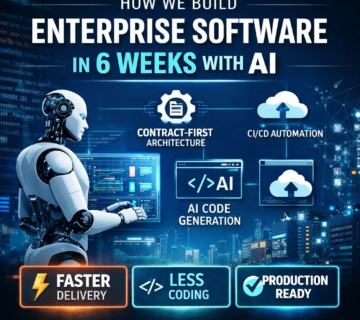
How We Build Enterprise Software in 6 Weeks with AI: The Methodology Behind Technijian’s Accelerated Delivery

Enterprise software development in 6 weeks is now possible with AI-native methodologies and contract-first architecture. Technijian delivers production-ready applications—not prototypes—by eliminating traditional bottlenecks like sequential workflows and manual coding. With AI handling up to 60% of repetitive tasks, development teams focus on business logic, security, and scalability. This approach enables faster delivery, higher quality, and measurable outcomes for enterprises and startups across Southern California. ... Read More
Technijian Software Development Guide

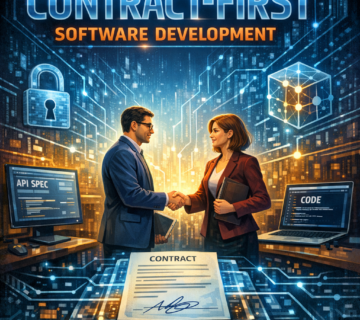
Contract-First Development Methodology Explained: Why Every Enterprise Software Project Should Start with the Interface, Not the Code

Technijian explains how contract-first software development prevents scope creep, budget overruns, and integration failures by defining API contracts before writing code. Learn how enterprise teams use contract-first methodology, OpenAPI specifications, and parallel development workflows to deliver scalable applications faster, with predictable scope, cost, and timelines. ... Read More
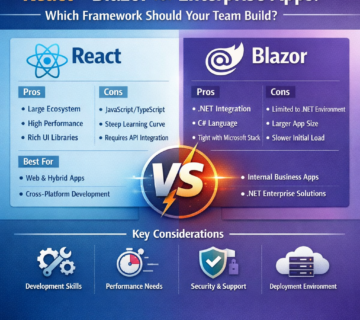
React vs Blazor for Enterprise Apps

React vs Blazor for Enterprise Apps: Which Framework Should Your Team Build On in 2026?  

Choosing the right framework can shape the success of your enterprise application. This guide compares React and Blazor for enterprise apps in 2026, analyzing performance, ecosystem maturity, talent availability, security, and long-term scalability. Designed for CTOs and engineering leaders, it explains when React’s vast JavaScript ecosystem is the better choice and when Blazor’s unified .NET full-stack development model delivers stronger enterprise value. The article also explores hybrid architectures where organizations leverage both frameworks to build scalable SaaS platforms, internal dashboards, and modern enterprise applications. ... Read More