Hybrid Cloud Solutions for SMBs: The Future of Scalable IT in 2026
🎙️ Dive Deeper with Our Podcast!
The digital transformation landscape is evolving rapidly, and small to medium-sized businesses are discovering that the future of IT infrastructure isn’t purely cloud-based or entirely on-premises. Instead, the winning strategy for 2026 combines the best of both worlds through hybrid cloud solutions.
This flexible approach is revolutionizing how SMBs manage their technology infrastructure, offering unprecedented scalability, security, and cost efficiency. Let’s explore why hybrid cloud infrastructure is becoming the go-to solution for forward-thinking businesses.
What Are Hybrid Cloud Solutions?
In order to provide a cohesive computing environment, hybrid cloud infrastructure strategically combines public cloud services with private on-premises systems. This architecture allows businesses to maintain critical applications and sensitive data on private servers while leveraging the elasticity and innovation of public cloud platforms for less sensitive workloads.
For SMBs navigating today’s competitive marketplace, hybrid cloud solutions provide the agility needed to respond quickly to market changes. The model has matured significantly, with seamless integration capabilities that were once available only to enterprise organizations.
Why SMBs Are Moving to Hybrid Cloud Infrastructure
The migration toward hybrid cloud infrastructure services stems from several compelling business drivers that resonate particularly well with small and medium-sized organizations.
Cost Optimization and Predictability
Traditional IT infrastructure requires substantial upfront capital investment in hardware, software licenses, and facility costs. Hybrid cloud solutions transform these capital expenditures into manageable operational expenses.
SMBs can scale resources up or down based on actual demand, paying only for what they use while maintaining essential systems on-premises. This financial flexibility is especially valuable for businesses experiencing seasonal fluctuations or rapid growth phases.
Enhanced Security and Compliance
For companies of all sizes, data security continues to be a major concern. Hybrid cloud infrastructure enables SMBs to keep sensitive customer information, financial records, and proprietary data within their controlled environment while still accessing cloud benefits.
This architecture is particularly advantageous for companies operating in regulated industries where compliance requirements mandate specific data handling procedures. The ability to choose where different data types reside provides peace of mind without sacrificing innovation.
Business Continuity and Disaster Recovery
Downtime can devastate small businesses, with studies showing that even a few hours of system unavailability can result in significant revenue loss and customer dissatisfaction.
Hybrid cloud solutions inherently support robust disaster recovery strategies by replicating critical data across multiple locations. If on-premises systems fail, cloud-based backups ensure business operations continue with minimal interruption.
Scalability Without Compromise
Growth should never be hindered by infrastructure limitations. Cloud infrastructure services within a hybrid model allow SMBs to scale computing resources instantly during peak periods without investing in hardware that sits idle during slower times.
Whether launching a new product line, expanding to new markets, or handling seasonal demand spikes, hybrid cloud infrastructure adapts to business needs in real-time.
Strategic Advantages of Cloud Migration for Small Business
Cloud migration for small business is no longer a question of “if” but “how” and “when.” The strategic implementation of hybrid cloud solutions positions SMBs to compete effectively with larger competitors while maintaining operational efficiency.
Legacy System Integration
Many SMBs have invested significantly in existing applications and systems that continue to deliver value. Rather than forcing a complete replacement, hybrid cloud architecture allows gradual migration.
Critical legacy applications can remain on-premises while new, cloud-native applications leverage modern cloud platforms. This phased approach reduces risk and allows staff to adapt to new technologies progressively.
Geographic Flexibility
As remote work becomes standard and businesses expand their geographic footprint, hybrid cloud infrastructure provides consistent access to resources regardless of location.
Employees can securely access applications and data whether working from headquarters, home offices, or client sites. This flexibility supports modern work arrangements without compromising security or performance.
Innovation and Competitive Edge
Cloud platforms continuously introduce cutting-edge technologies including artificial intelligence, machine learning, and advanced analytics tools.
Through hybrid cloud solutions, SMBs gain access to these innovations without the expertise or investment typically required for implementation. This levels the playing field, allowing smaller organizations to leverage enterprise-grade capabilities that drive competitive advantage.
Key Components of Effective Hybrid Cloud Infrastructure
Successful hybrid cloud implementation requires careful consideration of several technical and strategic elements that work together to create a cohesive environment.
Network Connectivity
Reliable, high-bandwidth connectivity between on-premises infrastructure and cloud platforms is fundamental. Dedicated connections ensure consistent performance and security for data transfer between environments.
Without proper network architecture, the hybrid model can introduce latency and bottlenecks that undermine its benefits.
Unified Management Platform
Managing resources across multiple environments can become complex without the right tools. Modern hybrid cloud solutions incorporate centralized management consoles that provide visibility and control over both on-premises and cloud resources from a single interface.
This increases operating efficiency, lowers errors, and streamlines administration.
Security Architecture
Hybrid environments require comprehensive security strategies that protect data in transit and at rest across all locations. This includes encryption, identity and access management, threat detection, and compliance monitoring.
Security policies must be consistent across environments while accounting for the unique characteristics of each platform.
Workload Optimization
Not all applications and data are created equal. Effective hybrid cloud strategy involves analyzing each workload to determine its optimal placement.
Latency-sensitive applications might perform better on-premises, while bursty workloads benefit from cloud elasticity. This optimization ensures performance while controlling costs.
Overcoming Hybrid Cloud Implementation Challenges
While the benefits are substantial, SMBs must navigate several challenges when adopting hybrid cloud solutions.
Skills and Expertise Gap
Cloud infrastructure services require specialized knowledge that many small business IT teams lack. The learning curve for managing hybrid environments can be steep, potentially leading to misconfigurations or inefficient resource utilization.
Partnering with experienced cloud infrastructure providers helps bridge this gap, providing expertise without the overhead of hiring specialized staff.
Integration Complexity
Connecting disparate systems and ensuring seamless data flow between on-premises and cloud environments presents technical challenges. APIs, middleware, and integration platforms must be configured correctly to create a cohesive hybrid infrastructure.
Poor integration can result in data silos that negate the benefits of the hybrid approach.
Cost Management
While hybrid cloud solutions offer cost advantages, the multi-environment nature can make expense tracking complex. Cloud costs might suddenly increase in the absence of adequate monitoring and administration.
Implementing cost management tools and establishing clear policies helps maintain financial control.
The Future of Hybrid Cloud Technology in 2026
Looking ahead through 2026 and beyond, several trends will shape how SMBs leverage hybrid cloud infrastructure.
Edge Computing Integration
As Internet of Things devices proliferate and latency requirements tighten, edge computing will become an essential component of hybrid cloud architecture.
Processing data closer to its source while maintaining cloud connectivity for analytics and storage creates new opportunities for real-time insights and automation.
AI-Driven Management
Artificial intelligence will increasingly automate hybrid cloud management tasks including workload placement, performance optimization, and security monitoring.
These intelligent systems will make recommendations and automatically adjust resources to maintain optimal performance and cost efficiency.
Sustainability Focus
Environmental considerations are becoming business imperatives. Hybrid cloud solutions enable SMBs to reduce their carbon footprint by optimizing resource utilization and leveraging cloud providers’ investments in renewable energy and efficient data centers.
Best Practices for Cloud Migration for Small Business
Successful cloud migration for small business requires methodical planning and execution rather than rushed implementation.
Assessment and Planning
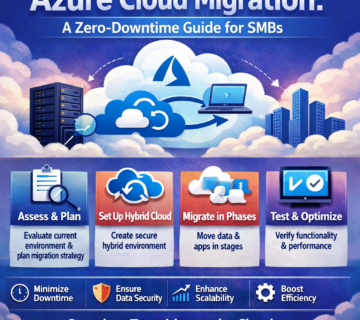
Begin with a comprehensive inventory of existing applications, infrastructure, and data. Evaluate each component to determine its suitability for cloud migration versus on-premises retention.
Develop a phased migration roadmap that prioritizes low-risk, high-value opportunities.
Pilot Programs
Test the hybrid cloud approach with non-critical workloads before migrating essential systems. This allows your team to gain experience and identify potential issues in a controlled environment.
Use lessons learned from pilot programs to refine your approach before broader deployment.
Training and Change Management
User adoption determines whether technological advancements succeed or fail. Invest in training programs that help staff understand new tools and processes.
Communicate the benefits clearly and provide ongoing support during the transition period.
Continuous Optimization
It is not possible to “set and forget” hybrid cloud infrastructure. Regularly review workload placement, cost metrics, and performance indicators.
As your business evolves and cloud technologies advance, your hybrid strategy should adapt accordingly.
Frequently Asked Questions About Hybrid Cloud Solutions
What is the difference between hybrid cloud and multi-cloud?
Hybrid cloud combines on-premises infrastructure with cloud services to create an integrated environment where applications and data can move between platforms. Multi-cloud refers to using multiple public cloud providers (such as AWS, Azure, and Google Cloud) without necessarily integrating with on-premises systems.
Hybrid cloud focuses on integration across private and public environments, while multi-cloud emphasizes avoiding vendor lock-in through diversification.
How much does hybrid cloud infrastructure cost for a small business?
Costs vary significantly based on your specific requirements, existing infrastructure, and cloud usage patterns. Generally, SMBs can expect initial setup costs ranging from a few thousand to tens of thousands of dollars, depending on complexity.
Ongoing monthly expenses typically range from several hundred to several thousand dollars. The key advantage is converting large upfront capital expenses into predictable operational costs that scale with your business.
How long does it take a small firm to migrate to the cloud?
Migration timelines depend on the complexity of your environment and the scope of your project. Simple migrations involving a few applications might complete in weeks, while comprehensive transformations can take several months.
A phased approach typically works best for SMBs, allowing you to migrate workloads incrementally over three to twelve months. This reduces risk and allows your team to adapt gradually to the new environment.
Is hybrid cloud secure enough for sensitive business data?
When implemented correctly, hybrid cloud solutions can be extremely secure, often more so than traditional on-premises-only approaches. The hybrid model allows you to keep your most sensitive data on private infrastructure under your direct control while leveraging cloud security features.
Security depends on proper configuration, strong access controls, encryption, and ongoing monitoring rather than the deployment model itself.
Can we switch cloud providers if we’re unhappy with our current one?
Yes, though the ease of switching depends on how your hybrid infrastructure is architected. Using open standards, containerization, and abstraction layers makes moving between providers more straightforward.
However, deep integration with proprietary services can create dependencies that complicate migration. Working with a cloud infrastructure partner who emphasizes portability and avoids vendor lock-in helps maintain flexibility for the future.
Do we need to hire additional IT staff to manage hybrid cloud infrastructure?
Not necessarily. Many SMBs successfully manage hybrid cloud environments with their existing teams, especially when partnering with managed service providers who handle day-to-day operations, monitoring, and optimization.
This approach provides access to specialized expertise without the expense of hiring full-time cloud engineers. As your comfort and requirements grow, you can decide whether in-house expertise makes sense for your organization.
What happens to our data if the internet connection fails?
Properly designed hybrid cloud architecture includes failover mechanisms and local data caching to maintain business continuity during connectivity disruptions. Critical applications and recently accessed data can remain available on your on-premises infrastructure even when cloud connectivity is interrupted.
When connection is restored, systems automatically synchronize. Your disaster recovery plan should address connectivity failures as part of comprehensive business continuity planning.
How do we know which workloads should stay on-premises versus moving to the cloud?
Workload placement depends on several factors including security requirements, performance needs, compliance regulations, and cost considerations.
Generally, latency-sensitive applications, systems with strict data residency requirements, and legacy applications with complex dependencies are good candidates for on-premises deployment. Variable workloads, development environments, disaster recovery systems, and applications requiring rapid scaling benefit from cloud placement.
How Technijian Can Help With Your Hybrid Cloud Solutions
Navigating the complexities of hybrid cloud solutions requires expertise, experience, and a partner who understands both technology and your unique business needs. Technijian specializes in designing and implementing cloud infrastructure services tailored specifically for small and medium-sized businesses.
Our approach begins with a comprehensive assessment of your current IT environment, business objectives, and growth plans. We take time to understand your challenges, compliance requirements, and budgetary constraints before recommending solutions.
Unlike one-size-fits-all approaches, we design hybrid cloud infrastructure that aligns with your specific situation.
Complete Cloud Migration Support
Technijian handles every aspect of your cloud migration for small business, from planning and design through implementation and ongoing management. Our team brings deep expertise across all major cloud platforms and integration technologies, ensuring your hybrid environment operates seamlessly.
We implement robust security measures, optimize costs, and provide the monitoring and support needed to maintain peak performance.
Long-Term Partnership
Beyond initial implementation, Technijian serves as your long-term cloud infrastructure partner. We provide ongoing optimization recommendations, help you adapt to changing business needs, and ensure your hybrid cloud solution continues delivering value as your organization grows.
Our managed services take the burden of day-to-day operations off your internal team, allowing them to focus on strategic initiatives rather than infrastructure management.
Expertise You Can Trust
Whether you’re just beginning to explore hybrid cloud possibilities or ready to execute a comprehensive migration strategy, Technijian provides the guidance and expertise to ensure success.
Take the Next Step Toward Scalable IT Infrastructure
The future of IT for small and medium-sized businesses is undeniably hybrid. Organizations that embrace this model position themselves for growth, innovation, and competitive success in 2026 and beyond.
The question isn’t whether hybrid cloud makes sense for your business, but how quickly you can capture its benefits.
Don’t let infrastructure limitations hold your business back. Discover how hybrid cloud solutions can transform your operations, reduce costs, and provide the scalability you need to achieve your goals.
Request Your Free Hybrid Cloud Strategy Consultation
Request a hybrid cloud strategy consultation with Technijian today. Our experts will assess your current environment, understand your business objectives, and develop a customized roadmap for your hybrid cloud journey.
There’s no obligation, just straightforward advice from professionals who have helped dozens of SMBs successfully navigate cloud transformation.
Contact Technijian now to schedule your complimentary consultation and take the first step toward building flexible, secure, and scalable IT infrastructure that grows with your business.
About Technijian
Technijian is a trusted technology solutions provider dedicated to empowering small and medium-sized businesses with enterprise-grade IT infrastructure. With years of experience in cloud infrastructure services, virtualization, and digital transformation, we specialize in helping SMBs navigate the complexities of modern technology without the overhead of large IT departments.
Our team of certified cloud architects and IT professionals brings deep expertise across all major cloud platforms and hybrid infrastructure solutions. We pride ourselves on delivering personalized service that goes beyond technology implementation—we become your strategic IT partner, invested in your long-term success.
At Technijian, we believe that every business, regardless of size, deserves access to cutting-edge technology that drives growth, enhances security, and improves operational efficiency. Our mission is to make advanced IT infrastructure accessible, affordable, and manageable for organizations ready to compete in the digital age.
From initial consultation through ongoing support, Technijian provides the expertise, reliability, and partnership you need to transform your IT infrastructure and achieve your business objectives.