
Managed IT for
Energy & Utilities
🔒 OT/SCADA Cybersecurity & IT/OT Segmentation📄 NERC CIP Continuous Compliance⚡ Smart Grid & AMI Infrastructure🖧 CIS / MDMS / OMS / GIS Management🗄️ Utility-Grade DR & Business Continuity📍 Serving SoCal Energy Operators
Your SCADA network is on the same subnet as corporate email. Your NERC CIP audit is in 90 days with 40% of documentation missing. Your AMI head-end crashes every billing cycle. Your 12-year-old CIS runs on end-of-life software and your IT team can’t plan a migration because they’re fighting fires.
Technijian provides managed IT built for energy: OT/SCADA cybersecurity with IT/OT segmentation, continuous NERC CIP compliance, utility application management (CIS, MDMS, OMS, GIS), smart grid infrastructure optimization, and the 24/7 support that energy operations demand.
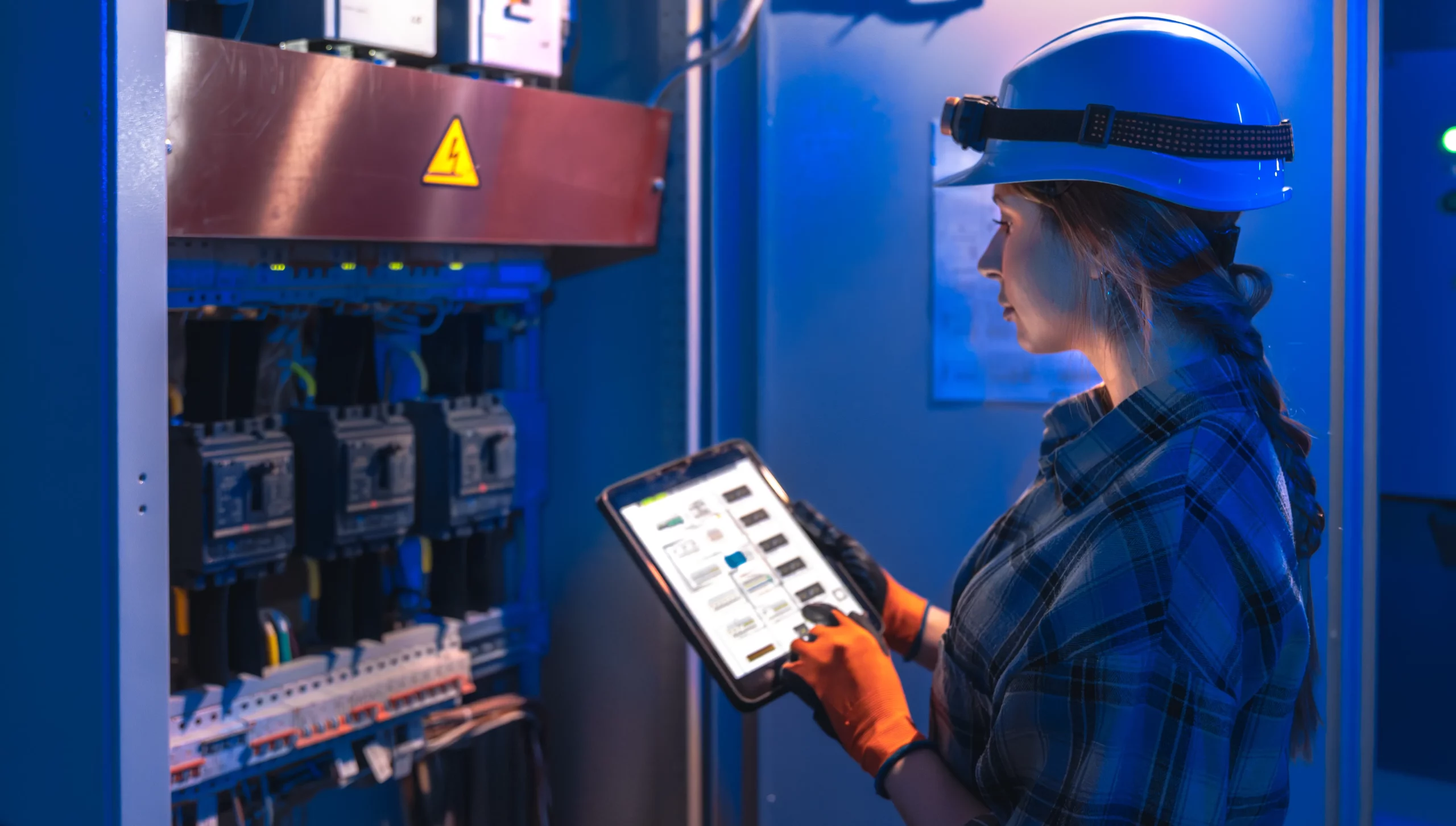
Sound Familiar, Operator?
If any of these describe your utility IT, you need a partner who speaks energy.
Your SCADA network is on the same subnet as your corporate email and a single phishing email could shut down operations for 50,000 customers
Your NERC CIP compliance audit is in 90 days and you have zero documentation for 40% of the required controls
Your utility has deployed 35,000 smart meters but your IT infrastructure can’t handle the data volume, and your AMI head-end crashes every billing cycle
Your 200-person utility runs on a 12-year-old CIS that the vendor stopped supporting, and your IT team is too busy fighting fires to plan a migration
Typical Energy IT vs. Technijian
❌ Typical Energy & Utilities IT
- SCADA/OT on same network as corporate IT — one phishing email = operational shutdown
- NERC CIP documentation 2 years outdated — $1M/violation/day exposure
- AMI head-end crashing during billing cycles — 1.2B data points overwhelming infrastructure
- 12-year-old CIS on end-of-life OS with 23 unpatched known bugs
- 4-person IT team spending 80% on break-fix, 0% on modernization
- No OT-specific cybersecurity — same EDR (or none) on control room workstations and office PCs
- Backup on same network as production — ransomware encrypts everything including DR
- Compliance is a reactive scramble before audits, not a continuous program
✓ Technijian Energy & Utilities IT
- IT/OT segmentation with electronic security perimeters, DMZ, and unidirectional gateways
- NERC CIP compliance maintained continuously — documentation always audit-ready
- AMI infrastructure scaled for 5-year data growth with optimized MDMS processing
- CIS migration planned and executed without disrupting billing or customer service
- Managed IT frees your team: Technijian handles infrastructure while you focus on operations
- OT-specific security (asset inventory, vulnerability management, anomaly detection)
- Immutable backup isolated from production — ransomware cannot reach recovery systems
- Compliance as a continuous program: controls monitored, evidence collected, documentation current
Why Energy Companies Need an IT Partner Who Understands OT (and Why the MSP That Manages Your Dentist’s Network Cannot Secure Your SCADA System)
The specific differences that make energy IT a specialized discipline: (1) IT/OT convergence. Your energy company operates two technology domains — IT (corporate systems) and OT (SCADA, EMS, DMS, RTUs, PLCs, protection relays) — that must communicate for operational efficiency but must be segmented for security. A general MSP has never encountered OT, doesn’t understand ICS (Industrial Control System) protocols (DNP3, Modbus, IEC 61850, IEC 60870-5-104), and will either ignore your OT environment entirely or inadvertently weaken security by connecting it to IT without proper segmentation. (2) Regulatory compliance specific to energy. NERC CIP for electric utilities, TSA Security Directives for pipeline operators, AWWA guidance for water utilities, PHMSA regulations for gas, and state PUC requirements (CPUC in California). A general MSP has never heard of CIP-005 or CIP-007, let alone implemented the electronic security perimeters, patch management documentation, and evidence collection these standards require. (3) Utility-specific applications. CIS, MDMS, OMS, GIS, SCADA historians, work management — these are specialized platforms that general IT providers have never supported.
Technijian bridges this gap. We provide managed IT for energy companies with the specific knowledge your industry requires: IT/OT segmentation experience, NERC CIP and regulatory compliance implementation, utility application platform support, and the 24/7 monitoring with utility-priority response times that ensure your CIS processes bills on schedule, your MDMS ingests meter data without interruption, and your corporate IT infrastructure supports operations reliably. Your engineers should be engineering the grid, not troubleshooting server performance issues on the CIS database.
NERC CIP Compliance: What It Actually Requires, What Most Utilities Get Wrong, and How to Maintain Compliance Continuously Instead of Scrambling Before Audits
What most utilities get wrong: treating compliance as a pre-audit project instead of a continuous program. The typical pattern: 6-9 months before an audit, the compliance team scrambles to update documentation, collect evidence, and close gaps. Engineers are pulled from operational work to fill out compliance spreadsheets. The audit reveals findings (not because controls aren’t in place, but because evidence wasn’t collected when the control was executed). Corrective action plans are filed. Six months of remediation work follows. Then the cycle repeats. This approach is expensive (pulling engineers from operations costs money), risky (gaps exist between audits when documentation isn’t maintained), and stressful (the pre-audit scramble creates pressure and errors).
Technijian implements NERC CIP as a continuous compliance program: CIP-002 asset inventory is maintained in real-time (new BES Cyber Systems are categorized when deployed, not retroactively before audits). CIP-005 electronic security perimeters are monitored continuously with automated alerts for unauthorized access attempts. CIP-007 patch management is tracked in real-time (patches are logged when applied, not reconstructed from server logs months later). CIP-010 configuration baselines are captured automatically when changes are made. Evidence collection is automated wherever possible and manual evidence is collected at the time the control is executed, not months later when memories have faded and screenshots have been overwritten. The result: your compliance documentation is always audit-ready. When the audit notice arrives, you open your compliance management system and provide evidence — instead of spending 3 months reconstructing it.
The Smart Grid Data Challenge: Why Your AMI Investment Isn’t Delivering ROI (and How to Fix the IT Infrastructure Bottleneck)
The typical AMI data bottleneck: a utility with 35,000 smart meters collecting 15-minute interval data generates 3.36 million data points per day and 1.2 billion per year. The MDMS must: receive this data from the head-end (ingest), validate it (check for missing intervals, outliers, communication failures), estimate missing data (using algorithms appropriate for each meter’s historical pattern), edit invalid data, and produce billing determinants that CIS uses to generate customer bills. When the MDMS was deployed, it handled this processing in 3 hours. After 4 years of accumulated data, it takes 14 hours. Billing cycle processing that should complete overnight now runs into business hours, delaying billing and creating downstream scheduling conflicts.
Technijian optimizes AMI IT infrastructure: MDMS database optimization (indexing, query tuning, archiving historical data to keep the working dataset manageable, potentially upgrading database hardware or migrating to SSD storage), head-end server performance tuning (connection management for meter communication, data ingestion optimization, failover configuration), AMI-to-OMS integration tuning (ensuring last-gasp events from meters trigger outage detection within seconds, not minutes — the whole point of smart meters for outage management), AMI data analytics infrastructure (building the data platform that transforms raw interval data into operational intelligence: demand response targeting, load forecasting, conservation program effectiveness, theft detection algorithms, voltage optimization analysis), and capacity planning for growth (ensuring your AMI infrastructure handles not just today’s meter count but the 50,000 or 100,000 meters you’ll have in 5 years, plus the increased data frequency as utilities move from 15-minute to 5-minute or even 1-minute intervals).
Our 6-Phase Energy IT Onboarding
Assess → Segment → Comply → Optimize → Protect → Manage
Weeks 1-3
Energy IT & OT Security Assessment
Weeks 6-16
Utility Application Optimization & Migration
Weeks 2-6
IT/OT Network Segmentation & Security Hardening
Weeks 8-12
Backup, Disaster Recovery & Business Continuity
Weeks 4-10
Compliance Program Implementation
Ongoing
Managed IT Operations & Continuous Compliance
Energy & Utilities IT Services
IT built for energy operators — not repurposed from dental office IT.
🔒OT/SCADA Cybersecurity & IT/OT Segmentation
- IT/OT network segmentation (electronic security perimeters)
- DMZ architecture for safe IT-to-OT data exchange
- OT asset inventory & discovery
- OT vulnerability management (passive, non-disruptive)
- Network anomaly detection for control systems
- Remote access security (jump hosts, MFA, session recording)
- Unidirectional security gateways (data diodes)
- Incident response planning for OT environments
⚡Smart Grid & AMI Infrastructure
- AMI head-end server management & performance tuning
- MDMS data pipeline optimization (VEE processing)
- AMI-to-OMS integration (real-time outage detection)
- AMI-to-CIS integration (billing determinant accuracy)
- AMI analytics (demand response, load profiling, theft detection)
- Communication network monitoring (RF mesh, cellular, PLC)
- Smart meter data security & encryption
- Capacity planning for meter population growth
📄NERC CIP Compliance & Regulatory Support
- CIP-002: BES Cyber System categorization & asset inventory
- CIP-005: Electronic security perimeters & remote access
- CIP-007: System security (patches, ports, malware, access)
- CIP-008/009: Incident response & recovery plan testing
- CIP-010: Configuration management & vulnerability assessment
- CIP-011: Information protection for BES Cyber System data
- CIP-013: Supply chain risk management
- NIST CSF / AWWA / TSA Security Directives (non-NERC entities)
🗄️Disaster Recovery & Business Continuity for Utilities
- SCADA/EMS hot standby & automatic failover
- CIS disaster recovery (4-hour RTO, billing integrity)
- MDMS DR with data backlog recovery
- OMS geographic separation for storm resilience
- Immutable backup (ransomware-proof, isolated)
- Quarterly DR testing (CIP-009 compliant)
- Business continuity planning (48-hour+ outage scenarios)
- Communication redundancy for field operations
🖧Utility Application Management (CIS, MDMS, OMS, GIS)
- CIS management (Oracle CC&B, SAP IS-U, Harris, Cayenta)
- MDMS optimization (Itron, Oracle MDM, L+G, Aclara)
- OMS support (Oracle NMS, Milsoft, ABB, Schneider)
- GIS platform management (Esri ArcGIS, GE Smallworld)
- Work management (Maximo, Cityworks, Lucity)
- Integration management between utility systems
- Database performance optimization
- CIS/MDMS migration & upgrade support
💻Managed IT & Cloud for Energy Companies
- 24/7 monitoring with utility-priority response
- Server management for CIS, MDMS, OMS, GIS, work mgmt
- Microsoft 365 security hardening for energy companies
- Cloud infrastructure (Azure/AWS) for utility applications
- Desktop/endpoint support (office, field, control room)
- VoIP and communication management
- Vendor coordination (CIS, SCADA, AMI, GIS vendors)
- Patch management on utility-appropriate schedules
Energy Sub-Verticals We Serve
⚡Electric Utilities (IOUs, Munis, Co-ops)
☀️Renewable Energy & Solar/Storage
💧Water & Wastewater Utilities
🏭Oil & Gas Upstream/Midstream
🔥Natural Gas Distribution & Pipeline
🏗️Energy Services, EPC & Engineering
FAQ — Energy & Utilities IT
Schema: FAQPage · 8 Q&As · Targets “energy utility IT services” + “NERC CIP compliance” + “SCADA cybersecurity”
What makes energy and utility IT different from general business IT?
Three fundamental differences: (1) IT/OT convergence — energy companies operate SCADA, EMS, DMS, and other operational technology that controls physical infrastructure. A general MSP has never encountered OT, ICS protocols (DNP3, Modbus, IEC 61850), or the security requirements for systems where cyber failures can cause physical harm. (2) Regulatory compliance specific to energy — NERC CIP for electric, TSA Security Directives for pipelines, AWWA for water, PHMSA for gas. General MSPs don’t know what CIP-005 or CIP-007 require. (3) Utility-specific applications — CIS, MDMS, OMS, GIS, SCADA historians, work management are specialized platforms that general IT providers have never supported. Technijian has specific experience across all three domains.
How much does managed IT cost for an energy or utility company?
Three tiers: Essentials ($8,000-$18,000/month) for small utilities/energy companies with 20-80 users — 24/7 monitoring, cybersecurity, CIS/MDMS server support, and NERC CIP gap assessment. Professional ($18,000-$40,000/month) for mid-size utilities with 80-250 users and NERC CIP or TSA compliance requirements — adds IT/OT segmentation, continuous compliance, AMI optimization, and dedicated engineer. Enterprise ($40,000-$100,000+/month) for large utilities with 250+ users — adds full OT cybersecurity, platform migration management, vCIO, and multi-facility support. Compare to internal IT: a 5-person utility IT team costs $600K-$850K/year and doesn’t provide 24/7 monitoring, OT security expertise, or compliance management.
Does Technijian handle NERC CIP compliance?
Yes. We implement and maintain all applicable NERC CIP standards for registered entities: CIP-002 (BES Cyber System categorization), CIP-003 (security management controls), CIP-004 (personnel and training), CIP-005 (electronic security perimeters and remote access), CIP-006 (physical security), CIP-007 (system security management), CIP-008 (incident response), CIP-009 (recovery planning), CIP-010 (configuration management and vulnerability assessment), CIP-011 (information protection), CIP-013 (supply chain risk management), and CIP-014 (physical security). Our approach: continuous compliance, not pre-audit scrambles. Evidence is collected when controls are executed. Documentation is always audit-ready.
Can Technijian secure our SCADA/OT environment?
Does Technijian support utility-specific applications like CIS, MDMS, and OMS?
Can Technijian help with our AMI/smart meter infrastructure?
Does Technijian handle compliance for water utilities and pipeline operators?
Where does Technijian serve energy and utility companies?
Ready for IT That
Understands Your Grid?
Free Energy IT Assessment — we audit your IT/OT architecture, cybersecurity posture, compliance gaps, utility application health, and DR readiness.
Delivered as a written report with risk scores and prioritized remediation roadmap. Yours whether you hire us or not.
What Our Clients Say
Technijian - Managed IT Services, IT Services and IT Support Orange County
Out of 5 stars
Overall rating out of 68 Google reviews



Working with Technijian has been a game-changer for our business. Their expertise in IT services has streamlined our operations significantly

Technijian's proactive approach to IT support has helped us prevent many potential problems. They are always monitoring our systems and identifying potential issues before they cause downtime

We've been using Technijian for years and have always been impressed with their level of service and expertise.👍👍👍

We highly recommend Technijian to any business looking for a reliable and experienced IT support provider ✨

Technijian's team is incredibly responsive and knowledgeable. They always resolve our IT issues quickly and efficiently.

Technijian’s IT compliance consulting has ensured we meet all regulations without hassle. Highly recommend!

When we faced a data loss crisis, Technijian’s recovery team saved the day. Fast and efficient service!

Their disaster recovery solutions are comprehensive and give us confidence that we’re prepared for anything.

Managed cloud services from Technijian take the complexity out of cloud management, ensuring your business has reliable, scalable, and secure infrastructure.

Migration to Microsoft 365 was seamless with Technijian. Their team provided excellent support throughout the process.

Technijian provides IT compliance consulting to ensure your business meets industry standards and stays on top of evolving regulations.

The IT maintenance services from Technijian have been a game-changer. They keep our systems updated and prevent issues before they arise. Very reliable!

Technijian's VOIP solutions have significantly improved our communication. The quality is excellent and the system is easy to use.

We sleep better knowing our data is safe with Technijian’s cloud backup services. Their secure and reliable solutions ensure we’re protected against unexpected disasters.🤩

Since hiring Technijian, we feel much more confident about the security of our data. Their protection systems have proven to be very effective.

Cybersecurity is a priority for us, and Technijian has provided us with the tools and expertise necessary to keep our systems safe.

Technijian is like having a personal IT team. They are always there to help you and explain everything clearly and simply. 5 stars! ⭐

Migration to Microsoft 365 has never been easier! Let Technijian guide you through the process with minimal downtime and maximum efficiency.