
Shadow AI in the Enterprise: The Invisible Risk Your OC Business Cannot Afford to Ignore

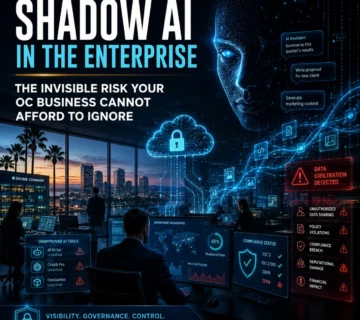
Shadow AI in the Enterprise: The Invisible Risk Your OC Business Cannot Afford to Ignore 

Shadow AI Risks Enterprise Management 2026 explains how employees using unauthorized AI tools can expose sensitive business data, client information, intellectual property, and regulated records. This blog covers why shadow AI is spreading quickly across enterprises, the risks it creates for OC businesses, and how a practical AI governance framework can help organizations discover, classify, monitor, and safely manage AI usage without slowing productivity. ... Read More
ISO 42001

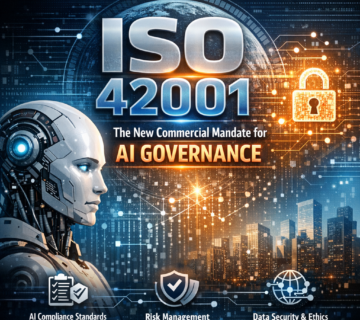
ISO 42001 Certification Surge Hits This Week: ibex and Palindrome Announcements Signal AI Governance

The ISO/IEC 42001 certification, which governs AI risk management, transparency, and ethics, has officially crossed the line from voluntary best practice to a mandatory business requirement. With companies like ibex earning certification and Palindrome Technologies becoming an accredited Certification Body, the urgency for businesses to adopt AI governance best practices has never been clearer. ISO 42001 certification is now essential for organizations to maintain a competitive edge, mitigate AI-related risks, and ensure compliance with emerging legislation. Enterprises are advised to inventory their AI systems, assess ISO 27001 leverage, and engage with certification bodies immediately to stay ahead of deadlines. ... Read More
AI Policy Templates: Keep Your Teams Secure While Using ChatGPT

AI Policy Templates: Keep Your Teams Secure While Using ChatGPT

The crucial need for organizations to establish comprehensive AI governance frameworks and AI usage policies immediately, driven by the finding that most employees use AI tools without company guidelines. The sources emphasize that unmanaged AI adoption exposes businesses to serious threats, including the potential for data leakage of confidential information, intellectual property disputes, and costly compliance violations of regulations such as GDPR and HIPAA. To address these vulnerabilities, effective policies must define data classification guidelines, mandate the use of approved AI tools, and establish verification requirements to prevent flawed decision-making based on AI outputs. Furthermore, the imperative for secure AI requires continuous oversight from a governance committee, regular risk assessment of new tools, and mandatory training programs to ensure that employees understand responsible usage protocols. The overall goal is to strike a practical balance between leveraging AI's innovative capabilities and maintaining strict security controls, often achieved through external expertise in compliance management. ... Read More
Model Context Protocol (MCP) Explained

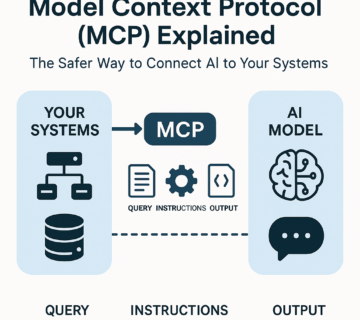
Model Context Protocol (MCP) Explained: The Safer Way to Connect AI to Your Systems

An extensive overview of the security risks associated with integrating Artificial Intelligence (AI) tools—such as ChatGPT and Claude—into business systems, highlighting that this creates a massive, often unsecured, attack surface. It explains the Model Context Protocol (MCP), an open standard designed to standardize these integrations, but stresses that adopting MCP without proper security controls creates “keys to the kingdom” scenarios vulnerable to attacks like prompt injection and token theft. The text then outlines a comprehensive, 12-step security implementation playbook that organizations, particularly Small and Mid-sized Businesses (SMBs), must follow to safely deploy MCP, including mandatory authentication, robust input validation, and continuous security testing. Finally, the document details the services offered by Technijian, an IT provider specializing in secure MCP architecture design and AI security management to help SMBs navigate these complex threats and maintain compliance. ... Read More