Compliance Management: Ensure Adherence to Industry Standards

Compliance management ensures that businesses meet industry regulations and legal requirements. By implementing effective compliance strategies, companies can avoid costly penalties, streamline risk management, and maintain trust with stakeholders.

Regular audits, documentation, and automated compliance tools help simplify the process, making it easier to stay up-to-date with evolving regulations and ensure business operations run smoothly within legal frameworks.

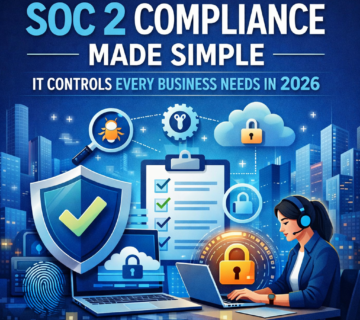
SOC 2 Compliance Made Simple: IT Controls Every Business Needs in 2026

SOC 2 Compliance Made Simple: IT Controls Every Business Needs in 2026

SOC 2 compliance has become a critical requirement for businesses handling customer data in 2026. This comprehensive guide breaks down the essential IT controls, security policies, and risk management frameworks needed to achieve and maintain SOC 2 certification. Whether you're a growing SaaS company, healthcare provider, or professional services firm in Orange County, understanding SOC 2 requirements protects your business from security risks while building customer trust. Learn how structured IT compliance services can streamline your audit preparation, implement necessary controls, and maintain ongoing compliance without disrupting daily operations. Discover practical steps to transform complex compliance requirements into manageable processes that strengthen your overall security posture. ... Read More
AI data security crisis infographic showing 99% of organizations with exposed sensitive data and cybersecurity threats in 2025

AI Data Breach Statistics 2025

"AI Data Security Crisis 2025," explains that while AI tools offer significant productivity gains, they also pose a substantial risk, creating the largest data security crisis in corporate history. Ninety-nine percent of organizations have sensitive data exposed to AI tools, making data breaches a certainty rather than a possibility. This vulnerability stems from AI's insatiable appetite for data and its ability to access sensitive information beyond its intended scope, leading to both human-to-machine and machine-to-machine risks. The article stresses the urgency of implementing a three-pillar strategy for AI data security: blast radius reduction, continuous monitoring and governance, and leveraging AI-powered security solutions. It also outlines a comprehensive implementation roadmap, emphasizing the need for professional technical support to assess vulnerabilities, implement tailored solutions, and provide ongoing monitoring and compliance management. The text concludes by asserting that investing in AI data security is crucial, as the cost of inaction far outweighs the investment in protective measures. ... Read More