Social Engineering: The Human Exploitation Behind Modern Cyberattacks

Social engineering is a deceptive technique used by cybercriminals to manipulate individuals into divulging confidential information or performing actions that compromise security. Unlike technical hacks, social engineering preys on human psychology—trust, fear, urgency, and curiosity—to gain access to systems, credentials, or physical spaces. Common tactics include phishing emails, impersonation, baiting, and pretexting. These attacks can bypass even the strongest technical defenses if users are not properly trained. Organizations must prioritize security awareness programs, implement verification protocols, and promote a culture of skepticism. Recognizing and resisting social engineering is essential for defending against one of the most effective tools in a hacker’s arsenal.

New ClickFix Malware Campaign Exploits

New ClickFix Malware Campaign Exploits Windows App-V Scripts to Deploy Dangerous Infostealer 

Cybercriminals are targeting organizations with a new malware campaign that exploits Windows App-V scripts to deploy the Amatera infostealer. The attack combines social engineering tactics with legitimate Windows components, tricking users into running malicious commands through fake CAPTCHA pages. By manipulating Microsoft’s SyncAppvPublishingServer.vbs script and PowerShell, the attackers bypass traditional security defenses, making detection more difficult. Once inside, Amatera steals sensitive data such as passwords and cookies, using Google Calendar and steganography to hide its activities. To combat this threat, businesses must restrict access to system tools, monitor PowerShell activities, and provide security awareness training for employees to recognize fake verification pages. Traditional antivirus solutions are not enough—organizations need advanced endpoint detection and response to protect against these evolving tactics. ... Read More

Okta SSO Accounts Under Siege

Okta SSO Accounts Under Siege: New Vishing Attacks Expose Critical Security Gaps

Okta SSO accounts are under siege from sophisticated vishing attacks that combine voice calls with real-time phishing technology to bypass multi-factor authentication. Cybercriminals impersonate IT staff, guide victims to fraudulent login pages, and intercept credentials during live phone conversations. A single compromised Okta SSO account grants attackers access to dozens of integrated business platforms like Salesforce, Microsoft 365, and Google Workspace. Organizations in financial services and fintech are being actively targeted, with threat actors quickly exfiltrating data and demanding ransoms. Traditional MFA is no longer sufficient—businesses must adopt phishing-resistant authentication methods like FIDO2 security keys, implement robust employee training, and deploy advanced monitoring to defend against these evolving threats. ... Read More
ClickFix

New ClickFix Attack Targeting Windows and macOS Users to Deploy Infostealer Malware

ClickFix, a sophisticated social engineering attack active in 2025 that deploys infostealer malware against both Windows and macOS users. This technique is highly effective because it bypasses traditional security tools by manipulating users into executing malicious fileless commands disguised as legitimate troubleshooting steps, leveraging trusted platforms like Google services to maintain credibility. The text explains the distinct attack vectors for Windows (distributing ACR stealer via fake software archives) and macOS (using a fake Cloudflare prompt to execute the Odyssey stealer via the Terminal), emphasizing the challenges security solutions face with this memory-resident malware. Finally, the document concludes with advice on recognizing and avoiding ClickFix, along with a pitch from Technijian, an Orange County-based Managed IT Services provider, detailing their services for helping organizations defend against such advanced cross-platform social engineering attacks. ... Read More
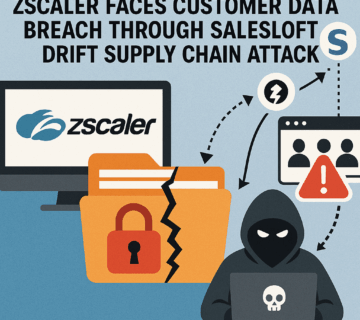
Zscaler Faces Customer Data Breach

Zscaler Faces Customer Data Breach Through Salesloft Drift Supply Chain Attack

A significant data breach experienced by Zscaler, a cybersecurity company, due to a supply chain attack on Salesloft Drift, an AI chat integration platform. This breach, attributed to the sophisticated threat actor group UNC6395, exposed sensitive customer data, including personal identifiers, licensing information, and support case content from Zscaler's Salesforce environment. The incident highlights the cascading effects of third-party compromises, impacting numerous other major corporations and leading to the temporary disabling of Drift integrations by Google and Salesforce. The text also emphasizes the increased risk of social engineering attacks due to the exposed information and underscores the critical importance of robust supply chain security measures for organizations. Finally, Technijian is introduced as a managed IT services provider offering solutions to strengthen cybersecurity defenses against such sophisticated threats. ... Read More