Social Engineering Attacks: Protecting Human Weakness

Social engineering attacks exploit human psychology rather than technical vulnerabilities, making them one of the most dangerous forms of cybercrime. Attackers use tactics like phishing, pretexting, baiting, and tailgating to trick individuals into revealing sensitive data or granting unauthorized access. These schemes often rely on urgency, trust, or fear to manipulate victims. Businesses and individuals must recognize warning signs, provide security awareness training, and implement strong verification processes to stay protected. By combining education, multi-factor authentication, and monitoring tools, organizations can reduce risks. Defending against social engineering requires vigilance, awareness, and a culture of cybersecurity at every level.

CrashFix malware attack

CrashFix Attacks: New Browser-Crashing Malware Threatens Users Through Fake Ad Blockers

Browser-based malware has evolved beyond silent infections into aggressive attacks that deliberately crash your system to manipulate you into installing dangerous payloads. In 2026, cybercriminals are deploying CrashFix malware through fake ad blocker extensions like NexShield, targeting both individual users and corporate networks with sophisticated social engineering tactics. This comprehensive security guide reveals how these attacks intentionally destabilize your browser, exploit trust through deceptive warnings, and deploy remote access trojans like ModeloRAT to compromise entire network infrastructures. Learn the critical warning signs, proven prevention strategies, and immediate response protocols that protect your systems from this emerging threat that traditional antivirus solutions often miss. ... Read More

ClickFix Attack Fake BSOD Malware

ClickFix Attack Uses Fake BSOD Screens to Deploy Malware

A sophisticated social engineering campaign known as ClickFix, which targets employees in the hospitality industry by mimicking legitimate Booking.com communications. The attack leverages fake Blue Screen of Death (BSOD) errors to manipulate panicked users into executing malicious PowerShell scripts. Once the victim follows the deceptive instructions, a remote access trojan called DCRAT is installed, granting hackers total control over the infected system and its sensitive data. Because these threats utilize legitimate system tools to evade detection, the source emphasizes the necessity of specialized cybersecurity training and advanced monitoring. Ultimately, the report highlights how modern cybercriminals exploit psychological pressure and industry-specific workflows to bypass traditional security measures. ... Read More
Workday Data Breach

Workday Data Breach: What You Need to Know About the Recent HR Giant Security Incident

A recent data breach impacting Workday, a major HR technology provider, where personal contact information was compromised from a third-party database. This incident is highlighted as part of a broader trend of cyberattacks on similar platforms, often attributed to the ShinyHunters hacking group utilizing social engineering. The sources examine the implications for HR technology security, emphasizing the vulnerabilities of cloud-based systems and the importance of robust preventative measures, including vendor security assessments and employee training. Additionally, one source promotes “Technician” (also referred to as “Technijian”) as a cybersecurity services provider that offers solutions to mitigate such risks, including third-party vendor risk assessments and social engineering training, underscoring their expertise in managed IT and cybersecurity. ... Read More
Native phishing attack techniques

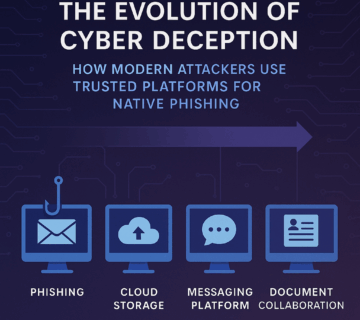
The Evolution of Cyber Deception: How Modern Attackers Use Trusted Platforms for Native Phishing

Native phishing, a sophisticated cyberattack method that exploits legitimate features within trusted enterprise applications like Microsoft OneNote and OneDrive to steal credentials. Unlike traditional phishing, these attacks generate seemingly authentic notifications, bypassing standard security measures and leveraging AI-powered website builders to create convincing fake login portals. The text emphasizes the importance of user awareness training that goes beyond traditional phishing indicators, focuses on behavioral monitoring within collaboration platforms, and advocates for multi-layered defense strategies incorporating robust identity management and integrated security technologies. Finally, the text introduces Technijian, a managed IT services provider offering comprehensive cybersecurity solutions, including advanced threat detection, incident response, and tailored security awareness training to combat evolving threats like native phishing campaigns. ... Read More
Scattered Spider's Latest VMware ESXi Attack

Scattered Spider’s Latest VMware ESXi Attack Campaign: A New Threat to Virtualized Environments

Specifically focusing on the Scattered Spider cybercriminal group's sophisticated attacks against VMware ESXi virtualized environments. They detail the multi-stage attack methodology, which leverages social engineering for initial access, followed by reconnaissance, privilege escalation, and ultimately, hypervisor-level compromise to deploy ransomware and neutralize backup systems. The sources highlight the significant impact on industries like retail, transportation, and insurance due to the speed and efficiency of these attacks. Finally, the documents emphasize crucial defensive strategies, including VMware infrastructure hardening, identity and access management improvements, enhanced monitoring, and robust backup and recovery preparation, while Technijian positions itself as a managed IT service provider offering specialized expertise to combat such advanced threats. ... Read More