Enterprise AI ROI Framework

How to Calculate ROI on AI Projects: A Framework for Enterprise Leaders in 2026 

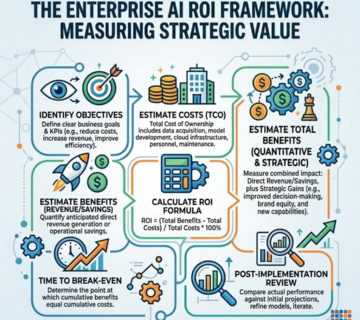
In 2026, enterprise leaders are faced with the challenge of demonstrating the financial value of AI investments. Despite widespread AI deployment, a large percentage of projects fail to show measurable returns. This blog provides a practical framework for calculating AI ROI, helping enterprise leaders in Los Angeles and Orange County measure cost savings, productivity gains, and revenue impact. It covers five key dimensions of value, including direct cost reduction, productivity improvements, revenue impact, risk reduction, and strategic positioning. Learn how to implement a robust measurement infrastructure and make AI investments more accountable to the board. ... Read More
Copilot vs Gemini vs ChatGPT

Copilot vs Gemini vs ChatGPT: Which AI Platform Belongs in Your Enterprise? 

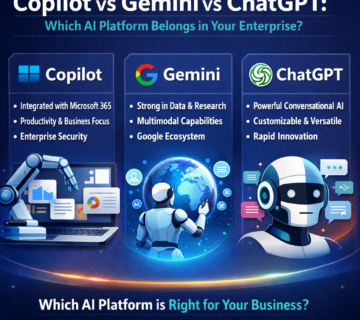
AI platforms—Microsoft Copilot, Google Gemini, and ChatGPT Enterprise—helping enterprises navigate the complex decision of which platform to choose for their AI strategy. It delves into the strengths, limitations, and integration capabilities of each platform, emphasizing key factors such as data governance, ecosystem compatibility, compliance readiness, and cost of ownership. The blog also discusses the growing trend of multi-platform AI adoption in large enterprises and offers guidance on selecting the right platform based on business needs and use cases. With insights on how to balance AI productivity, research, and creativity, it helps CIOs and digital transformation leaders make an informed decision for their enterprise. ... Read More
Enterprise AI Guide

Enterprise AI Guide 2026: How Smart Businesses Are Scaling with Artificial Intelligence

Enterprise AI is no longer just for Fortune 500 companies—by 2026 it’s a competitive advantage for mid-size and large organizations across every industry. This guide explains what enterprise AI really is (and how it differs from consumer AI), why the Enterprise AI Guide 2026 framework helps businesses adopt AI with structure and confidence, and the five pillars required for success: data readiness, use case prioritization, integration, governance/security, and change management. It also highlights high-impact 2026 use cases—customer support automation, predictive analytics, document processing, AI-driven cybersecurity, and productivity tools—plus what Orange County companies must consider around compliance and talent. Finally, it outlines a practical roadmap to get started and how Technijian helps businesses deploy secure, scalable, ROI-focused AI solutions. ... Read More