The 2025 Managed IT Revolution: Why Orange County Companies Are Outsourcing for Growth
🎙️ Dive Deeper with Our Podcast!
Orange County Managed IT for Business Growth
Summary: Orange County businesses are experiencing unprecedented growth by partnering with managed IT service providers in 2025. Companies throughout Irvine, Newport Beach, and Costa Mesa are discovering that outsourced IT support delivers 40% fewer security incidents, 30% cost reduction, and 50% faster technology decisions. This comprehensive guide explores why the traditional internal IT model is failing, how managed IT services have evolved into strategic partnerships, and what Orange County organizations should consider when selecting a provider. Learn how local businesses are leveraging managed IT to accelerate digital transformation, enhance security posture, and gain competitive advantages in their markets.
Why Is the Traditional Internal IT Model Failing Orange County Businesses?
The technology landscape has evolved far beyond what internal IT teams can effectively manage in 2025. Orange County companies are discovering that the single-IT-person or small-team approach creates critical vulnerabilities and missed opportunities that directly impact business growth.
Modern technology infrastructure demands specialized expertise across dozens of domains. Consider what a typical mid-sized business in Irvine or Costa Mesa needs today: advanced cybersecurity with threat detection and response, cloud architecture optimization across multiple platforms, compliance management for California-specific regulations like CCPA, artificial intelligence integration and automation, remote workforce security and management, disaster recovery planning and testing, and vendor management across complex technology ecosystems. Expecting one or two internal IT professionals to expertly handle all these areas is unrealistic and potentially dangerous.
The knowledge gap problem has become insurmountable. Technology specialization means that expertise in network security doesn’t translate to cloud optimization competence. Your systems administrator might excel at server management but struggle with advanced endpoint protection. Even well-staffed internal teams operate with significant blind spots that cybercriminals actively exploit.
Financial burden compounds these challenges. A single experienced IT professional in Orange County costs $95,000 to $150,000 in base salary, with benefits adding another 30% to 40%. Add ongoing training, certifications, redundancy for coverage, specialized tools, and recruitment costs, and companies easily spend $250,000 to $400,000 annually for just two IT staff members—without gaining the breadth of expertise or 24/7 coverage that businesses actually need.
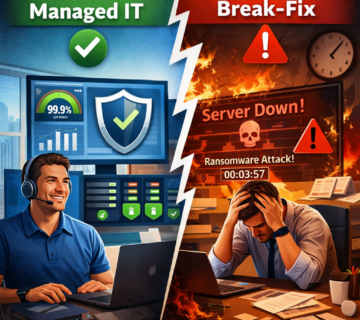
The reactive nature of traditional IT creates constant business disruption. Internal teams typically spend 70% to 80% of their time on break-fix activities, leaving minimal capacity for strategic initiatives that drive growth. This reactive approach means problems are addressed only after they impact operations, resulting in productivity losses, revenue disruption, and frustrated employees.
What Makes Managed IT Services Orange County the Superior Solution?
Managed IT services have evolved dramatically from basic help desk support into comprehensive technology partnerships that fundamentally transform how businesses operate. Understanding this evolution explains why Orange County companies are rapidly making the switch to managed IT services.
Proactive monitoring and prevention forms the foundation of modern managed IT services. Rather than waiting for systems to fail, providers continuously monitor infrastructure 24/7, identify potential issues before they impact operations, automatically patch vulnerabilities across all systems, optimize performance based on real-time usage patterns, and predict hardware failures before they occur. This shift from reactive break-fix to proactive prevention eliminates the costly downtime that plagues businesses relying on traditional IT support.
Comprehensive service scope addresses every technology need through specialized experts. Today’s managed IT services encompass around-the-clock network monitoring and management, enterprise-grade cybersecurity including advanced threat detection, cloud infrastructure design and continuous optimization, backup and disaster recovery with regular testing, compliance management for industry-specific regulations, strategic technology planning aligned with business objectives, vendor relationship management and consolidation, and emerging technology integration including AI and automation tools. This breadth of expertise would require hiring 10 to 15 specialists internally—an impossible feat for most organizations.
Predictable cost structure transforms IT from unpredictable capital expense into strategic operational investment. Managed IT services Irvine providers operate on fixed monthly fees that align technology costs directly with business value. This operational expense model provides complete budget predictability, eliminates surprise technology costs that disrupt financial planning, allows flexible scaling up or down based on business needs, and frees capital for core business investments rather than depreciating IT infrastructure.
Access to enterprise-grade tools and technology levels the playing field for mid-sized businesses. Managed service providers invest millions in security platforms, monitoring systems, and automation tools that would be cost-prohibitive for individual companies to purchase. Orange County businesses gain access to the same sophisticated technology that Fortune 500 companies use, without the capital investment or specialized staff required to operate these systems effectively.
How Do Managed IT Services Accelerate Business Growth?
The strategic impact of managed IT services extends far beyond cost savings or improved system uptime. Orange County companies are discovering that outsourced IT support creates tangible competitive advantages that directly influence revenue growth and market position.
Digital transformation acceleration represents the most significant benefit cited by businesses working with managed service providers. Companies report that technology initiatives previously requiring 12 to 18 months now complete in 3 to 6 months with superior results. This acceleration occurs because experienced providers bring proven implementation methodologies, extensive experience across diverse client environments, change management expertise that ensures user adoption, and continuous optimization based on actual usage patterns rather than theoretical plans.
A professional services firm in Irvine recently implemented a complete cloud migration that internal estimates projected would take 14 months. Working with their managed IT provider, they completed the transition in 4 months with zero disruption to client services. The accelerated timeline allowed them to capture new business opportunities that their slower-moving competitors couldn’t pursue.
Enhanced security posture delivers measurable business value beyond simply avoiding breaches. Organizations with comprehensive IT support benefit from enterprise-grade security tools that would cost hundreds of thousands of dollars to purchase independently, 24/7 threat monitoring by security operations center professionals, rapid response to emerging threats based on intelligence gathered across hundreds of client environments, and regular security assessments and penetration testing. This robust security foundation translates into better cyber insurance rates with lower premiums, stronger customer trust and willingness to share sensitive data, enhanced reputation with partners and vendors, and the ability to pursue business opportunities requiring advanced security certifications.
Operational efficiency improvements compound over time as managed IT services optimize every technology aspect. Automated routine tasks free internal staff for strategic initiatives that directly support revenue generation. Standardized processes reduce errors and inconsistency that create costly rework. Proactive maintenance minimizes disruptive outages that interrupt customer service and sales activities. Optimized infrastructure delivers better performance while reducing costs. Orange County companies typically report 25% to 40% improvement in overall IT operational efficiency within the first year of partnering with a managed service provider.
Strategic business enablement may be the most transformative benefit. When technology becomes a reliable foundation rather than a constant concern, leadership teams can focus entirely on growth initiatives. Managed IT services provide regular strategic planning sessions that align technology investments with business goals, vendor relationship management that optimizes costs and contract terms, technology roadmaps that anticipate future needs and budget accordingly, and objective guidance free from vendor bias or product-pushing. This strategic partnership often becomes one of the most valued business relationships for executive teams.
What Security Benefits Do Managed IT Services Provide?
The cybersecurity threat landscape in 2025 has intensified to the point where comprehensive security requires specialized expertise that most internal IT teams cannot maintain. Orange County companies face particular challenges due to California’s strict data privacy laws and the region’s concentration of businesses handling sensitive customer information.
Multi-layered security architecture provides defense-in-depth protection that addresses threats at every level. Professional managed IT service providers implement advanced endpoint protection with AI-powered threat detection, next-generation firewalls with intrusion prevention systems, email security filtering that blocks 99.9% of phishing attempts, network segmentation that contains breaches if they occur, privileged access management that limits exposure from compromised credentials, security information and event management (SIEM) that correlates threats across all systems, and regular vulnerability scanning and penetration testing. This comprehensive approach dramatically reduces risk compared to the patchwork security typical of internally managed environments.
Continuous threat monitoring and response ensures that security isn’t a set-it-and-forget-it checkbox exercise. Cybersecurity services from managed providers include 24/7 security operations center monitoring by certified professionals, automated threat detection that identifies anomalies in real-time, immediate incident response when threats are detected, threat intelligence feeds providing early warning of emerging attacks, and post-incident forensics and remediation. When a healthcare provider in Mission Viejo experienced a ransomware attempt at 2 AM on a Sunday, their managed IT provider’s security team detected and contained the attack within 8 minutes, preventing any data encryption or business disruption.
Compliance management addresses the complex regulatory requirements facing Orange County businesses. Managed IT providers with industry specialization understand the specific requirements for HIPAA in healthcare, PCI DSS for payment card processing, CCPA and upcoming California privacy regulations, SOC 2 for service organizations, and industry-specific frameworks like FINRA for financial services. They provide documentation and evidence required for audits, regular compliance assessments identifying gaps, policy development and implementation support, and employee security awareness training. This comprehensive compliance support reduces audit costs and passes inspections with minimal findings.
Security awareness training addresses the human element that remains the weakest link in cybersecurity. Managed service providers deliver regular training for all employees covering current phishing tactics and social engineering, secure password practices and credential management, safe browsing and download habits, mobile device security, and incident reporting procedures. Simulated phishing campaigns test employee awareness and identify individuals needing additional training. Companies that implement comprehensive security awareness programs experience 70% fewer successful social engineering attacks.
How Quickly Can Orange County Businesses Implement Managed IT Services?
The implementation timeline varies based on environmental complexity, but most Orange County companies can begin receiving managed IT services within 30 to 45 days of signing an agreement. Understanding the phased approach helps businesses set realistic expectations and prepare their organizations for the transition.
Discovery and assessment phase typically requires one to two weeks. The provider conducts comprehensive documentation of current infrastructure including all servers, networking equipment, security appliances, and cloud services, interviews key stakeholders to understand business processes and technology pain points, reviews security posture through vulnerability scanning and configuration analysis, identifies immediate risks requiring urgent attention, and develops a prioritized roadmap for improvements. This thorough discovery ensures the provider fully understands your environment before assuming management responsibility.
Planning and preparation phase establishes clear expectations and procedures. Working collaboratively, you’ll define service level agreements for response times and system availability, establish communication protocols and escalation procedures, identify critical applications and infrastructure requiring priority attention, develop detailed transition plans with specific milestones and responsibilities, and prepare your team through communication about the changes and benefits they’ll experience. This planning phase typically takes one to two weeks and creates the foundation for smooth implementation.
Initial onboarding phase brings the most immediate benefits. Within the first two weeks, managed IT service providers typically deploy monitoring agents across all systems and infrastructure, activate help desk support for end users, implement critical security controls addressing immediate vulnerabilities, establish backup systems for data protection, and begin regular communication cadence with status updates. Even during this initial phase, most companies notice improved support responsiveness and faster problem resolution.
Full transition phase systematically transfers all IT management responsibilities. Over 30 to 60 days, the provider assumes complete management of security systems and policy enforcement, network infrastructure and optimization, server and application management, cloud services and cost optimization, vendor relationships and contract management, and strategic planning and technology guidance. Throughout this phase, regular check-ins ensure any concerns are promptly addressed.
Optimization and enhancement phase begins once systems stabilize under new management. Focus shifts toward strategic improvements including infrastructure modernization and upgrades, advanced security implementation, process automation for efficiency gains, emerging technology evaluation and integration, and continuous optimization based on usage patterns and business needs. This ongoing phase represents the true value of the managed IT partnership—continuous improvement rather than static maintenance.
What Should Orange County Companies Look for in a Managed IT Service Provider?
Selecting the right managed IT services partner significantly impacts the results you’ll achieve. Not all providers offer the same capabilities, expertise, or service quality. Orange County businesses should evaluate potential partners across several critical dimensions.
Local presence and Orange County expertise matters more than many businesses initially realize. While remote support technology is sophisticated, having a provider with deep Orange County roots provides significant advantages. They understand the local business environment and competitive dynamics specific to Southern California, maintain established relationships with regional vendors and service providers, can provide rapid on-site support when situations require physical presence, stay current with California-specific regulations and compliance requirements, and understand the unique challenges facing different Orange County industries from healthcare to manufacturing to professional services.
Breadth and depth of technical expertise requires thorough vetting. Request detailed information about the provider’s team composition including specific certifications like Microsoft Certified Solutions Expert (MCSE), Cisco Certified Network Professional (CCNP), Certified Information Systems Security Professional (CISSP), and cloud platform certifications. Ask about their approach to emerging technologies including artificial intelligence, advanced threat detection, and cloud optimization. Inquire about technology partnerships with vendors like Microsoft, Cisco, VMware, and leading security platforms. A mature managed service provider will have multiple specialists in each technical domain rather than generalists attempting to cover everything.
Proactive service philosophy and tools distinguishes exceptional providers from mediocre ones. During evaluation, ask specifically how they prevent problems rather than just fixing them. Request concrete examples of situations where they identified and addressed issues before clients were aware of them. Inquire about their monitoring platform capabilities, automated alerting systems, routine maintenance procedures, and performance optimization processes. The best providers should articulate a clear proactive management philosophy backed by specific tools, documented procedures, and measurable results.
Security capabilities and certifications deserve special attention given today’s threat landscape. Verify that potential providers maintain relevant security certifications including SOC 2 Type II compliance demonstrating independently audited security practices, specific cybersecurity frameworks like NIST or CIS Controls implementation, industry-specific certifications if applicable to your sector, and substantial cyber liability insurance coverage. Ask detailed questions about their security operations center capabilities, incident response procedures and average response times, threat intelligence sources and analysis capabilities, and track record with security incidents affecting their clients.
Service level agreements and guarantees establish clear accountability. Review proposed SLAs carefully, paying attention to defined response times for different priority levels (critical issues should receive 15-minute response), system uptime guarantees with credits for non-performance, scope of services covered under base agreement versus add-ons, escalation procedures when issues aren’t resolved promptly, and regular reporting and business review meetings. Strong SLAs demonstrate confidence in service delivery and provide recourse if performance doesn’t meet expectations.
Cultural fit and communication approach influences long-term partnership success. During evaluation, assess how potential providers communicate. Do they explain technical concepts in accessible business terms without condescension? Do they ask thoughtful questions demonstrating genuine interest in understanding your business? Do they listen carefully to your concerns rather than pushing predetermined solutions? Do they demonstrate flexibility in adapting their approach to your preferences? The best managed IT partnerships feel like a natural extension of your team rather than a distant vendor relationship.
What Results Can Orange County Businesses Expect from Managed IT Services?
Understanding realistic outcomes helps businesses set appropriate expectations and measure return on investment. While every organization’s experience varies based on their starting point and specific needs, consistent patterns emerge across Orange County companies that partner with quality managed service providers.
Immediate improvements typically appear within the first 30 to 60 days. Companies report dramatically faster response times to support requests, often receiving help within 15 minutes instead of waiting hours or days. System monitoring identifies and resolves issues before users notice problems, reducing the constant stream of technology complaints. Critical security vulnerabilities get addressed quickly, reducing immediate risk exposure. Help desk ticket volumes often decrease by 30% to 40% as proactive monitoring prevents issues that previously required user reporting.
Short-term benefits accumulate over the first 3 to 6 months. Infrastructure optimization improves performance while often reducing costs. Backup and disaster recovery systems get properly implemented and regularly tested, providing confidence in business continuity. Security posture strengthens measurably through vulnerability remediation, updated policies, and improved controls. Strategic planning sessions establish clear technology roadmaps aligned with business goals. Employee satisfaction with technology support typically increases significantly as frustrating recurring problems get permanently resolved.
Medium-term transformation becomes evident within 6 to 12 months. Technology-related business disruptions decrease dramatically, often by 60% to 80%, as proactive management prevents the outages and slowdowns that plagued previous operations. Strategic technology initiatives that were previously delayed or deemed too complex get successfully implemented. Compliance requirements that seemed overwhelming become manageable through systematic processes and expert guidance. Overall IT costs become predictable and often decrease by 20% to 35% despite significantly improved service quality and capabilities.
Long-term strategic advantages compound over years of partnership. Technology transforms from a business constraint to an enabler of new opportunities. Companies report successfully pursuing business opportunities previously out of reach due to technology limitations or security concerns. Competitive advantages emerge from faster adoption of new capabilities while competitors struggle with outdated approaches. Leadership teams gain confidence in their technology foundation, enabling bolder business strategies. The managed IT provider becomes a trusted advisor influencing broader business decisions beyond just technology.
Measurable business outcomes demonstrate tangible return on investment. Orange County companies working with managed service providers consistently report productivity improvements of 25% to 40% as technology reliability increases, revenue growth acceleration as technology enables rather than limits business initiatives, customer satisfaction increases due to better service delivery and reliability, employee retention improvements as technology frustration decreases, and faster time-to-market for new products and services. These measurable outcomes justify the managed IT investment many times over.
How Do Managed IT Services Handle Compliance and Regulatory Requirements?
California businesses face increasingly complex compliance requirements across multiple frameworks. Orange County companies in regulated industries find that managed IT services provide essential expertise and systematic approaches that internal teams struggle to maintain.
Healthcare organizations must navigate HIPAA requirements that have grown more stringent. Managed IT providers specializing in healthcare understand the technical safeguards required including encryption of electronic protected health information (ePHI) at rest and in transit, access controls ensuring minimum necessary access to patient data, audit logging of all access to medical records, business associate agreements with all vendors, regular risk assessments identifying and mitigating vulnerabilities, and incident response procedures addressing potential breaches. They maintain current knowledge as regulations evolve and enforcement priorities shift. A medical practice in Irvine reduced their compliance-related workload by 70% after partnering with a healthcare-specialized managed IT provider while simultaneously improving their security posture.
Financial services firms face SEC, FINRA, and state regulatory requirements. Managed service providers with financial services expertise implement systems addressing record retention requirements with immutable backup storage, communications surveillance and archiving for compliance monitoring, disaster recovery and business continuity meeting regulatory expectations, cybersecurity programs aligned with NIST frameworks, and regular reporting demonstrating compliance with board oversight obligations. They stay current with regulatory guidance including cybersecurity examination priorities and evolving standards for cloud services and emerging technologies.
All California businesses must address CCPA requirements and prepare for additional privacy regulations. Managed IT services help organizations implement data inventory and mapping processes identifying all personal information, consumer rights fulfillment procedures for access and deletion requests, vendor management ensuring third-party compliance, security measures protecting personal information from unauthorized access, breach notification procedures meeting California’s strict timelines, and privacy by design principles in new system implementations. As California privacy law continues evolving with new requirements, having expert guidance prevents costly compliance gaps.
Industry-specific frameworks require specialized knowledge that managed IT providers maintain. Whether implementing PCI DSS for payment card processing, SOC 2 for service organizations, FedRAMP for government contractors, or sector-specific requirements, experienced providers bring proven implementation methodologies, documentation templates and evidence collection processes, audit preparation and support, and continuous monitoring ensuring ongoing compliance. This specialized expertise would require significant investment if developed internally, making managed services highly cost-effective for compliance-heavy industries.
What Cybersecurity Threats Do Managed IT Services Protect Against?
The threat landscape in 2025 has become increasingly sophisticated, with attackers leveraging artificial intelligence, exploiting zero-day vulnerabilities, and developing ransomware variants that evade traditional security tools. Understanding these threats explains why comprehensive managed IT security services have become essential for Orange County businesses.
Ransomware attacks remain the most prevalent and damaging threat facing businesses. Modern ransomware variants use advanced encryption algorithms that make recovery without decryption keys virtually impossible, employ double extortion tactics by exfiltrating data before encryption, target backup systems specifically to prevent recovery, and spread laterally through networks to maximize damage. Managed IT services protect against ransomware through multiple defense layers including advanced endpoint protection detecting encryption behavior, network segmentation limiting spread if systems are compromised, immutable backup systems that ransomware cannot encrypt or delete, email filtering blocking the phishing messages that deliver ransomware, and employee training reducing successful social engineering attacks.
Business email compromise represents a growing threat that costs businesses billions annually. Attackers impersonate executives or vendors through carefully crafted emails, manipulate employees into initiating wire transfers or sharing sensitive information, exploit trust relationships between businesses and their partners, and use AI tools to make fraudulent communications more convincing. Managed security services combat business email compromise through advanced email authentication protocols like DMARC, behavioral analysis detecting unusual email patterns, multi-factor authentication preventing account takeover, approval workflows for financial transactions, and regular security awareness training covering current tactics.
Supply chain attacks exploit trusted relationships between businesses and their vendors. Attackers compromise software vendors and distribute malware through legitimate updates, exploit managed service provider access to attack multiple clients simultaneously, target cloud service dependencies affecting thousands of organizations, and infiltrate hardware supply chains embedding vulnerabilities in equipment. Managed IT providers protect against supply chain attacks through rigorous vendor security assessments, network segmentation isolating vendor access, monitoring for unusual activity from third-party connections, rapid patch management addressing discovered vulnerabilities, and threat intelligence tracking supply chain compromises.
Insider threats from employees or contractors cause significant damage through both malicious and accidental actions. Managed IT services address insider threats through privileged access management limiting sensitive system access, user behavior analytics detecting anomalous activity, data loss prevention controlling sensitive information movement, regular access reviews removing unnecessary permissions, and security awareness training reducing accidental exposures. When a manufacturing company in Santa Ana experienced suspicious file access by a recently terminated employee, their managed IT provider’s monitoring system detected the activity immediately and blocked data exfiltration before damage occurred.
Advanced persistent threats from sophisticated attackers require constant vigilance. These well-resourced attackers use custom malware designed to evade detection, maintain long-term presence in networks gathering intelligence, move laterally identifying and compromising high-value targets, and employ zero-day exploits before patches are available. Managed security operations centers combat advanced threats through continuous network monitoring for subtle indicators of compromise, threat hunting actively searching for hidden attackers, security information correlation identifying patterns across systems, rapid incident response when threats are detected, and threat intelligence tracking known attacker techniques and infrastructure.
Frequently Asked Questions About Managed IT Services Orange County
How quickly can managed IT services be implemented for our Orange County business?
Most Orange County businesses can begin receiving managed IT services within 30 to 45 days of signing an agreement. The implementation follows a structured approach starting with a comprehensive discovery phase lasting one to two weeks where the provider documents your current infrastructure, security posture, and critical systems. The planning phase establishes service level agreements, communication protocols, and transition procedures. Phased onboarding then begins with monitoring and help desk support activating within the first two weeks, while complete transition of all management responsibilities typically takes 60 to 90 days for larger environments. Critical services like security monitoring and user support start immediately, so you’ll experience benefits even during the transition period. The timeline can be accelerated for businesses with simpler environments or urgent needs.
What happens to our existing IT staff when we engage managed IT services?
Managed IT services should be viewed as augmenting capabilities rather than automatically replacing internal staff. Many successful Orange County companies retain internal IT personnel but redirect their focus from reactive firefighting to strategic initiatives that directly support business growth. Your existing IT staff can provide valuable institutional knowledge about systems and business processes, focus on user training and technology adoption initiatives, manage special projects and business-specific applications, serve as the internal liaison with your managed service provider, and drive digital transformation initiatives. This shift often dramatically improves job satisfaction as IT professionals can focus on interesting strategic work rather than repetitive maintenance tasks. Some businesses do choose to reduce or eliminate internal IT positions, redirecting those resources toward core business functions, but this should be a thoughtful decision based on your specific needs rather than an automatic outcome.
How do managed IT service providers handle after-hours emergencies?
Professional managed IT service providers maintain 24/7 network operations centers staffed with experienced technicians who monitor your systems continuously. When issues arise outside normal business hours, automated monitoring alerts trigger immediate response protocols. Critical problems receive priority escalation to senior technical staff regardless of the time—whether it’s 2 AM on Sunday or during a holiday. Most providers guarantee response times through service level agreements, typically offering 15-minute response for critical issues affecting business operations and one-hour response for high-priority problems. For Orange County businesses, having a local provider means that on-site emergency support can arrive quickly when remote resolution isn’t possible, though most issues can be addressed remotely through secure access tools. The 24/7 monitoring often identifies and resolves potential problems before they impact operations, preventing many after-hours emergencies entirely.
Can we customize managed IT services to fit our specific industry requirements?
Absolutely, and customization is one of the key advantages of working with an experienced managed service provider. Reputable providers have extensive experience across multiple industries and understand sector-specific requirements. For healthcare organizations, this includes HIPAA compliance, business associate agreements, and ePHI protection. For financial services, this covers SEC and FINRA regulations, communications archiving, and audit trails. For manufacturing, this includes operational technology security and industrial control systems. For legal services, this addresses attorney-client privilege protections and matter-based security. For education, this covers FERPA compliance and network access control. During the initial assessment and planning phase, the provider documents your industry-specific requirements and designs service delivery to address these needs. Customization extends to compliance reporting formats, specialized security controls, industry-specific application support, and workflow integrations unique to your business operations.
What happens if we’re not satisfied with the managed IT service provider?
Quality managed service providers structure their agreements to protect clients while establishing clear expectations for both parties. Most contracts include well-defined service level agreements with measurable performance guarantees, escalation procedures for addressing concerns or disputes promptly, regular business reviews (typically monthly or quarterly) to ensure satisfaction and alignment, and exit clauses allowing termination with reasonable notice, typically 30 to 90 days. Before reaching the point of considering termination, proactive communication about any concerns usually resolves issues. Professional providers view client satisfaction as paramount and will work diligently to address problems through personnel changes, process adjustments, or service modifications. However, if a relationship truly isn’t working, you should be able to transition to another provider or bring services back in-house without being locked into an untenable long-term commitment. Reputable providers stand behind their services and don’t rely on restrictive contracts to retain unhappy clients.
How do managed IT services handle software and hardware purchases?
Most managed IT service providers act as trusted advisors for technology purchases rather than pushing specific vendors or products for commission purposes. They typically provide vendor-neutral recommendations based on your specific business needs and budget, competitive pricing through established vendor relationships and volume purchasing power, procurement management to simplify the buying process and handle vendor interactions, lifecycle management to help plan for replacements before hardware fails, and ongoing support ensuring purchased technology integrates properly with existing systems. Some providers offer hardware as a service where you lease equipment through them with automatic replacements on a regular cycle, eliminating capital expense and obsolescence concerns. The key is that purchasing decisions should always be guided by your business needs rather than the provider’s financial interests. Transparent providers clearly disclose any vendor relationships or referral arrangements and focus recommendations on what genuinely serves your requirements best.
What security measures protect our data when working with managed IT services?
Security is paramount in the managed IT relationship, and professional providers implement multiple protective layers. All remote access occurs through encrypted VPN connections with multi-factor authentication required for any system access, ensuring that even if credentials are compromised, unauthorized access cannot occur. Role-based access controls ensure technicians can only access systems necessary for their specific responsibilities—a help desk technician cannot access financial systems, for example. Comprehensive audit logging tracks all activities for security and compliance purposes, creating an immutable record of who accessed what and when. Background checks and security training are mandatory for all technical staff before they handle client systems. Many providers maintain security certifications like SOC 2 Type II, demonstrating that independent auditors have verified their security practices meet rigorous standards. Additionally, professional providers carry comprehensive cyber liability insurance and will typically sign business associate agreements or other contractual commitments to protect your data according to applicable regulations.
How do managed IT services stay current with rapidly evolving technology?
Staying current with technology is fundamental to the managed service provider business model, and they invest significantly more in ongoing education than most internal IT teams can afford. Providers maintain formal partnerships with major technology vendors like Microsoft, Cisco, AWS, and leading security companies that include regular training sessions, early access to new capabilities, and advance notice of changes. They employ specialists who focus on specific domains—cloud architecture, cybersecurity, networking—and maintain deep expertise through continuous learning, industry certifications, and hands-on experience. Their exposure to diverse client environments provides practical experience with new technologies across different use cases and industries, accelerating learning beyond what any single organization experiences. Many providers dedicate specific time for research and testing of emerging solutions in lab environments before recommending them to clients. This collective knowledge approach and continuous learning investment ensures you benefit from current expertise without having to sponsor extensive training for internal staff or hire expensive specialists for every new technology area that emerges.
How Technijian Can Help Transform Your Orange County Business
Since 2000, Technijian has been Orange County’s trusted partner for comprehensive managed IT services, helping businesses throughout Irvine, Newport Beach, Costa Mesa, Santa Ana, Anaheim, and surrounding communities transform technology from a cost center into a strategic competitive advantage. Our deep-rooted local presence combined with enterprise-level capabilities makes us the ideal partner for Orange County companies serious about leveraging technology for growth.
Our managed IT services provide complete technology management including 24/7 proactive monitoring of all systems and infrastructure with immediate alerts and response, comprehensive cybersecurity protection with continuous threat detection and security operations center oversight, strategic technology planning sessions aligned with your specific business objectives and growth plans, responsive help desk support for your entire team with 15-minute response times for critical issues, cloud optimization and management across AWS, Azure, Microsoft 365, and specialized platforms, backup and disaster recovery ensuring business continuity with regular testing and documentation, compliance management for industry-specific regulations including HIPAA, PCI DSS, and CCPA requirements, and vendor management consolidating relationships and optimizing technology spending. We don’t just keep your systems running—we ensure your technology actively supports your growth objectives and competitive positioning.
What distinguishes Technijian is our combination of local presence and enterprise-level expertise. Our team includes Microsoft-certified specialists with advanced credentials across the entire Microsoft 365 and Azure ecosystem, cybersecurity experts holding CISSP, CEH, and other advanced security certifications, cloud architects with deep multi-platform experience optimizing complex environments, network engineers with decades of combined experience, and business technology strategists who understand Orange County’s unique market dynamics and competitive pressures. We maintain our own security operations center providing advanced threat protection typically available only to enterprise organizations, yet we deliver this with the personalized service and rapid responsiveness of a local partner who genuinely understands your business.
Our clients consistently report transformative results that extend far beyond basic IT maintenance. They experience dramatic reduction in downtime and technology disruptions that previously frustrated employees and disrupted customer service, enhanced security posture with measurable risk reduction and successful compliance audits, 30% to 40% improvement in overall IT operational efficiency freeing staff for higher-value activities, accelerated implementation of strategic technology initiatives that previously seemed too complex or risky, predictable technology costs that align with business value rather than unpredictable emergency spending, and most importantly, the confidence to pursue growth opportunities knowing their technology foundation is robust, secure, scalable, and continuously optimized by experts who care about their success.
We invite Orange County businesses to experience the Technijian difference through our comprehensive free managed IT assessment. This thorough evaluation provides detailed analysis of your current technology environment across all systems and infrastructure, identification of security vulnerabilities and optimization opportunities with specific risk levels, prioritized recommendations with clear action items and expected business impact, a technology roadmap for the next 12 to 36 months aligned with your business goals, and competitive cost analysis showing potential savings and efficiency gains. There’s no obligation whatsoever, and the insights you gain from this assessment provide substantial value regardless of whether you choose to partner with us. Many companies use these findings to improve their technology operations even if they decide to continue with existing arrangements.
Ready to join the managed IT revolution and unlock your Orange County business’s full potential? Contact Technijian today at (949) 379-8499 or visit www.technijian.com to request your free managed IT assessment. Discover why Orange County’s most successful companies trust Technijian to power their technology infrastructure and accelerate their business growth.
Technijian is Orange County’s premier managed IT service provider, delivering comprehensive technology solutions to businesses throughout Irvine, Newport Beach, Costa Mesa, Santa Ana, Anaheim, and Southern California since 2000. Our expertise spans cybersecurity, cloud services, Microsoft 365 management, backup and disaster recovery, strategic technology consulting, and proactive IT support. Let us show you how managed IT services can transform your business operations and competitive positioning.