React vs Blazor for Enterprise Apps: Which Framework Should Your Team Build
🎙️ Dive Deeper with Our Podcast!
Your enterprise needs a new customer-facing portal, an internal operations dashboard, or a SaaS platform that will serve thousands of concurrent users. Your engineering team presents two options: React with TypeScript, the dominant JavaScript library powering over 54 million websites globally, or Blazor, Microsoft’s rapidly growing .NET framework that lets your C# developers build full-stack applications without touching JavaScript.
This is not an academic comparison. It is a business decision that affects your hiring pipeline, development velocity, long-term maintenance costs, and competitive positioning. For CTOs and engineering leaders across Irvine’s tech corridor, Santa Monica’s startup ecosystem, and Southern California’s enterprise landscape, choosing the wrong framework can cost six figures in rework and twelve months in lost market advantage.
This guide compares React and Blazor across the dimensions that actually matter for enterprise decision-making in 2026: performance, ecosystem maturity, talent availability, security, total cost of ownership, and strategic alignment with your existing technology stack.
| Target keywords: React TypeScript developers Irvine tech corridor • enterprise web application development Irvine • custom .NET 8 development agency Orange County • AI-native software development company Irvine California • SaaS platform development Silicon Beach |
Where React and Blazor Stand in 2026
Understanding the current market position of each framework provides essential context for the enterprise decision:
React, maintained by Meta, remains the undisputed leader in frontend development. Approximately 44.7% of professional developers use React according to the latest Stack Overflow survey, making it the most widely adopted frontend library worldwide. It powers an estimated 54 million live websites, from startup MVPs to Fortune 500 customer portals. Its ecosystem includes thousands of mature libraries, component frameworks, and battle-tested patterns for every conceivable use case.
Blazor, maintained by Microsoft, has experienced remarkable growth since its introduction in 2018. The number of live websites using Blazor grew from roughly 10,000 in late 2021 to over 32,000 by early 2026—a trajectory that reflects genuine enterprise adoption, not just experimentation. Stack Overflow data shows Blazor developer usage rising from 4.46% in 2022 to 7% in 2025, positioning it as the seventh most popular frontend framework globally. Notable adopters include Ferrari, Frankfurt Airport, and Celonis.
The growth narrative matters: React is the established incumbent with a massive ecosystem. Blazor is the fast-growing challenger with deep enterprise integration through the Microsoft stack. Your choice depends on which narrative aligns with your organization’s strategic direction.
Head-to-Head Enterprise Comparison
| Dimension | React (TypeScript) | Blazor (.NET 8) |
| Language | JavaScript / TypeScript | C# with Razor syntax |
| Initial Load | Fast—small bundles, lazy loading, sub-second first paint | Blazor WASM: 2–5 second initial load (downloads .NET runtime); Blazor Server: near-instant |
| Runtime Perf | Excellent—Virtual DOM optimized for rapid UI updates | Strong after initial load; AOT compilation in .NET 8 significantly improved throughput |
| Ecosystem | Massive—thousands of libraries, UI kits (MUI, Ant Design, Tailwind), state management options | Growing—MudBlazor, Radzen, Syncfusion; strong within Microsoft ecosystem but smaller overall |
| Full-Stack | Separate backend required (Node.js, .NET, Python); adds architectural complexity | Unified C# stack: frontend and backend share models, validation, and business logic |
| Security | Flexible but requires careful configuration; Dec 2025 RCE vulnerability in Server Components | Enterprise-grade via ASP.NET Core; built-in auth with Azure AD, Identity Server integration |
| Talent Pool | Largest in frontend—44.7% of developers; abundant hiring pipeline globally | Smaller but growing—7% usage; aligns with .NET enterprise developer workforce |
| Hosting | Any platform—Vercel, Netlify, AWS, Azure, self-hosted | Azure-native; also runs on AWS, Docker, Kubernetes; Linux hosting supported |
| Mobile | React Native for cross-platform mobile apps | Blazor Hybrid via .NET MAUI for desktop and mobile |
| SEO | Excellent with Next.js SSR/SSG; strong for public-facing content | Blazor Server supports SSR; Blazor WASM requires prerendering for SEO |
| Best For | Customer-facing SPAs, SaaS platforms, PWAs, public websites, rapid UI iteration | Enterprise dashboards, internal portals, .NET-native apps, security-critical systems |
When Your Enterprise Should Choose React
React is the right choice when frontend performance, ecosystem breadth, and talent availability are the deciding factors:
- Customer-facing SaaS platforms: If your application is a public-facing SaaS product where first-load performance, SEO, and user experience directly impact revenue, React with Next.js provides the fastest path to market with the best initial load times.
- Startup speed and iteration: For startups in Santa Monica’s Silicon Beach and Irvine’s tech corridor building MVPs that need to ship in weeks, React’s massive ecosystem of pre-built components and patterns accelerates development velocity significantly.
- Heterogeneous backend environments: If your backend runs on Node.js, Python, Go, or a microservices mix, React’s ecosystem-agnostic nature means it integrates with any API layer without requiring a .NET backend.
- Maximum hiring flexibility: With 44.7% of developers using React, your recruiting pipeline is broader and more competitive. For companies scaling engineering teams rapidly, this talent availability is a strategic advantage.
- Mobile application strategy: If your roadmap includes native mobile apps, React Native provides a shared codebase approach that allows significant code reuse between web and mobile platforms.
When Your Enterprise Should Choose Blazor
Blazor is the right choice when full-stack consistency, enterprise security, and alignment with an existing Microsoft technology investment are priorities:
- Existing .NET enterprise stack: If your organization already runs .NET backends, Azure infrastructure, and employs C# developers, Blazor eliminates the language-switching overhead and enables true full-stack C# development—shared models, shared validation, shared business logic.
- Internal enterprise applications: For dashboards, admin portals, operations platforms, and data-heavy internal tools where initial load time is less critical than architectural consistency and long-term maintainability, Blazor Server excels.
- Security-critical applications: Blazor’s integration with ASP.NET Core’s authentication and authorization framework provides enterprise-grade security out of the box—Azure AD, Identity Server, role-based access controls, and CSRF protection without additional library dependencies.
- Reducing frontend complexity: If your team struggles with the fragmentation of the JavaScript ecosystem—choosing between Redux, Zustand, or Recoil for state management, configuring Webpack or Vite bundlers, managing Node version conflicts—Blazor’s opinionated, integrated approach eliminates this complexity.
- Cross-platform desktop and mobile: If your roadmap includes desktop applications alongside web, Blazor Hybrid with .NET MAUI enables code sharing across web, Windows, macOS, iOS, and Android from a single C# codebase.
The Enterprise Reality: When to Use Both
For many enterprises in 2026, the answer is not React or Blazor—it is React and Blazor, each deployed where its strengths provide the greatest value:
- Customer-facing in React, internal in Blazor: Build your public-facing customer portal, marketing site, and SaaS frontend in React for maximum performance and SEO. Build your internal operations dashboard, admin portal, and reporting tools in Blazor for full-stack C# consistency and rapid development.
- Micro-frontend architecture: Modern architecture patterns allow React and Blazor components to coexist within the same application shell, each owning specific functional areas. This lets teams choose the best tool for each problem without a monolithic framework commitment.
- Migration pathway: If you are migrating from a legacy .NET application, Blazor provides a natural modernization path for the frontend while React can be introduced incrementally for new customer-facing features that demand maximum frontend performance.
| Technijian’s engineering team builds enterprise applications in both React TypeScript and Blazor. Our contract-first development methodology determines which framework delivers the best outcome for each project based on your specific requirements, existing stack, and team capabilities—not our preferences. |
How Technijian Builds Enterprise Applications with the Right Technology
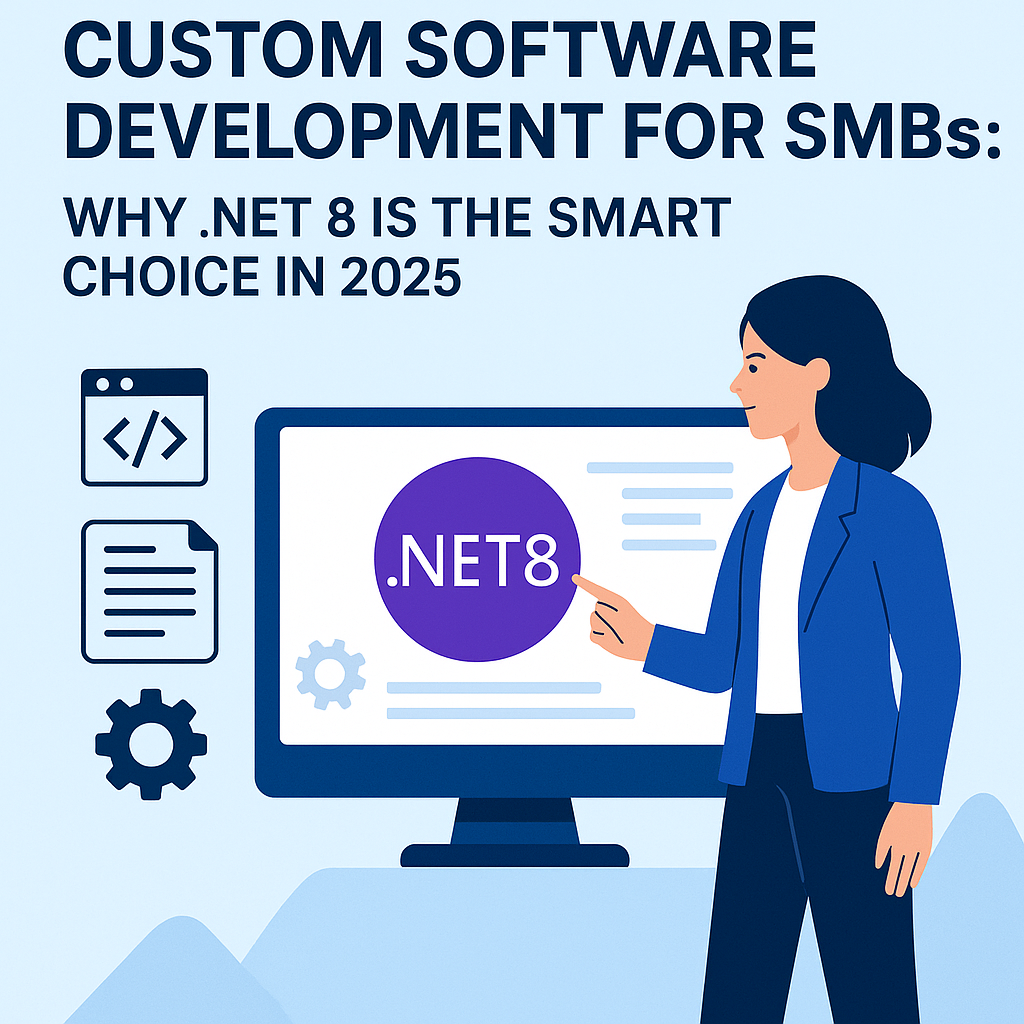
Technijian is an AI-native software development company headquartered in Irvine, California. We specialize in building enterprise web applications using modern frameworks—React with TypeScript, Blazor on .NET 8, and hybrid architectures that leverage the strengths of both.
| The Hybrid Advantage™ | What This Means for Your Project |
| Framework-Neutral Advisory | We evaluate your requirements, existing stack, team skills, and long-term roadmap before recommending a framework. Our recommendation is always driven by your business outcomes, not our technology preferences. |
| React TypeScript Development | Senior React developers building customer-facing SPAs, SaaS platforms, and progressive web apps with TypeScript, Next.js, and modern state management—optimized for performance, SEO, and rapid iteration. |
| Blazor .NET 8 Development | Experienced .NET architects building enterprise dashboards, internal portals, and security-critical applications with Blazor Server and Blazor WebAssembly on .NET 8—unified C# from frontend to database. |
| Contract-First Methodology | Fixed-scope, fixed-price contracts that define the technology stack, architecture, deliverables, and timeline before development begins. No scope creep, no technology debates mid-project, no surprises. |
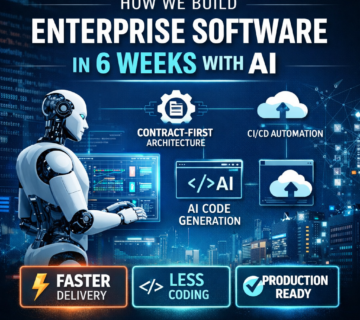
| AI-Accelerated Development | We integrate AI-assisted code generation, testing, and review into our development workflow—reducing development timelines by 30–40% across both React and Blazor projects. |
| Post-Launch Operations | Our Technijian Pod™ provides 24/7 managed operations: performance monitoring, security patching, dependency updates, and continuous optimization for both React and Blazor applications. |
| “The framework debate is the wrong debate. The right question is: what does the business need this application to do, and which technology delivers that outcome fastest, most securely, and most maintainably? We’ve built production applications in both React and Blazor. The answer is always project-specific.” — Technijian Engineering |
Frequently Asked Questions
Q: Is Blazor ready for enterprise production use in 2026?
A: Yes. Blazor is a mature, production-ready framework backed by Microsoft with Long-Term Support through .NET 8. It powers applications for organizations including Ferrari and Frankfurt Airport. Its adoption has grown 184% in the last year alone. For enterprises already invested in the .NET ecosystem, Blazor is a strong, production-proven choice.
Q: Is React faster than Blazor?
A: For initial page load, React is typically faster because it does not require downloading a .NET runtime. However, after initial load, Blazor WebAssembly with AOT compilation delivers competitive runtime performance. Blazor Server offers near-instant initial loads but depends on network latency for UI updates. The performance comparison depends heavily on your specific use case and hosting model.
Q: Can my .NET team learn React, or should we use Blazor?
A: .NET developers can learn React, but the transition involves mastering JavaScript/TypeScript, a different state management paradigm, and a fragmented ecosystem of build tools and libraries. If your team is productive in C# and your project suits Blazor’s strengths, staying in the .NET ecosystem avoids this transition cost. If your project demands React’s ecosystem advantages, the learning investment may be worthwhile.
Q: What is the cost difference between React and Blazor development?
A: React developers in the US typically cost $28–$80/hour; Blazor developers range from $25–$72/hour. However, the real cost difference is in full-stack development efficiency. Blazor’s unified C# stack can reduce total development time for .NET-backend applications by eliminating the frontend/backend language gap. React projects may require separate frontend and backend teams. Technijian’s contract-first pricing provides fixed costs regardless of framework.
Q: Can I use React and Blazor in the same application?
A: Yes. Micro-frontend architectures allow React and Blazor components to coexist within the same application. This is increasingly common in enterprises that use React for customer-facing features and Blazor for internal admin functionality. Technijian has experience building these hybrid architectures.
Q: Which framework is more secure for enterprise applications?
A: Blazor benefits from ASP.NET Core’s enterprise-grade security framework, including built-in authentication, authorization, CSRF protection, and Azure AD integration. React requires more manual security configuration and relies on third-party libraries. For security-critical applications in regulated industries, Blazor’s integrated security model is an advantage.
Q: What about React Native vs Blazor Hybrid for mobile?
A: React Native has a larger ecosystem and broader adoption for mobile development. Blazor Hybrid via .NET MAUI is newer but enables code sharing between web, desktop, and mobile from a single C# codebase. Choose React Native for dedicated mobile teams; choose Blazor Hybrid when maximizing code reuse across platforms within a .NET organization.
Q: Does Technijian recommend one framework over the other?
A: No. We recommend the framework that best serves your specific project requirements, existing technology stack, team capabilities, and long-term roadmap. We have senior engineers in both React TypeScript and Blazor .NET 8, and our contract-first methodology ensures the technology decision is made based on your business outcomes.
Q: How quickly can Technijian build an enterprise application?
A: Using our AI-accelerated development workflow and contract-first methodology, typical enterprise web applications are delivered in 6–12 weeks depending on complexity. MVPs can be delivered in as few as 4–6 weeks. Our Hybrid Advantage™ model combines local Irvine-based architects with distributed engineering capacity for maximum velocity.
Q: How do I get started with Technijian for an enterprise web application?
A: Contact us at (949)-379-8500 or visit technijian.com. We begin every engagement with a technical discovery session that evaluates your requirements, existing stack, and constraints—then deliver a contract-first proposal with framework recommendation, architecture, timeline, and fixed pricing.
Build Your Enterprise App on the Right Foundation
Get a free technical discovery session from Technijian. We’ll evaluate your requirements and recommend the framework that delivers the best business outcome.
Related Topics:
AI-native software development company Irvine California • custom .NET 8 development agency Orange County • React TypeScript developers Irvine tech corridor • enterprise web application development Irvine • AI agent development for logistics companies Irvine • custom CRM development with AI integration Irvine • supply chain automation software Orange County • fastest enterprise app development Irvine Business Park • Microsoft Azure development partner Southern California • contract-first software development methodology Irvine • startup software development agency Santa Monica • SaaS platform development Silicon Beach • AI-powered application development Santa Monica 90401 • React developers for startups near Santa Monica Pier • MVP development in 6 weeks Santa Monica tech scene • venture-backed startup tech partner Silicon Beach • AI-first development methodology Santa Monica CA