
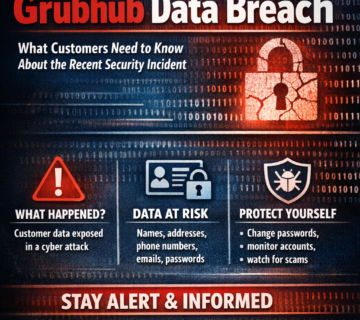
Grubhub Data Breach: What Customers Need to Know About the Recent Security Incident

This article examines the Grubhub data breach as a case study in modern supply chain cybersecurity vulnerabilities, where third-party platform compromises create cascading risks across interconnected business ecosystems. The incident demonstrates how attackers weaponize stolen OAuth tokens and access credentials from upstream service providers—specifically Salesforce and Zendesk integrations—to systematically infiltrate downstream customer systems without direct exploitation of primary infrastructure. Unlike traditional perimeter breaches that target individual organizations, this attack vector leverages the trust relationships inherent in SaaS-dependent architectures, enabling threat actors to access customer support data, contact records, and interaction histories across multiple corporate entities simultaneously. The breach highlights a fundamental shift in enterprise threat modeling, where vendor security posture becomes inseparable from organizational risk exposure. As food delivery platforms process millions of transactions containing personally identifiable information, delivery coordinates, and behavioral patterns, the incident underscores critical gaps in credential rotation protocols, token lifecycle management, and third-party security validation frameworks that define modern cloud-native vulnerability landscapes. ... Read More
