
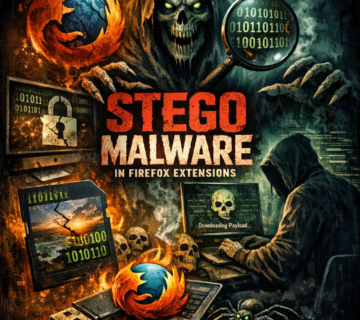
GhostPoster: Steganography Malware

GhostPoster Attacks Hide Malicious JavaScript in Firefox Addon Logos

GhostPoster that compromised over 50,000 Firefox browsers by concealing malicious JavaScript code within the logo images of popular extensions using a technique called steganography. This threat avoids detection through delayed activation (48 hours) and probabilistic payload delivery, making it extremely difficult for standard security tools to identify. Once active, the malware performs financial fraud by hijacking affiliate links, injects pervasive tracking code onto every website visited, and weakens browser defenses by stripping security headers. The text concludes with an urgent call for users to manually remove the compromised extensions and for businesses to adopt proactive extension whitelisting and specialized browser security audits to defend against such complex, evasive threats. ... Read More
Gootloader Resurgence: Advanced Evasion Tactics

Gootloader Malware Resurfaces with Advanced Evasion Tactics After Seven-Month Hiatus

An extensive security briefing detailing the resurgence of the Gootloader malware operation after a seven-month break. This sophisticated threat utilizes SEO poisoning to compromise websites and push malicious files disguised as legitimate business documents, often resulting in ransomware deployment. The new campaign incorporates advanced evasion tactics, such as custom font manipulation and malformed ZIP archives, designed to bypass automated security scanners. Finally, the text shifts to an advertisement, outlining how the Managed IT Service Provider (MSP) Technijian offers comprehensive cybersecurity services, incident response, and targeted security awareness training to help organizations defend against this evolving threat. ... Read More