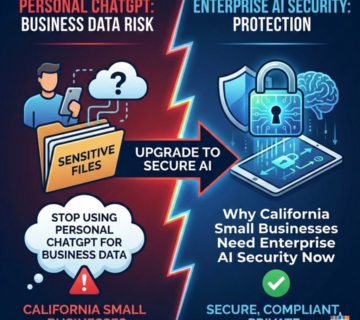
AI Security and Compliance: How to Deploy GenAI Without Leaking Your Data
🎙️ Dive Deeper with Our Podcast!
Your employees are already using AI. The question is not whether generative AI tools are inside your enterprise—they are. The question is whether you know what data they are processing, where that data is being sent, and whether your organization is compliant with the regulatory frameworks that govern your industry.
The statistics are alarming: 97% of organizations reported GenAI security issues in 2026. Shadow AI—unauthorized AI applications used by employees without IT knowledge or approval—accounts for over 50% of all enterprise AI usage. Eleven percent of data employees paste into ChatGPT is confidential, including source code, access credentials, and customer records. And Gartner predicts that by 2027, more than 40% of AI-related data breaches will stem from improper cross-border GenAI usage.
For enterprise leaders across Orange County and Los Angeles—from Fortune 500 satellite offices in Irvine to corporate headquarters in Downtown LA to manufacturing operations in Torrance—AI security and compliance is no longer a future concern. It is a present-day operational risk that demands immediate, structured action.
This guide identifies the five most critical AI security threats facing enterprises in 2026, maps them to the regulatory frameworks you must comply with, and provides a practical governance blueprint for deploying GenAI safely, compliantly, and productively.
| Target keywords: enterprise AI strategy consulting Orange County • AI business process automation Irvine CA • AI vendor selection consultant Southern California • ChatGPT Enterprise consulting Southern California • AI penetration testing HackGPT Irvine |
The AI Security Threat Landscape in 2026: By the Numbers
| 97% | Of organizations reported GenAI security issues and breaches in 2026 (Viking Cloud) |
| 11% | Of data employees paste into ChatGPT is confidential—including source code, credentials, and PII (Cyberhaven) |
| 50%+ | Of enterprise AI usage is Shadow AI—unsanctioned tools employees use without IT knowledge or approval |
| 890% | Year-over-year surge in enterprise GenAI traffic in 2024, with data sharing increasing 30x in a single year |
| $670K | Additional cost per breach when shadow AI is involved—significantly more expensive than traditional incidents |
| 80%+ | Of unauthorized AI transactions stem from internal policy violations, not external attacks (Gartner) |
| Aug 2026 | EU AI Act high-risk requirements become fully enforceable—compliance deadline for enterprises operating in Europe |
The Five Critical AI Security Threats Every Enterprise Must Address
Threat 1: Data Exfiltration Through GenAI Tools
The most immediate and widespread AI security risk is employees inadvertently leaking sensitive data through generative AI platforms. When a developer pastes proprietary source code into ChatGPT for debugging, when a financial analyst uploads confidential spreadsheets to an AI assistant, or when HR personnel use AI to draft documents containing employee PII—each interaction creates a potential data exfiltration channel.
The scale of exposure is staggering. The average enterprise now shares more than 7.7 GB of data with AI tools per month, a massive increase from just 250 MB a year ago. Twenty-two percent of files and 4.37% of prompts sent to GenAI tools contain sensitive information—including source code, access credentials, proprietary algorithms, M&A documents, and customer records. Organizations with formal GenAI governance policies reduce data leakage incidents by up to 46% compared to those without controls.
Threat 2: Shadow AI Proliferation
Shadow AI is the unauthorized use of AI applications by employees without IT department knowledge or approval. While your organization may have approved specific enterprise-grade AI tools, employees inevitably turn to other, more convenient public platforms. This creates massive visibility gaps that security teams cannot monitor, govern, or protect.
The average enterprise now has approximately 66 GenAI applications in use, with 10% classified as high risk. Over 50% of all current AI application adoption is estimated to be shadow AI. Seventy-five percent of enterprise users access applications with GenAI features embedded within them, creating an unintentional insider threat that bypasses traditional data loss prevention controls. Security teams cannot protect what they cannot see.
Threat 3: Prompt Injection Attacks
Prompt injection is the number-one vulnerability on the OWASP Top 10 for LLM Applications 2025. Unlike traditional cyberattacks that exploit code vulnerabilities, prompt injection manipulates the meaning of inputs to trick AI systems into executing unintended actions—bypassing safety filters, exfiltrating data, or executing unauthorized commands.
The threat is not theoretical. In 2025, researchers demonstrated a zero-click attack against Microsoft 365 Copilot where a poisoned email with encoded strings could force the AI assistant to exfiltrate sensitive business data to an external server—without the user ever seeing or interacting with the malicious message. NIST has documented a greater than 2,000% increase in AI-specific CVEs since 2022, reflecting the rapid expansion of this attack surface.
Threat 4: Regulatory Non-Compliance
The regulatory landscape for enterprise AI is tightening rapidly across every jurisdiction. The EU AI Act’s high-risk requirements become fully enforceable in August 2026. GDPR applies stringent requirements to personal data processed by AI systems. In the US, state-level AI legislation is accelerating in California, Colorado, and Illinois. Industry-specific regulations—HIPAA, FINRA, PCI DSS, SOC 2—all apply to AI-processed data.
Many organizations integrate AI into their workflows without performing the necessary compliance mapping. In early 2025, OpenAI was fined €15 million by the Italian Data Protection Authority for training models on personal data without clear legal basis. The first major enforcement wave under the EU AI Act is intensifying through 2026. Enterprises that have not established AI governance frameworks before these deadlines face significant regulatory exposure.
Threat 5: Supply Chain and Third-Party AI Risk
Enterprise AI systems depend on complex supply chains: pre-trained models, third-party APIs, embedding databases, plugin ecosystems, and SaaS platforms with AI features. Each dependency represents a potential vulnerability. The January 2026 DeepSeek security crisis—which revealed exposed databases and prompted government bans worldwide—demonstrated that AI supply chain compromises can cascade across thousands of downstream organizations. Ninety-five percent of firms have performed penetration testing on their GenAI LLM web applications, with 32% finding serious vulnerabilities. Yet only 21% of those vulnerabilities were actually fixed.
The Enterprise AI Security Blueprint: Six Governance Pillars
Pillar 1: AI Inventory and Shadow AI Discovery
You cannot secure what you cannot see. The first step in any AI security program is gaining complete visibility into every AI tool, feature, and integration operating within your enterprise. Catalogue all sanctioned and unsanctioned AI applications. Map which employees are using them, what data they access, and where that data is transmitted. The average organization discovers significantly more AI tools in use than IT departments estimate.
Pillar 2: Data Classification and AI-Specific DLP
Implement data loss prevention policies specifically designed for AI interactions. Traditional keyword-based DLP is insufficient for GenAI—context-aware policies must evaluate what type of data is being shared, with which AI tool, by which user, and whether the sensitivity level is appropriate for that platform. Block or alert when employees attempt to share data classified as confidential, regulated, or proprietary with external AI tools.
Pillar 3: Enterprise AI Usage Policies
Develop and enforce written policies defining acceptable and unacceptable uses of AI tools across the organization. Specify which tools are approved, what data classifications can and cannot be processed by AI, how AI outputs must be reviewed before use, and what records must be maintained for compliance purposes. Integrate these policies into mandatory employee training programs.
Pillar 4: Secure AI Deployment Architecture
Organizations with private AI implementations experience 76% fewer data exposure incidents compared to those relying solely on public services. Where possible, deploy enterprise-grade AI platforms that keep data within your security perimeter—ChatGPT Enterprise, Microsoft Copilot within your M365 trust boundary, or self-hosted models. Implement network segmentation, API security controls, and output monitoring for all AI-connected systems.
Pillar 5: AI Red Teaming and Penetration Testing
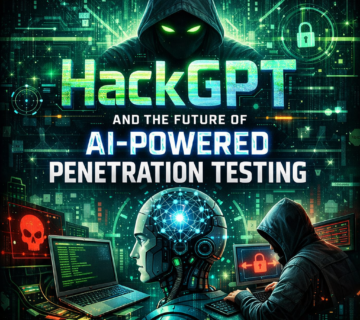
Regularly test your AI systems against prompt injection, data extraction, and model manipulation attacks. The OWASP Top 10 for LLM Applications provides the authoritative framework for AI-specific vulnerability assessment. Test both your AI-powered applications and the AI tools your employees use to identify vulnerabilities before attackers exploit them. AI red-teaming demand is projected to surge 35% by 2028.
Pillar 6: Regulatory Compliance Mapping
Map every AI deployment to the specific regulatory requirements governing your industry and geographies. For Orange County enterprises, this typically includes CCPA, SOC 2, and industry-specific frameworks (HIPAA for healthcare, FINRA for financial services, PCI DSS for payment processing). For organizations with European operations, the EU AI Act’s August 2026 enforcement date requires immediate compliance planning. Document your AI governance framework with the same rigor you apply to other regulated technology systems.
| Key principle: Organizations with structured AI governance frameworks in place experience dramatically better security outcomes. The governance framework itself drives better outcomes because it forces visibility, accountability, and systematic risk management across all AI touchpoints. |
How Technijian Secures Enterprise AI Deployments
Technijian’s AI consulting practice is built around our Secure AI Implementation principle: every AI deployment begins with security architecture, compliance mapping, and governance frameworks—not as afterthoughts, but as prerequisites.
| Secure AI Implementation | How This Protects Your Enterprise |
| Shadow AI Discovery & Audit | We identify every AI tool, feature, and integration operating across your enterprise—including shadow AI your security team doesn’t know about—and deliver a complete AI risk inventory. |
| AI-Specific DLP Implementation | We deploy context-aware data loss prevention policies designed specifically for GenAI interactions, preventing sensitive data from leaving your security perimeter through AI channels. |
| AI Governance Framework | We design and implement comprehensive AI usage policies, approval workflows, data classification rules, and employee training programs that reduce data leakage incidents by up to 46%. |
| Secure AI Architecture | We deploy enterprise AI platforms within your security boundary: ChatGPT Enterprise, Microsoft Copilot, or private model hosting with proper network segmentation, API security, and output monitoring. |
| AI Penetration Testing | We conduct OWASP-aligned penetration testing of your AI applications and integrations, identifying prompt injection vulnerabilities, data extraction risks, and supply chain weaknesses before attackers do. |
| Regulatory Compliance Mapping | We map every AI deployment to CCPA, HIPAA, FINRA, SOC 2, PCI DSS, and EU AI Act requirements, delivering audit-ready documentation that demonstrates compliance to regulators and stakeholders. |
| “The organizations that get breached through AI are not the ones that banned AI. They are the ones that let AI proliferate without governance. We help enterprises use AI aggressively and safely—because the competitive cost of not using AI is as dangerous as the security cost of using it poorly.” — Technijian AI Security |
Frequently Asked Questions
Q: What is the biggest AI security risk for enterprises in 2026?
A: Data exfiltration through GenAI tools is the most widespread and immediate risk. Employees unknowingly share confidential source code, customer PII, financial data, and intellectual property through AI platforms. Shadow AI compounds the problem because security teams cannot monitor or govern tools they don’t know about. Organizations with formal governance policies reduce these incidents by up to 46%.
Q: What is Shadow AI and why is it dangerous?
A: Shadow AI refers to AI applications used by employees without IT department knowledge or approval. Over 50% of enterprise AI usage is shadow AI. It is dangerous because security teams cannot apply DLP policies, monitor data flows, or enforce compliance for tools they cannot see. Shadow AI-related breaches cost $670,000 more per incident than traditional breaches.
Q: What is prompt injection and how do I defend against it?
A: Prompt injection is an attack where malicious inputs trick AI systems into executing unintended actions—bypassing safety filters, exfiltrating data, or running unauthorized commands. It is the #1 vulnerability on the OWASP Top 10 for LLM Applications. Defense requires behavioral analysis, input validation, output monitoring, and regular AI-specific penetration testing.
Q: Does the EU AI Act affect my Orange County business?
A: If your enterprise has operations, customers, or data subjects in the European Union, the EU AI Act applies to you. High-risk AI system requirements become fully enforceable in August 2026. Even US-only enterprises should monitor this legislation as it sets the global precedent that US state and federal regulations are likely to follow.
Q: How do I stop employees from leaking data through ChatGPT?
A: Implement a multi-layered approach: deploy enterprise-grade AI platforms where data stays within your security perimeter, implement AI-specific DLP policies that block or alert on sensitive data sharing, establish clear AI usage policies with employee training, and maintain continuous monitoring of AI interactions. Banning AI entirely is counterproductive—it drives usage underground into shadow AI.
Q: What regulations apply to enterprise AI use in California?
A: California enterprises must comply with CCPA (consumer privacy), plus industry-specific frameworks: HIPAA for healthcare, FINRA for financial services, PCI DSS for payment processing, SOC 2 for technology services. All of these regulations apply to data processed by AI systems. Technijian maps AI deployments to every applicable regulatory framework.
Q: Should my enterprise ban AI tools to avoid security risks?
A: No. Organizations that ban AI tools see higher rates of shadow AI adoption and lose the productivity and competitive benefits that AI provides. The correct approach is governed enablement: approve specific enterprise-grade AI platforms, implement security controls and DLP policies, train employees on acceptable use, and monitor AI interactions continuously.
Q: What is AI penetration testing?
A: AI penetration testing evaluates AI systems and AI-powered applications for vulnerabilities specific to large language models: prompt injection, data extraction, model manipulation, and supply chain weaknesses. It follows the OWASP Top 10 for LLM Applications framework and is increasingly required for compliance in regulated industries.
Q: What areas does Technijian serve for AI security consulting?
A: We serve enterprises across Orange County (Irvine 92618, Newport Beach, Costa Mesa), Los Angeles (Downtown LA 90017, Torrance 90503, Culver City 90230), and the broader Southern California region. Our AI security consulting engagements also support national enterprises with California-based operations.
Q: How do I get started with an AI security assessment?
A: Contact Technijian at (949)-379-8500 or visit technijian.com to schedule a complimentary AI security readiness assessment. We will inventory your current AI usage, identify shadow AI, map regulatory obligations, and deliver a prioritized security and governance roadmap—typically within two weeks.
Your Employees Are Using AI. Is Your Data Protected?
Get a complimentary AI Security Assessment from Technijian. Discover shadow AI, close data leakage gaps, and build the governance framework your enterprise needs.
Related Topics:
Microsoft Copilot implementation Orange County • Google Gemini integration services Irvine • ChatGPT Enterprise consulting Southern California • AI business process automation Irvine CA • LLM integration for enterprises Orange County • AI data analytics consultant Irvine Business Park • Power BI AI integration Orange County • AI penetration testing HackGPT Irvine • enterprise AI strategy consulting Orange County • AI vendor selection consultant Southern California • enterprise AI transformation roadmap Los Angeles • AI ROI calculator for enterprises LA • Microsoft AI partner Los Angeles financial district • AI proof of concept development downtown LA • generative AI consulting Fortune 500 Los Angeles