Technijian Blog

IT insights, cybersecurity guidance, cloud strategy, and technology updates for Southern California businesses.

CrashFix malware attack

CrashFix Attacks: New Browser-Crashing Malware Threatens Users Through Fake Ad Blockers

Browser-based malware has evolved beyond silent infections into aggressive attacks that deliberately crash your system to manipulate you into installing dangerous payloads. In 2026, cybercriminals are deploying CrashFix malware through fake ad blocker extensions like NexShield, targeting both individual users and corporate networks with sophisticated social engineering tactics. This comprehensive security guide reveals how these attacks intentionally destabilize your browser, exploit trust through deceptive warnings, and deploy remote access trojans like ModeloRAT to compromise entire network infrastructures. Learn the critical warning signs, proven prevention strategies, and immediate response protocols that protect your systems from this emerging threat that traditional antivirus solutions often miss. ... Read More
SEO Services in Orange County: How AI Tools Are Revolutionizing Local Rankings in 2026

SEO Services in Orange County: How AI Tools Are Revolutionizing Local Rankings in 2026

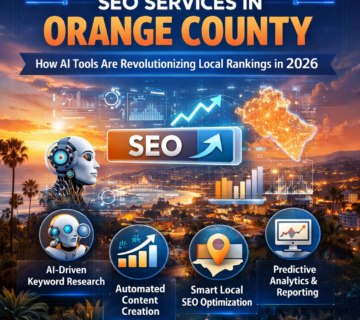
Traditional SEO strategies are no longer enough to dominate local search results in Orange County's competitive digital landscape. In 2026, businesses are leveraging AI-powered SEO tools to analyze search patterns, optimize content for voice search, and predict algorithm changes before they happen. This comprehensive guide explores how combining human expertise with artificial intelligence creates superior local SEO results, helping Orange County businesses achieve first-page rankings faster and maintain visibility across Google, ChatGPT, and emerging AI search platforms. Discover the proven strategies that deliver measurable ranking improvements. ... Read More
Microsoft Emergency Windows Updates

Microsoft Emergency Windows Updates: Fixing Critical Shutdown and Cloud PC Issues

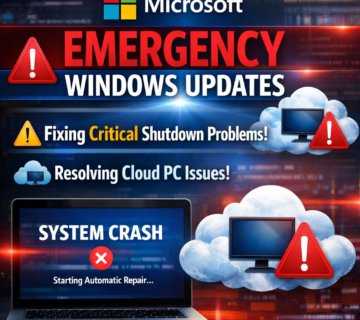
Windows emergency updates are critical for maintaining system stability and security in 2026. Microsoft recently released out-of-band patches addressing two major issues: Cloud PC authentication failures affecting remote desktop connections and shutdown problems on Windows 11 systems with Secure Launch enabled. These manual updates fix connectivity issues for Microsoft 365 Cloud PC, Azure Virtual Desktop, and Windows 365 users, while resolving the frustrating restart loop preventing proper system shutdown. Organizations can deploy fixes through direct installation or Known Issue Rollback via Group Policy, ensuring business continuity without waiting for February's Patch Tuesday. Understanding which update your system needs prevents productivity disruptions and maintains secure remote work capabilities. ... Read More
AI Driven Software Development: How U S  Businesses Are Building Smarter Apps

AI-Driven Software Development: How U.S. Businesses Are Building Smarter Apps

AI-driven software development is transforming how U.S. businesses create applications in 2026. Companies now leverage artificial intelligence for automated code generation, intelligent testing, predictive design, and faster deployment cycles. This technology reduces development time by up to 60%, minimizes human error, and enables businesses to build sophisticated applications without expanding their developer teams. From startups to Fortune 500 companies, organizations are adopting AI app development services to stay competitive, reduce costs, and deliver innovative solutions faster than traditional development methods allow. ... Read More
Grubhub Data Breach

Grubhub Data Breach: What Customers Need to Know About the Recent Security Incident

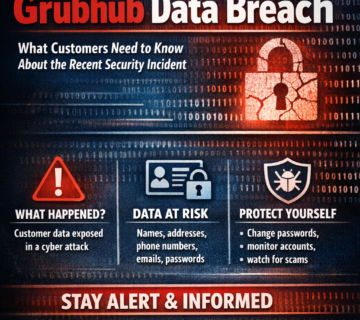
This article examines the Grubhub data breach as a case study in modern supply chain cybersecurity vulnerabilities, where third-party platform compromises create cascading risks across interconnected business ecosystems. The incident demonstrates how attackers weaponize stolen OAuth tokens and access credentials from upstream service providers—specifically Salesforce and Zendesk integrations—to systematically infiltrate downstream customer systems without direct exploitation of primary infrastructure. Unlike traditional perimeter breaches that target individual organizations, this attack vector leverages the trust relationships inherent in SaaS-dependent architectures, enabling threat actors to access customer support data, contact records, and interaction histories across multiple corporate entities simultaneously. The breach highlights a fundamental shift in enterprise threat modeling, where vendor security posture becomes inseparable from organizational risk exposure. As food delivery platforms process millions of transactions containing personally identifiable information, delivery coordinates, and behavioral patterns, the incident underscores critical gaps in credential rotation protocols, token lifecycle management, and third-party security validation frameworks that define modern cloud-native vulnerability landscapes. ... Read More