AI in Tech

AI in tech is revolutionizing industries by driving automation, innovation, and efficiency across various sectors. From machine learning algorithms improving cybersecurity to AI-powered analytics optimizing business decisions, artificial intelligence is reshaping the future. Companies leverage AI chatbots, predictive modeling, and intelligent automation to enhance user experience and streamline operations. As AI continues to evolve, its impact on software development, cloud computing, and data security will define the next generation of technological advancements.

AI Policy Templates: Keep Your Teams Secure While Using ChatGPT

AI Policy Templates: Keep Your Teams Secure While Using ChatGPT

The crucial need for organizations to establish comprehensive AI governance frameworks and AI usage policies immediately, driven by the finding that most employees use AI tools without company guidelines. The sources emphasize that unmanaged AI adoption exposes businesses to serious threats, including the potential for data leakage of confidential information, intellectual property disputes, and costly compliance violations of regulations such as GDPR and HIPAA. To address these vulnerabilities, effective policies must define data classification guidelines, mandate the use of approved AI tools, and establish verification requirements to prevent flawed decision-making based on AI outputs. Furthermore, the imperative for secure AI requires continuous oversight from a governance committee, regular risk assessment of new tools, and mandatory training programs to ensure that employees understand responsible usage protocols. The overall goal is to strike a practical balance between leveraging AI's innovative capabilities and maintaining strict security controls, often achieved through external expertise in compliance management. ... Read More
AI Powered Malicious Apps Using Advanced Obfuscation to Evade Antivirus Detection

AI-Powered Malicious Apps Using Advanced Obfuscation to Evade Antivirus Detection

Mobile cybersecurity, highlighting a sophisticated Android malware campaign that leverages artificial intelligence for advanced code obfuscation. This malicious software disguises itself as legitimate package tracking services to trick users into granting permissions, subsequently harvesting sensitive data undetected. A key innovation involves the malware using AI to transform code into randomized Korean characters to evade traditional antivirus software, while also exfiltrating stolen information through compromised but trusted legitimate websites. The text concludes by emphasizing the inadequacy of standard security measures against these adaptive threats and promotes the comprehensive, multi-layered cybersecurity services offered by Technijian to combat such AI-powered mobile risks. ... Read More
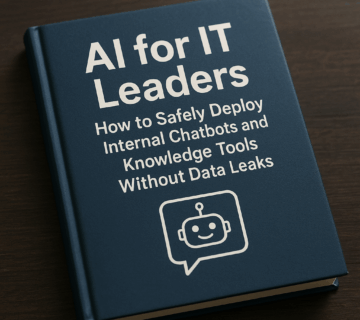
AI for IT Leaders: Secure Internal Chatbot Deployment with RAG & MCP | Prevent Data Leaks

AI for IT Leaders: How to Safely Deploy Internal Chatbots and Knowledge Tools Without Data Leaks

IT leaders on the secure deployment of internal AI chatbots and knowledge automation tools within an organization. It emphasizes that while these tools offer significant productivity benefits, they pose serious risks, including data exfiltration, prompt injection attacks, and compliance violations (especially for regulated industries like healthcare and finance). To mitigate these dangers, the text advocates for implementing specific architectures like Retrieval-Augmented Generation (RAG) and Model Context Protocol (MCP), which keep sensitive corporate data separate from the AI model's training process and enforce strict access controls. The guide then outlines a six-phase step-by-step approach covering governance definition, technology selection, data protection measures, access control integration, continuous monitoring, and user training to ensure safe and effective adoption. ... Read More
HackGPT Brings AI Powered Penetration

HackGPT Brings AI-Powered Penetration Testing to Enterprise Security Teams

HackGPT Enterprise, a cloud-native platform that utilizes sophisticated AI and machine learning, including models like GPT-4, to automate and accelerate enterprise-level penetration testing workflows. The platform significantly differentiates itself from traditional manual security testing by handling reconnaissance, scanning, and exploitation phases using a structured methodology, while also featuring compliance mapping to frameworks like NIST and PCI-DSS and advanced security controls like role-based access. Additionally, the text introduces Technijian, an Irvine-based Managed IT Services provider that offers expertise in deploying, configuring, and operating HackGPT and similar advanced cybersecurity solutions for businesses across Orange County and Southern California. The overall theme emphasizes the transition from manual to AI-powered security assessments and the importance of professional partners in implementing these complex systems. ... Read More