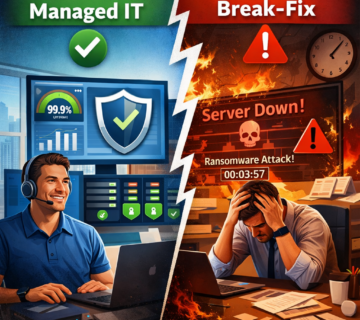
Don’t Weep Over WannaCry Software– Get IT Support in Orange County Today!
WannaCry ransomware spread widely in May 2017. It exploited vulnerabilities in Windows SMBv1, a protocol used for file sharing. Microsoft released security update MS17-010 on March 14, 2017. Unpatched systems remained at risk when the outbreak began.
This article discusses that historical outbreak and the limits of a recovery tool called WannaKey. The incident shows why businesses need patch management, tested backups and a clear response plan. Recovery depends on the affected systems and available evidence; no provider can promise to decrypt every infection.
WannaKey and its limits
WannaKey attempts to recover the prime numbers used to create a WannaCry RSA private key. It searches the infected process’s memory for those values. This depends on how certain Windows versions handle memory after cryptographic operations.
The original WannaKey documentation lists tested legacy Windows versions and warns that recovery may fail. The needed memory may already be overwritten. A restart can also remove the memory needed for this approach. It is not a general-purpose decryption solution or evidence that paying a ransom will restore files.
If an incident is active, isolate affected systems and involve qualified incident responders. They can assess containment and evidence-preservation needs before attempting recovery. Historical recovery instructions should not replace a response plan for a current incident.
Additional strategies
Businesses should combine several controls instead of relying on a decryption tool:
- BDR solutions: keep protected backups and test restores against agreed recovery targets.
- Cloud computing security: review access controls, backup scope and recovery responsibilities.
- Security education and protocols: train staff to report suspicious activity and follow the response plan.
Patch management addresses known vulnerabilities. Network controls can restrict unnecessary file-sharing access and limit movement between systems. Review legacy protocols and unsupported operating systems as part of that work.
Cloud hosting does not automatically include continuous backups or guaranteed recovery. Confirm backup retention, isolation, restore testing and responsibilities with each provider. Record test results so your team knows which systems it can recover and where gaps remain.
Education and response planning
Staff training helps people recognize suspicious messages and report incidents promptly. It complements technical controls rather than replacing them. Use unique passwords, a password manager and multi-factor authentication where supported.
A response plan should identify who can isolate systems, contact technical responders and authorize recovery work. Keep contact details available if normal systems are unavailable. After a recovery test or incident, document the outcome and update the plan.
Technijian can help review backup, patching and security needs for Orange County businesses. Contact us to discuss security and recovery planning. Agree the service scope and recovery targets before implementation.