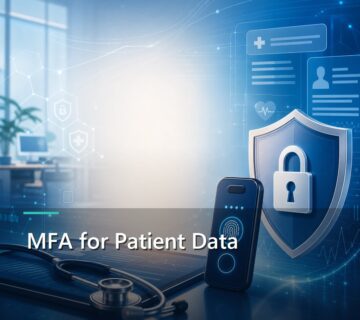

MFA for Patient Data featured image

MFA for Patient Data: How OC Healthcare Practices Protect Access in 2026

MFA for Patient Data: How OC Healthcare Practices Protect Access in 2026 gives Orange County healthcare owners, office managers, and compliance-minded practice leaders a practical 2026 guide to protect patient data by reducing the risk of stolen passwords and unmanaged access. It explains why the issue matters, what warning signs to review, how to build a first-phase roadmap, and how to measure progress without turning the work into a vague technical exercise. The article connects MFA patient data OC healthcare 2026 to the June SEO plan, internal service pages, external guidance, and useful buyer questions. Readers will learn what to check first, what mistakes to avoid, and how to turn the topic into a scoped action plan with ownership, evidence, and follow-up review. ... Read More

EDR for Orange County Offices: How Endpoint Detection Protects Modern Teams featured image

EDR for Orange County Offices: How Endpoint Detection Protects Modern Teams

Endpoint Detection and Response is now a practical security layer for Orange County offices that need stronger protection against ransomware, credential theft, malicious scripts, and remote-work risk. This guide explains how EDR differs from traditional antivirus, why endpoint visibility matters, how managed monitoring supports smaller teams, and what leaders should ask before rolling it out. It also covers implementation steps, alert tuning, compliance value, incident response, and how EDR fits into a broader cybersecurity and managed IT roadmap. ... Read More
VoidLink Malware

VoidLink Malware: The Advanced Threat Targeting Linux Cloud Infrastructure

This article uncovers VoidLink, a highly advanced malware framework engineered to silently compromise Linux-based cloud infrastructure. By targeting containerized environments such as Kubernetes and Docker, detecting major cloud providers like AWS, Azure, and GCP, and deploying memory-only plugins, rootkits, and encrypted command-and-control channels, VoidLink elevates cloud malware to a level where traditional antivirus and basic monitoring tools are largely ineffective. Its adaptive behavior, deep system reconnaissance, and aggressive anti-forensics capabilities enable attackers to maintain persistent, stealthy access while harvesting credentials and moving laterally across cloud environments. The result is a rapidly evolving threat landscape where cloud-native security, Linux-focused EDR, and continuous visibility are no longer optional—but essential for protecting modern infrastructure from professional-grade cyber adversaries. ... Read More