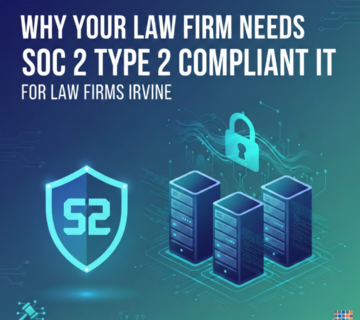
SOC 2 Compliance Made Simple: IT Controls Every Business Needs in 2026
🎙️ Dive Deeper with Our Podcast!
Summary
SOC 2 compliance has become a critical requirement for businesses handling customer data in 2026. This comprehensive guide breaks down the essential IT controls, security policies, and risk management frameworks needed to achieve and maintain SOC 2 certification. Whether you’re a growing SaaS company, healthcare provider, or professional services firm in Orange County, understanding SOC 2 requirements protects your business from security risks while building customer trust. Learn how structured IT compliance services can streamline your audit preparation, implement necessary controls, and maintain ongoing compliance without disrupting daily operations. Discover practical steps to transform complex compliance requirements into manageable processes that strengthen your overall security posture.
What is SOC 2 Compliance and Why Does Your Business Need It?
SOC 2 (Service Organization Control 2) compliance represents a framework developed by the American Institute of CPAs (AICPA) that defines criteria for managing customer data based on five “Trust Service Principles”: security, availability, processing integrity, confidentiality, and privacy.
For businesses in 2026, SOC 2 compliance has evolved from a nice-to-have credential into an essential business requirement. Here’s why:
Customer Expectations Have Changed
Enterprise clients and security-conscious customers now routinely request SOC 2 reports before signing contracts. Without this certification, your business may lose opportunities to major prospects who won’t work with vendors lacking verified security controls.
Regulatory Landscape Demands It
Industries like healthcare, finance, and technology face increasing pressure from regulators and insurance providers to demonstrate robust data protection measures. SOC 2 compliance provides the documented evidence that your organization takes data security seriously.
Competitive Advantage in Your Market
Companies with SOC 2 certification differentiate themselves from competitors, especially in crowded markets. This third-party validation signals to potential clients that your business operates with professional-grade security standards.
Risk Mitigation and Incident Prevention
The structured approach required for SOC 2 compliance forces businesses to identify vulnerabilities, implement controls, and establish monitoring processes that significantly reduce the likelihood of data breaches and security incidents.
For Southern California businesses managing sensitive customer information, SOC 2 compliance demonstrates commitment to security excellence while opening doors to enterprise-level opportunities.
Understanding the Five Trust Service Principles of SOC 2
SOC 2 compliance centers on five fundamental principles that guide how organizations should protect customer data. Let’s break down each principle and what it means for your business:
Security: The Foundation of SOC 2
The security principle is mandatory for all SOC 2 audits and focuses on protecting systems against unauthorized access. This includes:
- Network firewalls and intrusion detection systems
- Multi-factor authentication for all user accounts
- Encryption of data both in transit and at rest
- Regular vulnerability assessments and penetration testing
- Documented incident response procedures
Security controls form the backbone of your compliance framework, ensuring that only authorized personnel can access sensitive systems and data.
Availability: Keeping Systems Operational
Availability ensures your systems remain operational and accessible as committed in service level agreements. Key components include:
- Redundant infrastructure and failover capabilities
- Regular backup procedures with tested restoration processes
- Disaster recovery planning and business continuity protocols
- Performance monitoring and capacity planning
- Scheduled maintenance windows with customer notification
For businesses relying on cloud services or providing software solutions, availability controls prevent costly downtime and maintain customer trust.
Processing Integrity: Accurate and Complete Operations
This principle ensures that systems process data completely, accurately, and timely according to specifications. Implementation requires:
- Data validation controls at input and processing stages
- Error detection and correction mechanisms
- Quality assurance testing for system changes
- Transaction monitoring and reconciliation processes
- Documented workflows and processing procedures
Processing integrity particularly matters for businesses handling financial transactions, healthcare records, or automated customer interactions.
Confidentiality: Protecting Sensitive Information
Confidentiality goes beyond general security to protect information designated as confidential. Controls include:
- Data classification policies defining confidential information
- Access restrictions based on business need and role
- Non-disclosure agreements with employees and vendors
- Secure data disposal procedures
- Confidential information handling training
This principle applies when your business manages trade secrets, proprietary algorithms, or customer data subject to specific confidentiality requirements.
Privacy: Respecting Personal Information
Privacy addresses the collection, use, retention, disclosure, and disposal of personal information. Essential elements include:
- Privacy notices explaining data collection practices
- Consent mechanisms for personal information use
- Data retention and deletion policies
- Individual access rights to their personal data
- Third-party data sharing agreements and oversight
With privacy regulations like CCPA affecting California businesses, this principle aligns SOC 2 compliance with broader legal requirements.
Most organizations pursuing SOC 2 start with Security (mandatory) and add additional principles based on their business model and customer commitments.
Essential IT Controls for SOC 2 Compliance: Your Checklist
Achieving SOC 2 compliance requires implementing specific technical and administrative controls across your IT environment. Here’s your practical checklist organized by category:
Access Control Requirements
User Authentication and Authorization
- Implement multi-factor authentication (MFA) for all systems containing customer data
- Establish role-based access control (RBAC) limiting permissions to job requirements
- Create formal access request and approval processes
- Document access reviews conducted quarterly to verify appropriate permissions
- Maintain audit logs of all access changes and privileged account activities
Account Management
- Develop onboarding procedures that grant minimum necessary access
- Implement automated offboarding that immediately revokes access upon termination
- Enforce strong password policies (minimum 12 characters, complexity requirements)
- Require password changes every 90 days for administrative accounts
- Prohibit password sharing and document password manager usage
Network and Infrastructure Security
Perimeter Protection
- Deploy next-generation firewalls with intrusion prevention capabilities
- Segment networks separating production, development, and corporate environments
- Implement VPN requirements for remote access to internal systems
- Configure automated security updates for all network devices
- Conduct quarterly firewall rule reviews removing unnecessary permissions
Endpoint Security
- Install enterprise antivirus/anti-malware on all devices with centralized management
- Enable endpoint detection and response (EDR) monitoring
- Enforce device encryption for laptops and mobile devices
- Implement mobile device management (MDM) for BYOD scenarios
- Establish secure device disposal procedures with data wiping verification
Data Protection Measures
Encryption Standards
- Encrypt all customer data at rest using AES-256 or equivalent
- Require TLS 1.2 or higher for all data in transit
- Implement encrypted backup solutions with offsite retention
- Document encryption key management procedures
- Test backup restoration quarterly to verify data integrity
Data Classification and Handling
- Create data classification policy defining sensitivity levels
- Label systems and data repositories according to classification
- Establish handling procedures specific to each classification level
- Train employees on proper data handling requirements
- Monitor data exfiltration attempts through DLP tools
Change Management and System Development
Change Control Process
- Document formal change request and approval workflow
- Require testing in non-production environments before deployment
- Maintain change logs with details, approvers, and rollback procedures
- Schedule changes during maintenance windows with stakeholder notification
- Conduct post-implementation reviews for significant changes
Software Development Lifecycle
- Implement secure coding standards and developer training
- Require code reviews before merging to production branches
- Conduct vulnerability scanning of applications and dependencies
- Perform penetration testing annually or after major releases
- Maintain separate development, staging, and production environments
Monitoring and Incident Response
Security Monitoring
- Deploy SIEM solution aggregating logs from critical systems
- Configure alerts for suspicious activities and security events
- Review security logs daily for anomalies
- Maintain log retention for minimum 90 days (one year recommended)
- Document monitoring procedures and escalation paths
Incident Response Preparedness
- Create incident response plan with defined roles and responsibilities
- Establish incident classification criteria and response timeframes
- Document communication procedures for customers and stakeholders
- Conduct tabletop exercises testing incident response procedures
- Maintain incident log tracking detection, response, and resolution
Vendor and Third-Party Management
Vendor Risk Assessment
- Inventory all vendors with access to customer data or systems
- Require SOC 2 reports or equivalent security documentation from critical vendors
- Conduct annual security assessments for high-risk vendors
- Include security requirements in vendor contracts
- Monitor vendor compliance through ongoing reviews
Business Associate Agreements
- Execute formal agreements defining security responsibilities
- Document data sharing purposes and limitations
- Establish breach notification requirements and timeframes
- Require vendor incident reporting procedures
- Review and update agreements annually
This checklist provides the foundation for SOC 2 compliance, but specific requirements vary based on your Trust Service Principles and business operations. Our Managed IT Services team can help assess which controls apply to your environment and develop an implementation roadmap.
Risk Management for SMBs: Building Your Compliance Framework
Small and medium-sized businesses often struggle with SOC 2 compliance because they lack dedicated compliance teams or security resources. However, effective risk management doesn’t require enterprise-level budgets—it requires structured approaches and smart prioritization.
Conducting Your Initial Risk Assessment
The foundation of SOC 2 compliance starts with understanding your current security posture and identifying gaps:
Asset Inventory and Classification
Begin by documenting every system, application, and data repository in your environment. Classify each asset based on its sensitivity and criticality to business operations. This inventory becomes the scope for your compliance efforts and helps auditors understand your environment boundaries.
Threat and Vulnerability Analysis
Identify potential threats relevant to your business—from ransomware and phishing to insider threats and system failures. Conduct vulnerability scans across your infrastructure to discover technical weaknesses. This analysis reveals where you’re most exposed and helps prioritize remediation efforts.
Impact Assessment
For each identified risk, evaluate the potential business impact if that risk materializes. Consider financial losses, operational disruptions, reputational damage, and regulatory penalties. This assessment justifies security investments and helps leadership understand compliance importance.
Control Gap Analysis
Compare your existing security controls against SOC 2 requirements for your chosen Trust Service Principles. Document which controls are already in place, which need improvement, and which are completely missing. This gap analysis creates your implementation roadmap.
Developing Policies and Procedures
SOC 2 auditors don’t just verify technical controls—they review documented policies proving your organization has formalized its security approach:
Essential Policy Documents
Your compliance framework requires several core policies:
- Information Security Policy: Overarching document defining your security program goals, scope, and responsibilities
- Acceptable Use Policy: Guidelines for employee use of company systems and data
- Access Control Policy: Procedures for granting, reviewing, and revoking system access
- Incident Response Policy: Steps for detecting, responding to, and recovering from security incidents
- Business Continuity and Disaster Recovery Policy: Plans ensuring operational resilience during disruptions
- Vendor Management Policy: Requirements for third-party security assessments and oversight
Making Policies Practical
Policies fail when they’re theoretical documents nobody follows. Create practical procedures that employees can actually implement in daily operations. Include specific examples, decision trees, and contact information for questions. Review policies annually and update them when business processes change.
Implementing Continuous Monitoring
SOC 2 compliance isn’t achieved once and forgotten—it requires ongoing monitoring and evidence collection:
Automated Control Monitoring
Deploy tools that continuously verify control effectiveness without manual intervention. Security information and event management (SIEM) systems, automated backup verification, and access review tools reduce compliance burden while improving detection capabilities.
Regular Control Testing
Schedule quarterly or monthly tests verifying that controls operate as designed. Document testing results as evidence for auditors. When tests reveal control failures, investigate root causes and implement corrective actions.
Evidence Collection and Organization
SOC 2 audits require extensive evidence proving controls operated throughout the audit period. Maintain organized repositories of:
- Access review reports with approver sign-offs
- Change management tickets with testing documentation
- Security training completion records
- Vulnerability scan results and remediation tracking
- Incident reports and resolution documentation
- Backup logs and restoration test results
Organize evidence by control objective so auditors can quickly locate required documentation during the examination.
Establishing Governance Structure
Successful compliance programs need clear ownership and accountability:
Compliance Roles and Responsibilities
Designate a compliance owner (often a CTO, CISO, or IT Director) responsible for overall program management. Assign control owners for specific areas—someone owns user access reviews, another owns change management, etc. Define escalation paths when control failures occur.
Executive Engagement
Schedule quarterly compliance briefings for executive leadership covering program status, identified risks, and resource needs. Executive support becomes critical when compliance requirements conflict with business speed or require budget allocation.
Employee Training Program
All employees play roles in maintaining compliance. Develop security awareness training covering:
- Recognizing and reporting phishing attempts
- Proper handling of confidential customer data
- Secure password practices and MFA usage
- Incident reporting procedures
- Acceptable use of company systems
Deliver training during onboarding and annually thereafter, maintaining attendance records as audit evidence.
Risk management for SMBs succeeds when it becomes embedded in normal business operations rather than bolted on as an afterthought. With proper structure, even small teams can maintain effective compliance programs. Our Cybersecurity experts help Orange County businesses build sustainable compliance frameworks without overwhelming limited resources.
The SOC 2 Audit Process: What to Expect
Understanding the audit process removes uncertainty and helps your team prepare effectively. SOC 2 audits follow a structured approach that typically spans several months from kickoff to report delivery.
Choosing Between SOC 2 Type I and Type II
SOC 2 Type I: Point-in-Time Assessment
Type I audits verify that your controls are properly designed and implemented at a specific point in time. Auditors review your control documentation, interview key personnel, and examine evidence showing controls exist. Type I audits typically complete within 4-6 weeks and serve several purposes:
- Initial compliance validation when pursuing SOC 2 for the first time
- Demonstrating progress to customers while preparing for Type II
- Identifying control gaps before committing to the longer Type II process
- Meeting minimum requirements for customers with less stringent security demands
SOC 2 Type II: Operating Effectiveness Over Time
Type II audits examine whether controls operated effectively over a defined period, typically 3-12 months. Auditors test control operation multiple times throughout the period, reviewing evidence that controls functioned consistently. Type II reports carry more weight because they prove sustained compliance rather than momentary readiness.
Most enterprise customers require Type II reports, making this the standard for mature compliance programs. First-time SOC 2 pursuits often start with Type I to validate readiness before committing to the extended Type II timeline.
Pre-Audit Preparation Phase
Success during formal audits depends heavily on preparation work completed beforehand:
Readiness Assessment
Before engaging an audit firm, conduct an internal readiness assessment or work with IT compliance services to identify gaps. This pre-audit review prevents expensive surprises during the formal examination. Address critical gaps before starting the official audit clock.
Selecting an Audit Firm
Research CPA firms experienced with your industry and company size. Request proposals from 3-4 firms, comparing pricing, timelines, and approach. Check references from companies similar to yours. Remember that your audit firm becomes a long-term partner—annual re-audits are necessary to maintain valid reports.
Defining Audit Scope
Work with your auditor to document your compliance scope:
- Which systems and applications are in-scope
- Which Trust Service Principles will be examined
- The audit period start and end dates (for Type II)
- Any carved-out services or inherited controls from third parties
Clear scoping prevents scope creep that extends timelines and increases costs.
Audit Execution and Testing
Once the formal audit begins, your team works closely with auditors through several phases:
Opening Meeting and Documentation Review
Auditors start by reviewing your policies, procedures, and system documentation. They conduct interviews with control owners to understand how processes work in practice. This phase establishes the foundation for subsequent testing.
Control Testing and Evidence Review
Auditors request evidence demonstrating control operation throughout the audit period. Expect to provide:
- Sample of access review reports (typically 3-4 for Type II)
- Change management tickets with approval and testing documentation
- Security awareness training completion records
- Vulnerability scan results and remediation tracking
- Incident logs and investigation documentation
- Backup logs and restoration test results
Auditors may select random samples to test or request evidence for specific events or time periods. Respond to evidence requests promptly to keep audits on schedule.
Issue Identification and Remediation
If auditors identify control deficiencies, they’ll document findings and allow your team to respond. Significant deficiencies become exceptions in your SOC 2 report, potentially concerning customers. Work with auditors to:
- Understand the specific control failure or gap
- Implement corrective actions addressing root causes
- Provide evidence of remediation for inclusion in the report
- Document compensating controls that mitigate risk when immediate remediation isn’t possible
Management Representation and Report Issuance
At audit conclusion, management provides a representation letter affirming the accuracy of information provided to auditors. The audit firm then issues your SOC 2 report, typically within 2-3 weeks of completing fieldwork.
Understanding Your SOC 2 Report
Your completed SOC 2 report contains several sections that serve different purposes:
Management’s Assertion
Your management team’s statement describing the system, controls implemented, and assertion that controls operated effectively (for Type II). This section establishes management’s responsibility for the control environment.
Auditor’s Opinion
The audit firm’s independent opinion on whether controls were fairly described and operated effectively. Clean opinions state that controls operated as described with no exceptions. Qualified opinions identify control deficiencies that created gaps in your compliance.
System Description
Detailed documentation of your IT environment, including infrastructure, applications, data flows, and relevant business processes. Customers review this section to understand what your compliance covers.
Control Objectives and Tests
Documentation of each SOC 2 control objective, your specific controls addressing each objective, and the auditor’s testing procedures and results. This section provides transparency into what was tested and what was found.
Complementary User Entity Controls (CUECs)
Controls that your customers must implement for the system to operate securely. For example, customers must establish their own access controls for users they create in your system. CUECs clarify shared security responsibilities.
Most audit firms provide your report in both detailed and bridge letter formats. The bridge letter summarizes key information without exposing sensitive details, suitable for sharing with prospects during early sales conversations.
Maintaining Compliance Between Audits
SOC 2 reports expire after 12 months, requiring annual re-audits to maintain valid certification. Between audits, maintain evidence collection, conduct regular control testing, and address any control changes through your change management process. Continuous compliance activities make re-audits significantly easier than starting from scratch each year.
Common SOC 2 Compliance Challenges for Growing Businesses
As Orange County businesses pursue SOC 2 compliance, they frequently encounter obstacles that can derail timelines or inflate costs. Understanding these challenges helps you anticipate and address them proactively.
Resource Constraints and Competing Priorities
The Compliance-Growth Tension
Growing businesses face constant tension between investing in compliance versus product development, sales, or other growth initiatives. Leadership may view SOC 2 as a “tax” that diverts resources from revenue-generating activities. However, without compliance, sales cycles lengthen as security questionnaires go unanswered and enterprise deals stall.
Smart businesses recognize compliance as a growth enabler rather than a cost center. Frame compliance investments in terms of revenue opportunities unlocked—calculate the contract value of deals requiring SOC 2 and compare that to compliance costs.
Limited Internal Expertise
Most SMBs lack dedicated compliance personnel who understand SOC 2 requirements and audit processes. IT teams already stretched thin now face additional compliance responsibilities on top of daily operational demands. This expertise gap leads to inefficient implementations, extended timelines, and potential control gaps that auditors identify.
Partnering with IT compliance services bridges this expertise gap, providing guidance on control design, evidence collection, and audit preparation without requiring permanent headcount increases.
Documentation and Evidence Management
Creating Compliant Policies
Many businesses operate with informal processes that exist in team members’ heads rather than documented procedures. SOC 2 requires formalizing these processes into written policies and procedures, a time-consuming undertaking that reveals inconsistencies in how different team members approach the same tasks.
Policies must strike a balance—detailed enough to guide actual work but flexible enough to accommodate reasonable operational variations. Overly prescriptive policies become ignored; vague policies fail audits.
Maintaining Organized Evidence
SOC 2 audits require voluminous evidence spanning the entire audit period. Without organized systems, teams scramble to locate access review reports, change tickets, or training records when auditors request them. This evidence collection often becomes the most time-consuming aspect of audits.
Implement evidence management systems from day one of your compliance journey. Create shared folders organized by control objective where evidence automatically flows as controls operate. This upfront organization investment pays dividends during audit season.
Vendor and Third-Party Complexity
Inherited Control Dependencies
Modern businesses rely on numerous cloud services and software vendors. When you use services like AWS, Microsoft 365, or specialized SaaS tools, your controls depend partially on those vendors’ security practices. SOC 2 audits require documenting these dependencies and obtaining vendor SOC 2 reports proving they maintain adequate controls.
Some vendors lack SOC 2 reports or provide reports that don’t align with your audit period. Finding alternative evidence of vendor security (such as ISO certifications or security assessment questionnaires) becomes necessary but time-consuming.
Subprocessor Management
If your vendors use their own subprocessors (which is common), those introduce additional risk layers. Understanding your complete vendor stack—including second and third-tier providers—and assessing their security postures creates significant overhead.
Prioritize vendor assessments based on risk. Vendors processing customer data or hosting critical systems warrant thorough evaluation, while vendors providing non-sensitive services may require only basic review.
Technical Implementation Hurdles
Legacy System Challenges
Older systems often lack modern security capabilities like granular access controls, comprehensive logging, or encryption options. Upgrading or replacing legacy systems to meet SOC 2 requirements represents significant technical and financial undertaking.
When replacement isn’t immediately feasible, implement compensating controls. For example, if a legacy system lacks native encryption, ensure network-level encryption and strict network segmentation limiting access to that system.
Shadow IT Discovery
Compliance initiatives often reveal “shadow IT”—applications and services that employees adopted without IT department awareness or approval. These unauthorized tools may lack security controls and create compliance gaps. Discovering and addressing shadow IT requires diplomatic handling—you need employees’ cooperation identifying tools while implementing governance preventing future unauthorized adoption.
Establish clear procedures for evaluating and approving new tools, making it easy for employees to request legitimate services they need for productivity.
Control Operation Consistency
Process Adherence Gaps
Documenting controls is one thing; ensuring teams consistently follow documented procedures is another. Real-world pressures lead to shortcuts—skipping change testing during urgent fixes, approving access requests without proper review, or postponing security training.
These inconsistencies become audit findings when testing reveals controls didn’t operate as documented. Build accountability through regular management reviews of control operation metrics. When teams know leadership monitors compliance, adherence improves.
Audit Fatigue
After achieving initial SOC 2 compliance, teams sometimes relax their diligence assuming the hard work is done. Control operation degrades, evidence collection lapses, and the next audit reveals surprises requiring scrambled remediation.
Maintain compliance momentum through quarterly internal audits, regular training reinforcement, and celebration of compliance milestones. Make compliance part of your company culture rather than an annual obligation.
These challenges are normal parts of the compliance journey. With proper planning, expert guidance, and commitment from leadership, growing businesses successfully navigate these obstacles and establish sustainable compliance programs.
Building Your SOC 2 Compliance Roadmap: Timeline and Milestones
Achieving SOC 2 compliance follows a predictable journey with distinct phases. Understanding this timeline helps set realistic expectations and allocate resources appropriately.
Months 1-2: Assessment and Planning
Current State Evaluation
Begin with a comprehensive assessment of your existing controls, policies, and systems. Document what’s already in place that aligns with SOC 2 requirements. This baseline understanding prevents duplicating existing efforts and identifies quick wins versus significant gaps.
Scope Definition and Principle Selection
Determine which systems will be included in your SOC 2 scope and which Trust Service Principles your audit will cover. Most first-time audits focus on Security (mandatory) plus one or two additional principles relevant to customer commitments.
Consider business needs when selecting principles. If your contracts guarantee system availability, include the Availability principle. If you process personal information, Privacy becomes relevant.
Resource Planning and Budget Allocation
Estimate the people, tools, and external services required for your compliance initiative. Budget for:
- Audit firm fees ($15,000-$40,000+ depending on company size and complexity)
- Security tools filling technical control gaps ($5,000-$25,000 annually)
- IT compliance services or consultant guidance ($10,000-$30,000)
- Internal staff time (significant but often underestimated)
Secure executive approval for this investment before proceeding to implementation phases.
Project Team Formation
Assign clear roles and responsibilities:
- Executive sponsor providing authority and resources
- Project manager coordinating across teams and tracking progress
- Control owners responsible for specific control areas
- Technical staff implementing required security controls
Schedule regular project status meetings ensuring accountability and momentum.
Months 3-5: Implementation and Documentation
Policy and Procedure Development
Draft required policies based on SOC 2 requirements and your specific environment. Don’t start from scratch—leverage templates and frameworks while customizing for your operations. Policies should reflect how you actually work, not idealized processes nobody follows.
Obtain executive approval for policies and communicate them to relevant staff with clear expectations for compliance.
Technical Control Implementation
Deploy security controls identified during gap analysis:
- Configure multi-factor authentication across all in-scope systems
- Implement network segmentation separating production from other environments
- Deploy endpoint detection and response on all devices
- Establish centralized logging and SIEM for security monitoring
- Configure automated backup solutions with encryption
- Implement data loss prevention tools monitoring sensitive data movement
Prioritize controls that address the highest risks and will require the longest deployment timelines. Some implementations take weeks to complete and stabilize.
Process Establishment and Training
Create operational processes ensuring controls operate consistently:
- Quarterly access reviews with documented approvals
- Change management workflow requiring testing and approval
- Incident response procedures with assigned roles
- Vendor assessment process for new third parties
- Security awareness training program for all employees
Conduct initial training sessions ensuring teams understand their compliance responsibilities. Document training completion as future audit evidence.
Months 6-8: Evidence Collection and Pre-Audit Testing
Control Operation and Evidence Gathering
Begin operating under your new compliance program, collecting evidence that controls function as designed:
- Save access review reports with approver signatures
- Maintain change management tickets with complete documentation
- Store training completion records
- Capture vulnerability scan results and remediation tracking
- Log incident reports and response activities
Organize evidence by control objective in easily accessible repositories. This organization dramatically simplifies the formal audit process.
Internal Testing and Gap Remediation
Conduct internal audits testing whether controls operate effectively. Review a sample of access reviews—did approvers actually review appropriately? Check change tickets—did changes include proper testing documentation?
Internal testing invariably reveals gaps—controls not followed consistently, missing evidence, or processes requiring adjustment. Address these issues before engaging external auditors to avoid costly audit findings.
Readiness Assessment
About 1-2 months before your planned audit, conduct a comprehensive readiness assessment. Review all controls, policies, evidence, and processes verifying audit preparedness. This final check identifies any remaining gaps requiring urgent attention.
Some businesses engage external consultants for pre-audit readiness assessments, getting independent validation of their preparedness and identifying issues from an auditor’s perspective.
Months 9-11: Formal SOC 2 Audit
Audit Firm Engagement and Kickoff
Finalize your audit firm engagement, sign agreements, and schedule the audit kickoff meeting. During kickoff, auditors review your scope, timeline, and evidence requirements.
Assign a point person coordinating with auditors, managing evidence requests, and ensuring timely responses. Delays in providing evidence extend audit timelines and increase costs.
Audit Execution and Testing
Auditors conduct interviews, review documentation, and test controls according to their audit program. Respond promptly to evidence requests and clarifying questions. Most audits include weekly check-in calls tracking progress and addressing issues.
If auditors identify control deficiencies, work collaboratively to understand the issues and implement corrective actions. Some findings may warrant compensating controls rather than immediate remediation.
Report Review and Issuance
Near audit completion, auditors provide draft findings for management review. This is your opportunity to correct factual inaccuracies or provide additional context. Once finalized, the audit firm issues your official SOC 2 report.
Celebrate this milestone with your team—achieving SOC 2 represents significant accomplishment worthy of recognition.
Month 12+: Maintaining Ongoing Compliance
Continuous Control Operation
Compliance doesn’t end with report issuance. Continue operating controls consistently, collecting evidence, and conducting regular testing. Most companies begin planning their next audit 6-8 months after completing the first, ensuring continuous coverage.
Annual Re-Audit Preparation
SOC 2 reports expire after 12 months, requiring annual re-audits. Re-audits typically proceed faster than initial audits because your program is established and teams understand requirements. However, don’t become complacent—auditors will verify continued control operation and identify any degradation.
Program Maturity and Improvement
Use lessons learned from your first audit to improve processes, enhance automation, and strengthen controls. Many companies expand their scope in subsequent years, adding additional Trust Service Principles or bringing more systems into scope as their compliance program matures.
This timeline assumes reasonable resource allocation and effective project management. Timelines extend when teams lack dedicated focus, struggle with technical implementations, or face significant cultural resistance to compliance requirements. Our IT Support team helps Orange County businesses navigate this journey efficiently, avoiding common pitfalls that extend timelines and inflate costs.
The Business Value of SOC 2 Compliance Beyond the Checklist
While achieving SOC 2 compliance initially feels like checking boxes to satisfy customer requirements, mature compliance programs deliver substantial business value extending far beyond audit reports.
Accelerating Enterprise Sales Cycles
Eliminating Security Questionnaire Bottlenecks
Enterprise procurement processes include exhaustive security questionnaires containing hundreds of questions about your security practices. Without SOC 2, answering these questionnaires consumes significant sales engineering time and often requires follow-up meetings with security teams.
SOC 2 reports answer most security questions comprehensively. Many enterprise customers accept SOC 2 reports in lieu of questionnaires, dramatically reducing pre-sales friction. What previously took weeks of back-and-forth communication now concludes with a simple report share.
Building Trust with Security-Conscious Buyers
Chief Information Security Officers (CISOs) and security teams scrutinize vendors rigorously, knowing that vendor breaches create risks for their own organizations. SOC 2 certification provides independent validation that your security program meets professional standards.
This third-party verification carries more weight than your own claims about security practices. Security teams trust audit reports from reputable CPA firms, giving them confidence to recommend your solution to business stakeholders.
Competitive Differentiation
In competitive evaluations, SOC 2 compliance often becomes a tie-breaker. When multiple vendors offer similar functionality at comparable pricing, customers select the vendor with verified security controls. Without SOC 2, you may not even make the shortlist for enterprise opportunities.
Strengthening Internal Security Posture
Identifying and Addressing Vulnerabilities
The compliance process forces comprehensive security assessments that often reveal vulnerabilities previously unknown or acknowledged but not prioritized. Gap analysis uncovers missing controls, weak processes, and technical deficiencies requiring attention.
Addressing these gaps doesn’t just satisfy auditors—it materially improves your security posture, reducing the likelihood of breaches and security incidents. Many businesses discover that compliance investments prevent losses that would have exceeded the cost of compliance.
Establishing Security Culture
SOC 2 compliance requires organization-wide participation—security isn’t just the IT team’s responsibility. Training programs, acceptable use policies, and control procedures embed security awareness throughout your company culture.
Employees understand their roles in protecting customer data and recognize security as a business priority rather than an IT concern. This cultural shift creates lasting benefits that extend well beyond audit requirements.
Creating Incident Response Preparedness
Compliance frameworks require documented incident response procedures and regular testing. While no organization wants to experience security incidents, having established response procedures dramatically reduces impact when incidents occur.
Teams know exactly who to notify, what steps to take, and how to communicate with affected parties. This preparedness can mean the difference between contained incidents versus catastrophic breaches.
Enabling Strategic Business Initiatives
Supporting International Expansion
Many international markets, particularly in Europe and Asia, expect vendors to demonstrate robust security standards. While SOC 2 is a U.S. framework, it’s increasingly recognized globally as evidence of security maturity.
Businesses expanding into new geographic markets find SOC 2 certification smooths customer acquisition by addressing security concerns proactively. Some markets additionally require local certifications like ISO 27001, which share significant control overlap with SOC 2.
Facilitating Partnership and Integration Opportunities
Strategic partnerships with larger technology platforms often require security certifications. Integration marketplaces and technology partner programs may mandate SOC 2 as a prerequisite for listing your application.
Without compliance, partnership opportunities remain inaccessible regardless of technical merit or market fit. Compliance unlocks entire ecosystems of potential customers and revenue opportunities.
Preparing for Additional Compliance Requirements
SOC 2 compliance builds foundational capabilities that support additional compliance frameworks. Companies pursuing HIPAA, PCI DSS, ISO 27001, or other certifications find significant overlap in control requirements.
Investments in access controls, encryption, monitoring, and documentation serve multiple compliance objectives. Building a mature compliance program creates platforms for efficiently adding new certifications as business needs evolve.
Reducing Cyber Insurance Costs and Improving Coverage
Demonstrating Risk Management to Insurers
Cyber insurance providers increasingly scrutinize security practices before issuing policies. Businesses with weak security controls face higher premiums, lower coverage limits, or complete denial of coverage.
SOC 2 compliance demonstrates proactive risk management, potentially qualifying your business for better rates and higher coverage limits. Some insurers explicitly recognize SOC 2 certification in their underwriting criteria.
Mitigating Financial Impact of Incidents
Even with insurance, security incidents create substantial financial impact through deductibles, coverage gaps, and indirect costs. Strong security controls reduce incident likelihood and severity, protecting your business from uninsured losses.
The controls implemented for SOC 2 compliance—monitoring, incident response, backup and recovery—minimize damage when incidents occur, reducing both insured and uninsured costs.
Attracting and Retaining Security-Conscious Talent
Demonstrating Professional Environment
Security professionals seek employers committed to doing things properly. SOC 2 compliance signals that your organization invests in security and takes it seriously at executive levels.
This commitment helps attract experienced security talent who might otherwise gravitate toward larger organizations with established programs. Retaining security professionals becomes easier when they see leadership support for security initiatives.
Reducing Security Team Burnout
Security teams at companies without formal compliance programs often fight constant battles justifying basic security investments and convincing leadership of risk importance. Burnout and turnover result from these frustrations.
SOC 2 compliance establishes baseline expectations that security matters, giving security professionals the support and resources they need to succeed. This institutional commitment improves job satisfaction and retention.
View SOC 2 compliance as a strategic investment rather than a compliance tax. The upfront costs and effort yield returns through accelerated revenue, reduced risk, and operational improvements that compound over time.
Frequently Asked Questions About SOC 2 Compliance
How long does it take to achieve SOC 2 compliance?
Most businesses require 6-12 months to achieve SOC 2 compliance from initial decision to audit report delivery. The timeline depends on several factors:
- Current security maturity: Organizations with established security controls complete the process faster than those starting from scratch
- Resource availability: Dedicated compliance teams or external support accelerates timelines compared to part-time staff juggling competing priorities
- Audit type: SOC 2 Type I audits complete faster (4-6 weeks for the audit itself) than Type II (requiring 3-12 months of control operation evidence)
- Implementation complexity: Businesses with complex environments, legacy systems, or numerous vendors face longer implementation periods
Companies pursuing SOC 2 for the first time should budget at least 9-12 months for realistic planning, implementation, evidence collection, and audit completion.
How much does SOC 2 compliance cost?
SOC 2 compliance costs vary significantly based on company size, scope, and current security posture. Expect total costs including:
Audit Firm Fees: $15,000-$40,000+ for initial audits, with costs increasing based on company complexity, number of Trust Service Principles, and audit type (Type II costs more than Type I)
Security Tools and Technology: $5,000-$30,000 annually for tools like SIEM, endpoint detection, vulnerability scanning, backup solutions, and security awareness training platforms
Consulting and Compliance Services: $10,000-$40,000 for IT compliance services helping with gap analysis, implementation guidance, and audit preparation
Internal Staff Time: Substantial but often underestimated—expect significant time investment from IT, security, compliance, and management teams
Most small to mid-sized businesses should budget $40,000-$100,000 for first-year compliance including all direct and indirect costs. Subsequent annual re-audits typically cost 40-60% of initial audit costs as processes are established and evidence collection becomes routine.
What’s the difference between SOC 2 and other security certifications like ISO 27001?
SOC 2 and ISO 27001 are both information security frameworks but differ in several key aspects:
Geographic Origin: SOC 2 originates from the United States (AICPA standard), while ISO 27001 is an international standard recognized globally
Audit Approach: SOC 2 audits are performed by licensed CPA firms, while ISO 27001 certification comes from accredited certification bodies
Report Distribution: SOC 2 reports are confidential, shared only with customers and prospects under NDA. ISO 27001 certification is public—companies can display certification marks and certificates
Flexibility: SOC 2 allows customization of Trust Service Principles based on business needs, while ISO 27001 follows a more prescriptive control set
Market Recognition: In the United States, particularly for SaaS and technology companies, SOC 2 is often preferred by customers. European and international markets may favor ISO 27001
Both frameworks share significant control overlap—access management, encryption, monitoring, incident response—meaning businesses can pursue both without duplicating all implementation efforts. Some organizations pursue both certifications to address different customer requirements and market expectations.
Do we need SOC 2 Type I or Type II?
The choice between Type I and Type II depends on customer requirements and your compliance maturity:
Choose Type I When:
- Pursuing SOC 2 for the first time and want validation before committing to Type II
- Customers require compliance but accept point-in-time assessment
- You need to demonstrate security progress quickly
- Budget constraints limit options
Choose Type II When:
- Enterprise customers specifically require Type II reports
- You want to demonstrate sustained control effectiveness over time
- Your security program is mature enough to collect several months of evidence
- You need the strongest possible compliance credential
Most businesses ultimately pursue Type II because enterprise customers and security-conscious buyers prefer evidence of sustained compliance rather than momentary readiness. However, starting with Type I can validate your program design before committing to the extended Type II timeline and higher costs.
How often do we need to undergo SOC 2 audits?
SOC 2 reports expire after 12 months, requiring annual re-audits to maintain valid certification. The audit period clock starts at the beginning of your Type II audit period, not when the report is issued.
For example, if your Type II audit covers January 1 – December 31, 2026, with the report issued March 31, 2027, your next audit should cover January 1 – December 31, 2027 to maintain continuous coverage.
Most organizations schedule annual re-audits aligning with their fiscal year or the anniversary of their initial audit. Plan to begin preparation for your next audit 6-8 months before your current report expires to ensure seamless coverage.
Some customers may accept reports that are 13-15 months old during the transition period between audits, but maintaining continuous annual audits prevents coverage gaps that could block sales opportunities.
Can small businesses achieve SOC 2 compliance or is it only for enterprises?
SOC 2 compliance is absolutely achievable for small and mid-sized businesses. While the framework originated with larger organizations in mind, it’s increasingly common among growing companies serving security-conscious customers.
Advantages Small Businesses Have:
- Simpler environments with fewer systems to secure and audit
- Smaller teams making communication and training easier
- More agile decision-making enabling faster implementation
- Less bureaucracy streamlining change management
Challenges Small Businesses Face:
- Limited internal expertise requiring external support
- Budget constraints for tools and services
- Competing priorities between growth and compliance
- Smaller teams juggling multiple responsibilities
Success for small businesses typically involves:
- Leveraging cloud services with inherited controls (AWS, Microsoft Azure, Google Cloud)
- Using managed security services rather than building internal capabilities
- Partnering with IT compliance services for expertise and guidance
- Phasing implementation to spread costs over time
- Focusing initially on Security principle only, adding others as program matures
Many successful SaaS startups achieve SOC 2 with teams of 10-50 employees, proving that compliance doesn’t require enterprise scale. The key is treating compliance as a business enabler unlocking revenue opportunities rather than a burden to be minimized.
What happens if we fail a SOC 2 audit?
SOC 2 audits don’t use pass/fail terminology—instead, auditors issue opinions on whether controls operated effectively, with any deficiencies noted as exceptions or findings in the report.
Types of Audit Opinions:
Unqualified (Clean) Opinion: Controls operated effectively with no exceptions—the desired outcome
Qualified Opinion: Auditors identified deficiencies in control design or operation, documented as exceptions in the report
Adverse Opinion: Significant control failures call into question the overall effectiveness of your control environment—rare but serious
Disclaimer of Opinion: Auditors couldn’t obtain sufficient evidence to form an opinion—often due to inadequate cooperation or evidence
If Your Report Contains Exceptions:
Exceptions don’t necessarily disqualify you from sharing your report. Many customers accept reports with minor exceptions, especially if you document remediation plans. However, significant exceptions may concern customers and require explanation during security reviews.
When auditors identify potential exceptions during the audit, you have opportunities to:
- Provide additional evidence addressing auditor concerns
- Implement compensating controls mitigating identified risks
- Remediate issues during the audit period and demonstrate corrective action
- Document management responses explaining context and remediation plans
The goal is working collaboratively with auditors to address issues, providing transparency about deficiencies while demonstrating commitment to continuous improvement.
If an audit reveals significant gaps making report sharing inadvisable, some businesses choose to address issues and re-audit rather than distributing reports with severe exceptions. While disappointing, this approach may be preferable to distributing reports that damage customer confidence.
How do we maintain SOC 2 compliance between audits?
Maintaining compliance between audits requires treating security as an ongoing program rather than annual event:
Continuous Control Operation: Continue executing all controls—access reviews, change management, security monitoring, training—exactly as during the audit period
Evidence Collection: Maintain organized evidence repositories capturing proof of control operation throughout the year
Regular Testing: Conduct quarterly internal audits testing control effectiveness and identifying issues before external auditors
Process Improvement: Update policies and procedures as business operations evolve, documenting changes through change management
Control Monitoring: Deploy automated monitoring tracking control operation and alerting when processes aren’t followed
Team Training: Provide ongoing security awareness training and compliance refreshers maintaining staff engagement
Vendor Management: Conduct annual vendor security assessments and maintain current vendor SOC 2 reports
Incident Response: Document and properly investigate any security incidents, implementing corrective actions addressing root causes
Many businesses find the second year of compliance easier than the first because processes become routine and teams understand expectations. The key is embedding compliance into normal operations rather than treating it as periodic scramble before audits.
How Technijian Can Help Orange County Businesses Achieve SOC 2 Compliance
Achieving and maintaining SOC 2 compliance requires specialized expertise, technical capabilities, and dedicated resources that many growing businesses lack internally. Technijian helps Orange County companies navigate the compliance journey efficiently while avoiding common pitfalls that extend timelines and inflate costs.
Comprehensive Compliance Readiness Assessment
We begin every engagement with a thorough assessment of your current security posture mapped against SOC 2 requirements. Our team evaluates your existing controls, policies, documentation, and technical environment to identify exactly what’s working and what needs improvement.
This gap analysis provides the foundation for your implementation roadmap, prioritizing high-impact controls and identifying quick wins versus longer-term projects. You receive a detailed report with specific recommendations, estimated timelines, and implementation approaches for each identified gap.
Our assessment helps you make informed decisions about your compliance strategy—whether to pursue Type I or Type II, which Trust Service Principles to include, and realistic budgets and timelines for your specific environment.
Technical Control Implementation and Security Infrastructure
Many SOC 2 requirements involve technical controls requiring specialized implementation expertise. Our certified engineers deploy and configure the security infrastructure supporting your compliance program:
Access Control and Identity Management
- Multi-factor authentication deployment across all business applications
- Single sign-on (SSO) implementation streamlining user access
- Role-based access control (RBAC) configuration limiting permissions
- Privileged access management for administrative accounts
- Automated user provisioning and deprovisioning workflows
Network Security and Segmentation
- Next-generation firewall deployment with intrusion prevention
- Network segmentation separating production from other environments
- VPN configuration requiring secure remote access
- Wireless security with enterprise authentication
- Network monitoring detecting unauthorized access attempts
Endpoint Protection and Management
- Enterprise antivirus with centralized management and reporting
- Endpoint detection and response (EDR) providing threat visibility
- Device encryption enforcement for laptops and mobile devices
- Patch management ensuring timely security updates
- Mobile device management (MDM) for BYOD scenarios
Security Monitoring and SIEM
- Security information and event management (SIEM) deployment
- Log aggregation from critical systems and applications
- Alert configuration for suspicious activities and security events
- Security dashboard providing compliance visibility
- Integration with incident response procedures
Backup and Disaster Recovery
- Automated backup solution implementation with encryption
- Offsite backup retention meeting compliance requirements
- Disaster recovery planning and documentation
- Regular backup restoration testing verifying data recoverability
- Business continuity procedures ensuring operational resilience
Our technical implementations follow security best practices while maintaining compatibility with your existing environment and minimizing disruption to daily operations.
Policy Development and Documentation Support
SOC 2 audits require comprehensive policy documentation that’s often overwhelming for businesses lacking dedicated compliance resources. We provide expert guidance developing policies that satisfy audit requirements while remaining practical for your team to follow:
Core Policy Development
- Information Security Policy establishing program foundation
- Acceptable Use Policy guiding employee system usage
- Access Control Policy defining user access procedures
- Change Management Policy controlling system modifications
- Incident Response Policy documenting security event handling
- Disaster Recovery and Business Continuity Policy
- Vendor Management Policy governing third-party relationships
Procedure Documentation
- Step-by-step procedures operationalizing policy requirements
- Work instructions for technical control operation
- Escalation procedures for security incidents
- Evidence collection templates and checklists
Our policy templates incorporate industry best practices while customizing to your specific business operations, organizational structure, and risk profile. Policies receive executive review and approval, then we help communicate them effectively to relevant staff.
Audit Preparation and Evidence Management
The audit process becomes significantly less stressful with proper preparation and organized evidence. We help businesses prepare for successful audits through structured support:
Pre-Audit Readiness Reviews
- Comprehensive review of all controls before engaging auditors
- Evidence gap identification and remediation guidance
- Control testing verifying operation before formal audit
- Mock audit exercises preparing teams for auditor interactions
Evidence Organization and Management
- Evidence repository structure aligned with control objectives
- Documentation templates capturing required information
- Evidence collection schedules ensuring comprehensive coverage
- Evidence validation confirming completeness and adequacy
Audit Coordination Support
- Audit firm selection guidance and proposal evaluation
- Kickoff meeting participation establishing scope and timeline
- Evidence request coordination and response management
- Auditor communication managing questions and clarifications
- Issue resolution support addressing identified deficiencies
Our involvement during audits keeps projects on schedule, ensures complete evidence submission, and helps address auditor findings constructively.
Ongoing Compliance Program Management
Compliance doesn’t end with report issuance—maintaining controls between audits requires ongoing attention. We provide managed compliance services ensuring your program operates effectively year-round:
Continuous Control Operation
- Quarterly access reviews with documentation and approvals
- Change management oversight ensuring proper procedures
- Security monitoring and incident investigation
- Vulnerability management tracking and remediation
- Security awareness training administration
Evidence Collection and Documentation
- Automated evidence capture from security systems
- Evidence organization maintaining audit-ready repositories
- Quarterly evidence reviews verifying completeness
- Control testing and documentation
Vendor Risk Management
- Annual vendor security assessments
- Vendor SOC 2 report collection and review
- New vendor evaluation and approval
- Vendor performance monitoring
Program Reporting and Metrics
- Quarterly compliance status reports for leadership
- Risk dashboard tracking key security indicators
- Control effectiveness metrics demonstrating program maturity
- Trend analysis identifying areas requiring attention
Annual Re-Audit Support
- Re-audit planning and preparation
- Evidence submission coordination
- Auditor communication and issue resolution
- Report review and distribution
Our managed services model provides predictable monthly costs while ensuring compliance expertise is always available when needed—without the expense of full-time compliance staff.
Why Orange County Businesses Choose Technijian
With over two decades serving Southern California businesses, Technijian understands the unique challenges facing growing companies in our region. We’ve helped dozens of local businesses achieve SOC 2 compliance efficiently, unlocking enterprise opportunities while strengthening security postures.
Local Expertise and Responsiveness
- Based in Irvine with deep Orange County roots and relationships
- On-site support available when needed—not just remote assistance
- Understanding of local business landscape and customer expectations
- Rapid response times for urgent compliance questions or issues
Comprehensive IT and Security Capabilities
- Full-stack IT services integrating compliance with broader technology strategy
- Security expertise spanning preventive, detective, and responsive controls
- Cloud migration and optimization supporting compliance in modern infrastructure
- Disaster recovery and business continuity planning ensuring resilience
Proven Track Record
- Successful SOC 2 implementations across industries and company sizes
- Strong relationships with regional audit firms streamlining engagements
- Customer references available from similar businesses in your industry
- Case studies demonstrating tangible results and ROI
Business-Focused Approach
- Compliance strategies aligned with revenue goals and growth plans
- ROI analysis demonstrating value of compliance investments
- Flexible engagement models adapting to your budget and timeline
- Partnership mentality supporting your long-term success
Whether you’re pursuing SOC 2 for the first time or seeking to mature your existing compliance program, Technijian provides the expertise, technology, and ongoing support ensuring success without overwhelming your internal teams.
Ready to Start Your SOC 2 Compliance Journey?
SOC 2 compliance opens doors to enterprise opportunities, builds customer trust, and strengthens your security posture—but the journey can feel overwhelming without proper guidance and support. You don’t have to navigate this process alone.
Technijian’s compliance experts help Orange County businesses achieve SOC 2 certification efficiently while avoiding the common pitfalls that extend timelines and inflate costs. Our comprehensive approach addresses every aspect of compliance—from initial assessment through ongoing program management—ensuring your success.
Request Your Complimentary Compliance Readiness Review
Discover exactly where your business stands on the path to SOC 2 compliance. During your complimentary readiness review, our compliance specialists will:
- Assess your current security controls and documentation against SOC 2 requirements
- Identify specific gaps requiring attention before audit readiness
- Provide realistic timelines and budgets based on your environment
- Recommend implementation approaches optimized for your resources
- Answer your questions about the compliance process and requirements
Schedule Your Review Today
Contact Technijian at (949) 379-8499 or visit our website to schedule your complimentary compliance readiness review. Let’s discuss how we can help your business achieve SOC 2 certification while strengthening security and unlocking enterprise opportunities throughout Orange County and Southern California.
Don’t let compliance concerns delay your growth initiatives. With the right partner and proven approach, SOC 2 compliance becomes an achievable milestone that accelerates your business success.
About Technijian
Since 2000, Technijian has provided comprehensive managed IT services, cybersecurity solutions, and compliance support to businesses throughout Orange County and Southern California. Our team of certified engineers and compliance specialists helps growing companies implement security frameworks, achieve certifications, and maintain ongoing compliance without overwhelming internal resources. We combine deep technical expertise with practical business understanding, delivering solutions that strengthen security while supporting business growth. Contact us today to learn how we can help your business achieve its compliance and security objectives.