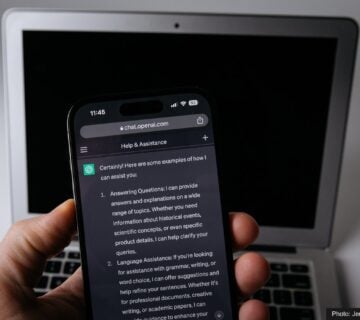
A hand holding a smartphone displaying ChatGPT in front of a laptop

OpenAI Doubles ChatGPT Pro Usage Limits After Backlash Over a Planned 50% Cut

This Friday news brief examines OpenAI's decision to double ChatGPT Pro usage limits across the Pro 100, Pro 200 and Pro 500 tiers and Business Premium, announced on 29 October 2026 one day before a planned cut of roughly half the Pro 200 allowance was due to take effect. Written for business owners, IT managers and finance leads throughout Orange County and Irvine who pay for ChatGPT Pro, Codex or Business Premium seats, the brief sets out what changed tier by tier, why speed settings make the practical multiplier different from the headline, and why a vendor reverses a cut. We examine the governance gaps the episode exposes, six questions to ask about your own AI subscriptions, and a short review to run before the next renewal. Organizations are encouraged to confirm seat tiers, consumption and data-handling rules now that the allowance has changed. ... Read More

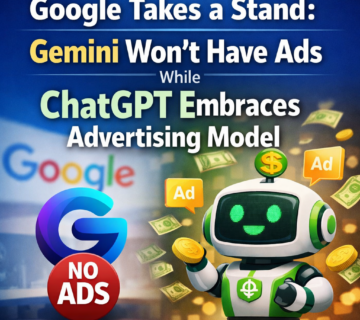
Google Takes a Stand: Gemini Won't Have Ads While ChatGPT

Google Takes a Stand: Gemini Won’t Have Ads While ChatGPT Embraces Advertising Model

Businesses are paying close attention to AI platform strategies as Google and OpenAI take divergent paths. Gemini, Google’s AI assistant, will remain ad-free, emphasizing seamless, distraction-free interactions that maintain user trust. In contrast, OpenAI is rolling out contextual advertisements in ChatGPT for free and Go-tier users, designed to appear only when relevant to ongoing conversations while avoiding sensitive topics such as health, mental health, and politics. Organizations must evaluate which model aligns with their operational goals, team workflows, and long-term adoption plans. Selecting the right AI assistant affects not only productivity but also employee engagement, customer trust, and overall experience when integrating AI into research, automation, or decision-making processes. Understanding these differences early helps businesses implement AI tools strategically without sacrificing quality or user satisfaction. ... Read More
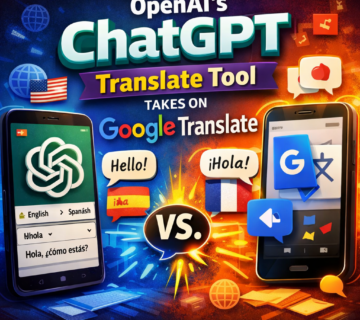
OpenAI's ChatGPT Translate Tool

OpenAI’s ChatGPT Translate Tool Takes on Google Translate

This article examines OpenAI’s ChatGPT Translate as a next-generation language translation system designed to move beyond traditional word-for-word conversion and into context-aware, adaptive communication. By leveraging large language models trained on multilingual and cross-cultural data, ChatGPT Translate interprets intent, tone, and audience while enabling real-time conversational refinement of translations. Unlike legacy translation engines that rely on static phrase mappings, this tool dynamically adjusts register, formality, and clarity for business, academic, or consumer use cases. Its ability to process text, voice, images, and documents—while preserving meaning rather than literal structure—signals a fundamental shift in how AI mediates global communication. The result is a translation paradigm where linguistic nuance, cultural alignment, and human-like interaction become central capabilities, redefining expectations for accuracy, usability, and scalability in modern language technology. ... Read More