Business VOIP Systems 2026: Choosing 3CX for Crystal-Clear, Cost-Effective Calls
🎙️ Dive Deeper with Our Podcast!
Summary
Business VOIP systems have evolved dramatically by 2026, with unified communications platforms like 3CX leading the transformation of enterprise telephony. Modern VOIP solutions integrate seamlessly with Microsoft Teams, dramatically reduce communication costs, and provide enterprise-grade reliability without traditional phone system expenses. For Orange County businesses seeking scalable, AI-enhanced communication infrastructure, 3CX phone systems offer crystal-clear voice quality, advanced automation features, and flexible deployment options. This comprehensive guide explores why unified communications platforms represent the future of business telephony, how 3CX stands out among competitors, and what growing SMBs should consider when modernizing their phone systems in 2026.
What Makes Business VOIP Systems Essential for 2026?
Traditional phone systems are rapidly becoming obsolete as businesses demand more flexibility, functionality, and cost efficiency from their communication infrastructure. Business VOIP systems have matured into comprehensive unified communications platforms that handle voice, video, messaging, and collaboration through a single interface.
The telecommunications landscape in 2026 prioritizes cloud-based infrastructure, AI-powered call management, and seamless integration with business applications. Companies still relying on legacy PBX systems face mounting maintenance costs, limited scalability, and inability to support remote workforces effectively.
Modern business VOIP systems eliminate hardware dependencies, reduce monthly telecommunication expenses by 40-60%, and provide advanced features like auto-attendants, call analytics, and intelligent routing that were previously available only to enterprise clients. For growing businesses in competitive markets like Orange County, these capabilities translate directly into improved customer service and operational efficiency.
The convergence of VOIP technology with unified communications creates a single platform for all business interactions, eliminating the frustration of switching between separate tools for calls, video meetings, instant messaging, and file sharing.
Why Choose 3CX Phone Systems Over Traditional Solutions?
3CX has emerged as the leading business VOIP platform for small and medium-sized businesses because it combines enterprise functionality with straightforward implementation and transparent pricing. Unlike proprietary systems that lock businesses into expensive hardware and per-user licensing schemes, 3CX offers flexible deployment options and predictable costs.
The platform’s architecture supports on-premises, cloud-hosted, or hybrid deployments, giving businesses complete control over their communication infrastructure. This flexibility proves particularly valuable for companies with specific compliance requirements or those transitioning gradually from legacy systems.
Key advantages of 3CX phone systems include:
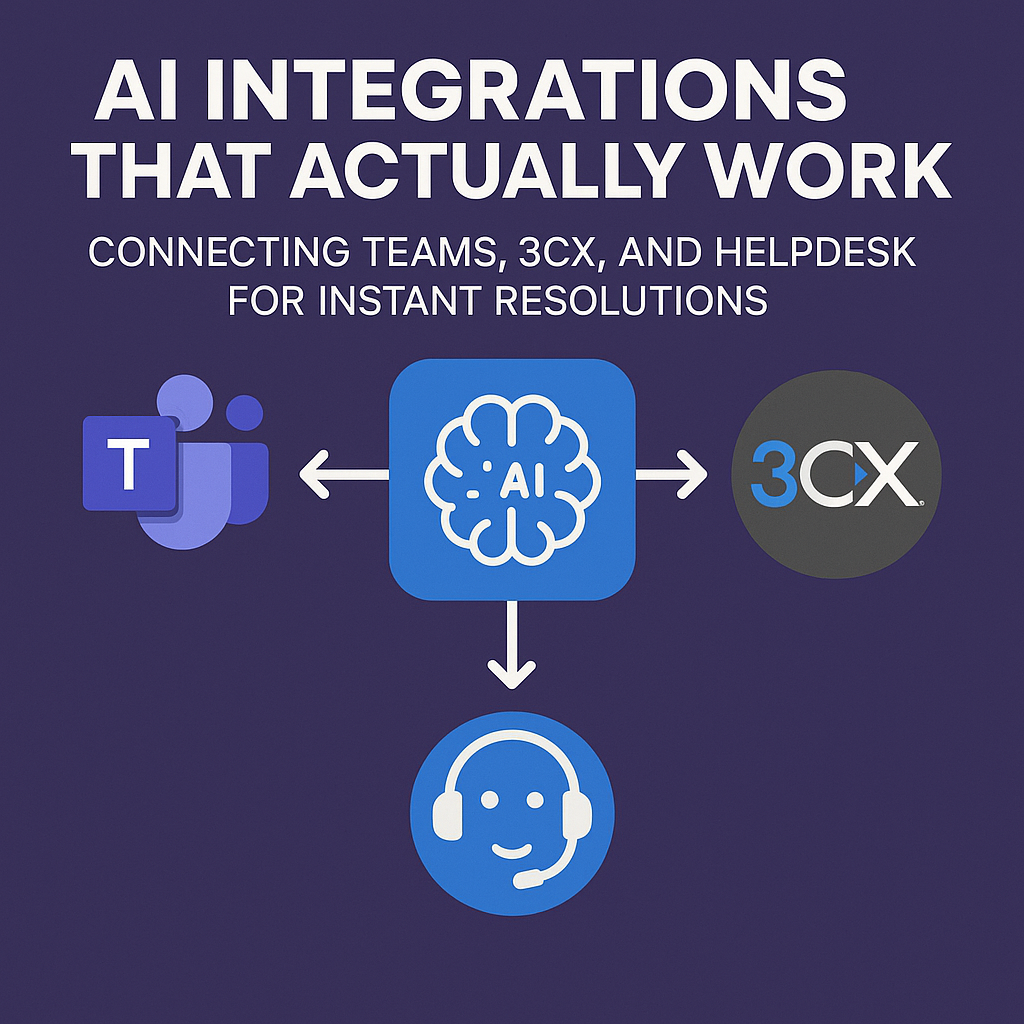
3CX provides native Microsoft Teams integration, allowing businesses to leverage their existing Microsoft 365 investments while maintaining professional telephony capabilities. Employees can make and receive business calls directly through Teams, eliminating the need for separate applications and reducing training requirements.
The system’s web-based administration interface simplifies management tasks that typically required specialized telecommunications knowledge. Adding users, configuring call flows, and monitoring system performance become accessible to general IT staff rather than requiring dedicated phone system administrators.
Built-in video conferencing eliminates the need for separate meeting platforms, while advanced call center features support customer service operations without additional software. The mobile apps ensure employees maintain full communication capabilities regardless of location, supporting the hybrid work environments that define 2026 business operations.
3CX’s pricing model based on concurrent calls rather than per-user licensing often delivers significant savings for businesses with fluctuating communication needs or large numbers of occasional users.
How Do Unified Communications Transform Business Operations?
Unified communications platforms consolidate previously separate communication channels into cohesive systems that improve collaboration and customer interactions. Rather than managing distinct tools for phone calls, video meetings, instant messaging, and presence information, businesses operate from a single interface.
This consolidation eliminates common frustrations like missed messages across platforms, difficulty reaching colleagues through their preferred communication method, and time wasted switching between applications. Employees access complete communication histories regardless of channel, providing context for every interaction.
For customer-facing operations, unified communications enable seamless transitions between communication methods. A customer service interaction might begin with a chat message, escalate to a voice call when complexity requires it, and incorporate screen sharing for technical support without requiring the customer to provide information multiple times.
Unified communications deliver measurable business benefits:
Response times improve dramatically when employees receive notifications across all channels and can choose the most efficient communication method for each situation. The presence information showing colleague availability reduces time spent attempting to reach unavailable team members.
Collaboration becomes more natural as teams share screens, documents, and video simultaneously while discussing projects. The barrier between formal meetings and quick conversations disappears, accelerating decision-making processes.
Integration with business applications like CRM systems, helpdesk platforms, and productivity tools creates workflows where communication happens within the context of work rather than as a separate activity. Customer information appears automatically during calls, support tickets link to communication histories, and team members receive notifications through their preferred channels.
For businesses with managed IT services, unified communications platforms integrate seamlessly with overall technology strategy, ensuring reliable performance and proper security configurations.
What Cost Savings Do Business VOIP Systems Provide?
The financial case for business VOIP systems extends beyond obvious reductions in monthly telecommunication bills. While businesses typically see 40-60% savings on calling costs compared to traditional phone services, the total economic impact encompasses multiple areas.
Eliminating physical phone equipment removes capital expenditure requirements and ongoing maintenance costs. Businesses no longer purchase expensive desk phones, replace failed hardware, or maintain on-premises PBX equipment requiring specialized technical knowledge.
VOIP systems reduce costs through:
Long-distance and international calling rates drop dramatically, with many VOIP providers offering unlimited domestic calling and reduced international rates. For businesses with remote locations or international clients, these savings accumulate quickly.
Scalability becomes essentially free, as adding users requires no additional hardware purchases or truck rolls for installation. Businesses expanding into new locations or supporting remote workers simply provision additional accounts without the delays and expenses of traditional phone system expansion.
The consolidation of communication tools eliminates redundant subscriptions to separate video conferencing services, instant messaging platforms, and collaboration tools. A comprehensive unified communications platform replaces multiple vendors with a single solution.
Productivity improvements, while harder to quantify precisely, represent significant value. Time saved switching between applications, improved first-call resolution rates through better information access, and reduced meeting overhead from seamless collaboration translate into measurable business outcomes.
For organizations investing in robust IT support, VOIP systems simplify telecommunications management and reduce the specialized expertise required to maintain phone infrastructure.
How Does Microsoft Teams Integration Enhance VOIP Functionality?
Microsoft Teams has become the collaboration hub for millions of businesses worldwide, making Teams integration a critical consideration for any VOIP deployment. The combination of 3CX phone systems with Teams creates a unified experience where traditional telephony capabilities exist within the familiar Teams interface.
Employees make and receive business calls using their existing Teams application rather than learning separate phone software. The business phone number appears in Teams alongside the standard calling features, with professional telephony capabilities like call transfer, hold, and conference merged seamlessly into the Teams experience.
Teams integration provides specific advantages:
The learning curve essentially disappears when employees already familiar with Teams gain phone capabilities within the same interface. Training requirements drop dramatically compared to introducing entirely new phone applications.
Call history, voicemail, and contact information synchronize across platforms, ensuring employees access complete communication records regardless of which system they’re actively using. A call placed through Teams appears in 3CX reports, while voicemails left in the phone system surface in Teams notifications.
For businesses already leveraging Microsoft 365 subscriptions, Teams integration maximizes existing investments rather than introducing redundant capabilities. The phone system enhances rather than replaces existing collaboration tools.
Mobile workers benefit particularly from this integration, as they carry a single application providing full communication capabilities rather than juggling separate phone, video, and messaging apps. The consistency of experience between desktop and mobile reduces friction in hybrid work environments.
Comprehensive cybersecurity services ensure that integrated communication platforms maintain proper security controls across all components, protecting sensitive business conversations and customer information.
What Features Should Growing SMBs Prioritize in 2026?
The VOIP market offers an overwhelming array of features, making it challenging for growing businesses to identify truly valuable capabilities versus nice-to-have extras that complicate systems without delivering proportional benefits.
Essential features for 2026 business VOIP systems:
AI-powered call routing intelligently directs incoming calls based on caller history, stated intent, and real-time agent availability. These systems learn from patterns to improve routing accuracy over time, reducing wait times and improving first-call resolution rates.
Advanced analytics and reporting provide visibility into communication patterns, call quality metrics, and team performance. Managers gain insights into peak calling times, average handling duration, and service levels that inform staffing decisions and process improvements.
Seamless mobile integration ensures employees maintain full phone system capabilities on smartphones, including access to company directories, professional caller ID, and advanced features like call recording. The distinction between desk phone and mobile device disappears.
CRM integration surfaces customer information automatically during calls, enabling personalized service without manual lookups. Call notes and recordings sync back to CRM records, maintaining comprehensive customer interaction histories.
Call recording and quality monitoring support training initiatives, dispute resolution, and compliance requirements. Automated transcription of recordings enables searchable call archives and quality assurance workflows.
Auto-attendant and interactive voice response provide professional call handling even for small businesses, routing callers efficiently and offering self-service options that reduce reception workload.
Video conferencing capabilities eliminate the need for separate meeting platforms while providing the professional quality expected in client interactions.
Disaster recovery and business continuity features ensure communication systems remain operational during outages, with automatic failover to mobile devices or alternate locations maintaining business continuity.
How Reliable Are Cloud-Based VOIP Systems Compared to Traditional Phones?
Concerns about VOIP reliability stem primarily from early implementations plagued by poor internet connections and immature technology. Modern business VOIP systems deployed over quality internet connections routinely exceed the reliability of traditional phone services.
Cloud-based unified communications platforms typically guarantee 99.99% uptime, representing less than one hour of downtime annually. This compares favorably to traditional phone systems vulnerable to local equipment failures, power outages, and physical line damage.
Modern VOIP reliability factors:
Geographic redundancy ensures communication services continue even if entire data centers experience outages. Calls automatically route through alternate facilities without user intervention or noticeable service interruption.
Quality of Service (QoS) configurations prioritize voice traffic over other network activity, ensuring call quality remains consistent even during periods of heavy internet usage. Properly configured networks deliver voice quality indistinguishable from traditional phone lines.
Automatic failover to mobile devices means employees maintain communication capabilities even during office internet outages. The phone system recognizes connectivity issues and seamlessly redirects calls to cell phones without dropping active conversations.
Session Border Controllers (SBCs) protect against network attacks and ensure optimal call routing, while continuous monitoring identifies potential issues before they impact service quality.
For businesses with comprehensive managed IT services, network infrastructure receives proper configuration and monitoring to support mission-critical VOIP communications, with bandwidth management and redundancy planning ensuring reliable performance.
What Implementation Considerations Matter Most?
Successful VOIP deployment requires attention to several technical and operational factors beyond simply selecting a platform and signing a contract. Businesses that address these considerations during planning avoid common pitfalls that undermine VOIP benefits.
Critical implementation factors include:
Network assessment verifies that internet connectivity provides sufficient bandwidth and quality for VOIP traffic. A connection adequate for web browsing and email may prove inadequate for multiple simultaneous voice calls requiring consistent low latency.
Power over Ethernet (PoE) infrastructure simplifies desk phone deployment by delivering both data and power through network cables, eliminating the need for separate power adapters at each location.
Number porting timeline requires advance planning, as transferring existing business numbers to new VOIP systems typically takes 2-4 weeks. Businesses must coordinate the transition to avoid service interruptions.
Training and change management ensure employees understand new system capabilities and adopt unified communications features effectively. Even intuitive systems benefit from structured onboarding that demonstrates features and establishes best practices.
Integration with existing systems like CRM platforms, helpdesk software, and business applications maximizes VOIP value by creating seamless workflows rather than isolated communication tools.
Disaster recovery planning establishes procedures for maintaining communication during various failure scenarios, from internet outages to power failures to facility evacuations.
Security configuration implements proper access controls, encryption, and monitoring to protect communication systems from unauthorized access and eavesdropping.
Frequently Asked Questions About Business VOIP Systems
How much does a 3CX phone system cost compared to traditional business phones?
3CX pricing typically ranges from $175-$300 annually per concurrent call rather than per user, making it significantly more cost-effective than traditional systems charging per extension. A 20-person office might require only 6-8 concurrent calls depending on usage patterns, resulting in annual costs of $1,400-$2,400 compared to $3,000-$5,000 for traditional per-user licensing. Additional savings come from eliminated hardware costs, reduced maintenance expenses, and lower calling rates. The total cost of ownership over five years typically shows 50-70% savings compared to legacy phone systems.
Can we keep our existing business phone numbers when switching to VOIP?
Yes, businesses retain existing phone numbers through a process called number porting, where numbers transfer from the current carrier to the VOIP provider. The process typically takes 2-4 weeks and requires providing current account information and a Letter of Authorization. During the transition, businesses maintain phone service through the existing provider until the port completes. Properly managed by experienced IT providers, number porting occurs seamlessly without service interruption or customer impact.
What internet speed do we need for reliable business VOIP?
Each active call requires approximately 100 Kbps of bandwidth in both upload and download directions, though planning for 150 Kbps per call provides a comfortable buffer. A business supporting 10 simultaneous calls needs minimum 1.5 Mbps dedicated to voice traffic, meaning a connection rated for 25-50 Mbps typically proves sufficient for small to medium businesses when properly configured. Upload speed matters as much as download speed for VOIP, and Quality of Service configurations should prioritize voice traffic over other network activities. Latency (round-trip time) below 150ms and minimal packet loss prove more critical than raw bandwidth for ensuring call quality.
How does 3CX compare to other business VOIP providers?
3CX distinguishes itself through flexible deployment options (cloud, on-premises, or hybrid), transparent licensing based on concurrent calls rather than users, comprehensive Microsoft Teams integration, and built-in video conferencing eliminating separate meeting platforms. Unlike many competitors, 3CX provides web-based administration accessible to general IT staff rather than requiring telecommunications specialists. The platform includes advanced call center features as standard rather than expensive add-ons. While providers like RingCentral and 8×8 offer competitive solutions, they typically charge per-user monthly fees that escalate costs for growing businesses.
What happens to our phone system during internet outages?
Modern business VOIP systems implement multiple failover strategies to maintain communication during internet disruptions. Calls automatically redirect to mobile phones using the company caller ID, ensuring customers reach employees without knowing about infrastructure issues. Cloud-based systems route calls to alternate locations with functioning internet connectivity. Some deployments maintain backup internet connections from different providers for critical communication redundancy. Businesses can also configure analog phone lines as emergency backup for essential numbers. Properly designed VOIP deployments achieve higher reliability than traditional phone systems vulnerable to local equipment failures and physical line damage.
Is VOIP secure enough for confidential business communications?
Business-grade VOIP systems implement encryption protocols like SRTP (Secure Real-time Transport Protocol) and TLS (Transport Layer Security) protecting voice traffic from eavesdropping. These security measures exceed protection available on traditional phone lines vulnerable to physical wiretapping. Additional security features include user authentication, role-based access controls, and comprehensive audit logging of system access and configuration changes. Session Border Controllers protect against denial-of-service attacks and unauthorized call access. When deployed by experienced IT providers following security best practices, VOIP systems meet or exceed compliance requirements for regulated industries including healthcare and finance.
Can our employees use VOIP phones from home?
Yes, modern business VOIP systems support fully remote workers with the same capabilities as office-based employees. Remote users receive business calls on softphone applications running on computers or mobile devices, or through IP desk phones connected to home networks. The company directory, extension dialing, call transfer, and all other phone system features work identically regardless of employee location. Calls between employees remain internal to the phone system even when team members work from different locations, and customers experience no difference when calling remote workers versus office staff. This location flexibility has made VOIP essential infrastructure for hybrid work environments.
How long does VOIP system implementation typically take?
Basic VOIP deployment for small businesses often completes within 1-2 weeks, including network assessment, system configuration, and user training. More complex implementations involving number porting, extensive integrations with business applications, multiple locations, or sophisticated call center features typically require 4-6 weeks. The timeline includes network infrastructure preparation, phone system setup and testing, number porting coordination, user provisioning, integration configuration, training sessions, and post-launch support. Businesses working with experienced IT providers minimize implementation time through proper planning and coordination. Phased rollouts allow businesses to validate system performance with small user groups before full deployment.
How Technijian Can Help
Technijian has helped hundreds of Orange County businesses successfully transition to modern business VOIP systems, delivering improved communication capabilities while reducing monthly telecommunication expenses. Our team brings deep expertise in 3CX phone system deployment, Microsoft Teams integration, and unified communications optimization.
We begin every engagement with comprehensive network assessment, ensuring your infrastructure properly supports reliable VOIP communications. Our engineers evaluate bandwidth, configure Quality of Service settings, implement proper security controls, and establish redundancy that keeps your business connected even during disruptions.
Our 3CX implementations integrate seamlessly with your existing Microsoft 365 environment, providing employees with familiar interfaces while delivering professional telephony capabilities. We handle number porting coordination, user training, and ongoing optimization that maximizes your communication investment.
Technijian’s managed IT services ensure your VOIP system receives proactive monitoring, security updates, and performance optimization as part of comprehensive technology support. We maintain the network infrastructure, security configurations, and system integrations that keep communication flowing reliably.
Whether you’re replacing an aging phone system, supporting a growing remote workforce, or consolidating multiple communication tools into a unified platform, Technijian delivers solutions tailored to your specific business requirements.
Ready to modernize your business communications with cost-effective, feature-rich VOIP systems? Contact Technijian today to schedule a VOIP system consultation and discover how unified communications can transform your Orange County business operations. Call us at (949) 379-8499 or visit our website to book your consultation.