Compliance

Navigating Compliance: A Comprehensive Resource for Business Integrity

Welcome to our Compliance blog, dedicated to unraveling the complexities of regulatory compliance, best practices, and strategies to ensure your business operates ethically and securely.

1. Introduction:
– Defining the importance of compliance in business operations.
– Understanding the legal and industry-specific frameworks.

2. Key Areas:
– Exploring different domains, including data protection, financial, and industry-specific regulations.
– Identifying regulatory bodies and standards relevant to your business.

3. Creating a Culture:
– Building a corporate culture that prioritizes ethical conduct and adherence to regulations.
– Employee training and awareness programs.

4. Data Protection and Privacy:
– Navigating data protection laws and ensuring customer privacy.
– GDPR, CCPA, and other global data protection regulations.

5. Financial and Reporting:
– Understanding financial regulations and reporting requirements.
– With SOX, IFRS, and other financial standards.

6. Healthcare:
– Complying with healthcare regulations, such as HIPAA.
– Ensuring the security and privacy of patient information.

7. Cybersecurity:
– Integrating cybersecurity measures into regulatory.
– With industry-specific cybersecurity standards.

8. Audit and Internal Controls:
– Establishing effective audit processes and internal controls.
– Ensuring transparency and accountability.

9. Third-Party Risk Management:
– Managing compliance risks associated with vendors and partners.
– Due diligence and monitoring third-party activities.

10. Continuous Monitoring and Adaptation:
– Implementing systems for continuous compliance monitoring.
– Adapting to changes in regulations and industry standards.

Whether you’re a officer, business owner, or someone keen on maintaining the highest standards of business ethics, our content aims to empower you with the knowledge and tools needed to navigate the intricate landscape of regulatory.


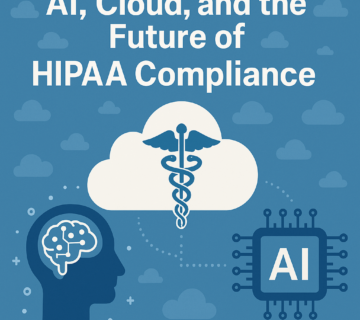
AI, Cloud, and the Future of HIPAA Compliance

HIPAA Compliance in 2025: Secure AI and Data Workflows for Healthcare Providers

A comprehensive guide detailing how healthcare organizations must adapt to maintain strict HIPAA compliance while implementing advanced technologies, such as Artificial Intelligence (AI) and cloud-based systems like Virtual Desktop Infrastructure (VDI). It stresses that rapid digital transformation has expanded the attack surface, requiring organizations to move beyond traditional frameworks to address new risks introduced by data flows in machine learning models and shared cloud environments. Effective strategies for mitigation include utilizing data minimization and de-identification techniques, establishing zero trust architecture, and implementing rigorous access controls and audit trails across all systems handling Protected Health Information (PHI). Furthermore, strict vendor management, especially the requirement for comprehensive Business Associate Agreements (BAAs) with all cloud and AI service providers, is deemed non-negotiable. The source emphasizes that compliance is an ongoing operational commitment that demands regular risk assessments, continuous security awareness training for employees, and tested breach prevention and response procedures. The text concludes by promoting Technijian’s specialized IT services designed to assist Southern California providers in building and maintaining these complex, compliant technology ecosystems. ... Read More
Endpoint Central Secrets The Hidden Features That Boost Security and Performance

Endpoint Central Secrets: The Hidden Features That Boost Security and Performance

ManageEngine Endpoint Central, detailing its extensive capabilities beyond basic patch management. It focuses on revealing "hidden features" that significantly boost an organization's security posture and performance, such as zero-day patching, granular asset visibility, automated workflows, and robust Mobile Device Management (MDM). The text explains how this unified platform helps small and medium-sized businesses simplify IT operations by consolidating essential functions like remote control, software deployment, and compliance reporting into a single system. Finally, the source promotes Technijian, a Southern California IT service provider, as an expert partner for implementing and optimizing Endpoint Central solutions. ... Read More
HIPAA Compliant AI

HIPAA-Compliant AI: How to Use Copilot, ChatGPT, and VDI Safely in Healthcare

HIPAA compliance while implementing artificial intelligence (AI) tools like ChatGPT and Copilot in healthcare settings. It details the significant risks posed by standard consumer AI tools, which frequently violate patient privacy rules by lacking Business Associate Agreements (BAAs), proper access controls, and data isolation features. The text advocates for secure, architected solutions such as utilizing Virtual Desktop Infrastructure (VDI) for containment and deploying enterprise-grade AI services (like Azure OpenAI) under signed BAAs and strict technical controls. Furthermore, the source emphasizes the critical role of policies, staff training, and continuous monitoring in ensuring the safe and compliant adoption of AI to maintain patient privacy and avoid regulatory penalties. ... Read More
SOC 2 Compliance with AI

SOC 2 Compliance with AI: How to Collect Evidence Automatically Without Breaking Rules

The challenges of traditional, manual SOC 2 compliance evidence collection, emphasizing that this process is costly, prone to human error, and takes security teams away from strategic work. The text then introduces AI-powered compliance automation as a solution, which continuously and automatically collects, organizes, and validates evidence from various systems—like cloud platforms and HR systems—to ensure organizations are always audit-ready. This approach is positioned as fundamentally strengthening security posture while significantly reducing the manual burden required to satisfy the five SOC 2 Trust Services Criteria. Finally, the text promotes the services of Technijian, an IT services provider specializing in implementing this AI-powered automation to help businesses achieve and maintain critical certifications. ... Read More
HIPAA + AI

HIPAA + AI: What Safeguards You Must Have Before Turning On Copilot

HIPAA compliance when deploying Microsoft 365 Copilot within healthcare organizations. It warns that utilizing Copilot without specific safeguards can lead to catastrophic regulatory fines, mandatory breach notifications, and potential criminal charges due to the exposure of Protected Health Information (PHI). The text details twelve critical steps required for a compliant implementation, including conducting a pre-deployment risk assessment, obtaining the correct Business Associate Agreement (BAA), implementing strict permission controls using the principle of least privilege, and configuring Data Loss Prevention (DLP) policies specifically for Copilot interactions. Furthermore, the source emphasizes the importance of addressing challenges unique to AI, such as shadow AI use, oversharing through misconfigured permissions, and inadequate audit controls. Finally, it positions professional IT services as necessary for small and mid-sized healthcare practices to navigate these complex technical and administrative requirements successfully. ... Read More