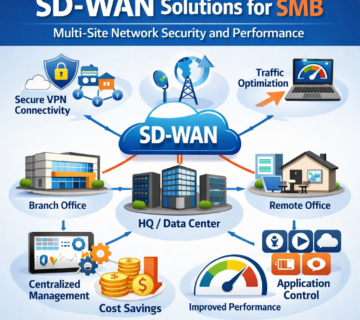
Transitioning from SD-WAN to SASE: A Future-Ready Network with AI Integration
SASE brings networking and security services into a shared approach for connecting users to applications. Organizations with remote staff, branch offices, or cloud services may find it useful. However, moving to SASE requires a plan that fits the current network and business risks.
Secure Access Service Edge (SASE) combines network access with cloud-delivered security. SD-WAN can be part of that design. It is not simply a product that SASE replaces. Review which capabilities are needed and how they will work together.
What Does SASE Include?
A SASE design can combine SD-WAN with zero trust network access, secure web gateways, cloud access security brokers, and firewall services. These functions address different needs. The selected provider and licences determine the actual features available.
For example, SD-WAN manages traffic across network links. Access controls determine who can reach an application. Web security tools apply policies to internet traffic. Plan and test each part instead of assuming that one label covers every requirement.
Plan the Move from SD-WAN to SASE
Assess the Current Network
List sites, users, applications, and network links. Identify critical traffic and existing security controls. Also record current performance and outages. This baseline helps the team compare the proposed design with today’s service.
Check Compatibility
Review whether existing devices and SD-WAN services can work with the proposed platform. Check identity systems, logs, and endpoint requirements too. Confirm licence costs and migration work before selecting the design.
Review Security and Data Requirements
Map access and data flows before changing policies. Confirm where logs and inspected traffic may be processed. Your security and compliance owners should review the applicable requirements. A SASE product name does not establish compliance.
Use a Phased Rollout
Start with a suitable group of users or a branch office. Test application access, performance, policy enforcement, and recovery. Keep a rollback plan and support contacts ready. Expand only when the pilot meets the agreed checks.
Where AI Can Assist SD-WAN Operations
Analyze Network Data
Some products use AI to highlight unusual traffic or resource patterns. This may help staff narrow an investigation. Check what data the feature uses and how it explains a recommendation.
Suggest Traffic Changes
A tool may recommend paths or policy changes based on current conditions. Test the effect on critical applications before enabling automatic actions. Poor input data or a wrong recommendation can disrupt service.
Support Troubleshooting
AI can summarize logs or suggest likely causes for a fault. Engineers still need to verify the evidence. Record the action taken and compare the outcome with the prediction.
AI features are product-specific. They do not guarantee faster networks or complete threat detection. Define the useful outcome and measure it during the pilot.
Discuss the Transition with Technijian
A scoped review can cover the network inventory, application needs, integration risks, and rollout plan. Agree on deliverables and client responsibilities before work begins. The plan should also identify who approves access policies and production changes.
After rollout, review monitoring, updates, escalation, and staff training. Confirm support hours and included tasks in the service agreement. Keep test records and unresolved risks available for later reviews.
Frequently Asked Questions
What is the difference between SD-WAN and SASE?
SD-WAN focuses on wide-area network connectivity and traffic management. SASE combines networking with security services. SD-WAN may remain part of the SASE architecture.
Does every organization need SASE?
No. The decision depends on users, applications, risks, and the existing setup. Compare the design with alternatives using the same requirements and costs.
What makes migration difficult?
Compatibility, identity integration, policy design, and application dependencies can create challenges. A staged pilot helps reveal these issues before a wider rollout.
How can AI help SD-WAN?
Depending on the product, it may help analyze patterns, suggest changes, or summarize faults. Verify recommendations and measure their value before relying on automated actions.
Can existing SD-WAN work with SASE?
Sometimes. Confirm support with the selected vendors and test the actual configuration. Existing devices, licences, and contracts may affect the migration.
How can Technijian help?
Discuss assessment, design, integration, testing, and support needs with the team. Confirm the tools and work included in the proposal. No migration should rely on an assumed guarantee of seamless service.
About Technijian’s Network Support
Technijian provides IT support in Orange County from its Irvine base. Review the relevant IT services and solutions for Orange against your business needs. Service scope, coverage, and implementation requirements should be agreed for the engagement.
Contact Technijian to discuss the current network and the goals for a SASE assessment.