
Endpoint Security

Endpoint security is critical for safeguarding devices like laptops, desktops, and mobile phones from cyber threats. By securing endpoints, organizations can prevent unauthorized access, data breaches, and malware attacks. Implementing robust endpoint security solutions ensures comprehensive protection and maintains the integrity of sensitive business data.

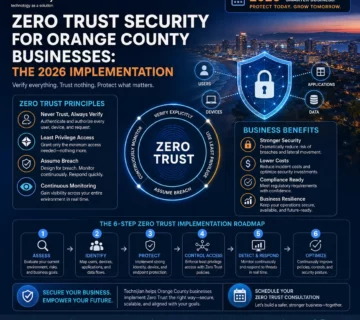
Zero Trust Security for Orange County Businesses: The 2026 Implementation

Zero Trust Security for Orange County Businesses: The 2026 Implementation Guide 

Zero Trust Security for Orange County Businesses is no longer optional in 2026. As traditional perimeter-based security fails in hybrid and cloud-driven environments, Zero Trust provides a modern approach based on “never trust, always verify.” This guide explains why legacy security models are ineffective, outlines the five pillars of Zero Trust architecture, and provides a practical implementation roadmap tailored for OC businesses. From identity verification and device compliance to microsegmentation and data protection, this blog helps organizations reduce breach risk, stop lateral movement, and secure critical systems in today’s evolving threat landscape. ... Read More
Weaponizing the Claude Code Leak

Claude Code Leak Weaponized to Push Vidar Infostealer Malware Through Fake GitHub Repositories 

The Claude Code leak quickly became a target for cybercriminals, who weaponized the incident by creating fake GitHub repositories to distribute Vidar infostealer malware. By exploiting search traffic and developer curiosity, attackers delivered malicious payloads disguised as legitimate tools. This blog breaks down how the attack worked, what data was at risk, and how individuals and organizations can protect themselves from similar event-driven malware campaigns. ... Read More
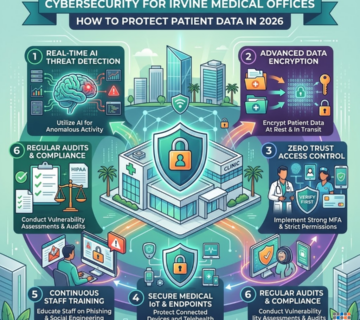
Cybersecurity for Irvine Medical Offices

Cybersecurity for Irvine Medical Offices: How to Protect Patient Data

Medical practices in Irvine are among the most targeted businesses for cyberattacks. Patient records sell for 10–50x the value of a credit card on the dark web, and most small clinics lack the IT security to defend against today's threats. The biggest risks facing Irvine healthcare offices in 2026 include ransomware, phishing emails, unsecured medical devices, insider threats, and cloud misconfigurations — any one of which can trigger a costly HIPAA breach. The average healthcare data breach now costs $10.9 million, and the Office for Civil Rights (OCR) is actively auditing small California practices. Under the HIPAA Security Rule, every medical office must have administrative, physical, and technical safeguards in place — covering everything from staff training and access controls to encryption and data backups. Penalties for non-compliance can reach $1.9 million per violation category. Technijian helps Irvine medical offices close these gaps fast with services including HIPAA Risk Assessments, 24/7 Managed Detection & Response, Penetration Testing, Security Awareness Training, and Microsoft 365 hardening — all built for healthcare environments in Orange County. ... Read More
CrashFix malware attack

CrashFix Attacks: New Browser-Crashing Malware Threatens Users Through Fake Ad Blockers

Browser-based malware has evolved beyond silent infections into aggressive attacks that deliberately crash your system to manipulate you into installing dangerous payloads. In 2026, cybercriminals are deploying CrashFix malware through fake ad blocker extensions like NexShield, targeting both individual users and corporate networks with sophisticated social engineering tactics. This comprehensive security guide reveals how these attacks intentionally destabilize your browser, exploit trust through deceptive warnings, and deploy remote access trojans like ModeloRAT to compromise entire network infrastructures. Learn the critical warning signs, proven prevention strategies, and immediate response protocols that protect your systems from this emerging threat that traditional antivirus solutions often miss. ... Read More
Unified Endpoint Management (UEM): Simplify Security Across All Devices

Unified Endpoint Management (UEM): Simplify Security Across All Devices

Unified Endpoint Management (UEM) has become essential for modern businesses managing diverse device ecosystems in 2026. This comprehensive approach consolidates security, compliance, and operational control across desktops, laptops, mobile devices, and IoT endpoints through centralized device management software. As cyber threats targeting endpoints continue to evolve, organizations need robust endpoint security solutions that reduce attack surfaces while maintaining productivity. UEM platforms like Endpoint Central deliver visibility, automated patch management, and policy enforcement across all devices—regardless of location or operating system. For businesses in Orange County and beyond, implementing unified endpoint management isn't just about convenience; it's a critical security imperative that protects sensitive data while simplifying IT operations. ... Read More